activism, Determination

The Power you Have

procession

Are you willing to use the power you have in the service of what you say you believe?


-Audre Lorde

We’d scheduled a White House tour for the morning after the election.  My 10-year-old son was already excused from school for the day. Through the night, the red stain bleeding across the map tangled me into a knot of sleepless apprehension.  It drew tighter every time I reached for the phone to pull up CNN.  As the unreality of our new president crystallized into fact, fear of what will happen to our nation, to my neighbors and our shared home — and the uncertainty about how to be a mother through it all — metastasized from compulsion to obsession.

Continue reading “The Power you Have”

Art, Determination, Purpose, Writing

Core’s Correction

ascent-of-the-spirit

We frame resilience. . . as the capacity of a system, enterprise, or a person to maintain its core purpose and integrity in the face of dramatically changed circumstances.

– Andrew Zolli and Ann Marie Healy in Resilience: Why Things Bounce Back

Having hit all the deadlines for Phase 1, I steered eagerly into Phase 2.  Blocks of writing time for the season ahead peppered my calendar.  Accountability buddies jumped on board.  To celebrate the milestone as well as the momentum, My Mister dipped into the Treat Jar and agreed to host a game night.

Then on the second-to-last day of the first month, my project ran aground.

Continue reading “Core’s Correction”

Choices, Determination, Purpose, Writing

Treat Jar

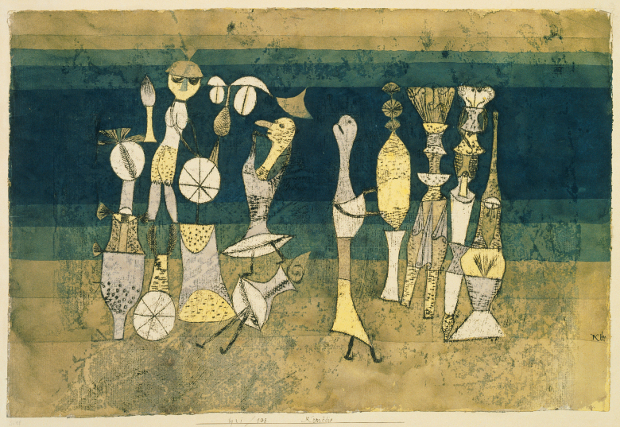
Comedy

The professor wears plaid clogs.  She strides into the conference room, bold black and gray swimming around feet sheathed in silver-threaded socks.  I tell her I like her style.  She tells me that every time she hits a professional milestone, she buys herself shoes.  She can stand in her closet and scan the trajectory of her career: her first publication shoes, her first edited volume shoes.  The plaid clogs?  Tenure-track shoes.

“What’s next?” I ask.

“Full professor, going up next year.”

“Have you scoped out the shoes?”

She shakes her head.  “Oh no, that would jinx it.”  Then she grins.  “Which is a total lie.  There are these boots,” she sort of moans.  “Boots and a whole new outfit to go with them.”

This concept mystifies me.  One friend picks out a fancy purse for every promotion or raise.  Coach, Kate Spade, Louis Vuitton.  Another takes herself on a cruise.  I clap along but something rankles.  We’re dogs now?  We get cookies for every well-timed wiggle?

Continue reading “Treat Jar”

Determination, Purpose, Writing

Blueprint Phase 1, Step 2

cpb-plan

On Tuesday night, I brought 3 days and 10 pages of notes to heel in this whacked out mind  map.  Even with my scattered brain forever chasing down The Meaning Of It All, I was able to rip the material and pin details to their categories.  One night later, I had expanded this into a clean, 3-page document charting each week-long task between now and May 1, 2017.  It’s typed.  With headings.  That makes it real, right?

Continue reading “Blueprint Phase 1, Step 2”

Creativity, Determination, Purpose, Writing

Writing Project Blueprint, Phase 1

romanesque-architecture

Assignment #1: Prepare an action plan for reaching a medium-term writing goal. You have seven days to complete and submit plan.

Assignment details:

Write up an overarching SMART goal and then generate a series of intermediate objectives, each with its own subset of deliverables.  The objectives and deliverables will use measurable action words, such as those in Bloom’s Taxonomy, and will themselves include all the elements of SMART goals (most importantly, specificity and timeline).

As the details of the interim requirements resolve into view, they may reveal that the Big Papi goal is itself problematic.  The goal might be too ambitious or your schedule unrealistic. Revise as necessary. The plan will be more effective if it emerges from an adaptive exchange between desired outcome and deliberative process.

Here is an example of my possible Big Papi writing goal:  By May 1, 2017, prepare for submission a working draft of book proposal (with complete outline), introduction, and chapter 1.

Continue reading “Writing Project Blueprint, Phase 1”

Change, Determination, Purpose, Uncategorized

Making Way

flying bike

On bike, top of hill, foot down.  Red light.  It was green as I was climbing but turned yellow before I could get through.  It’s a quiet Saturday, holiday weekend.  A few cars cross in front of me, no one behind me.  The rotation complete, my turn next, I step on the pedals and inch out.  The light stays red, though.  It is red as oncoming traffic starts to enter and turn left.  Because no drivers had joined me on my side of the intersection, the signal never kicked to green.  I could wait here all day at a red light that stays red.  Instead, I press through.  The oncoming drivers pause for two extra beats to wait for me before turning left across the empty lane.

A man jams his body halfway out of his driver’s side window.  His head, arm, torso look like they’re about to climb out after me.  He screams across the road, “Why don’t you obey the law, you fucking idiot!”

I catch my breath and keep riding.

Through my head race all the answers I would say if his were a real question.  Louder than my imagined response is the clang clang clang of his fury: “You fucking idiot, you fucking idiot, you. . .”  For the next mile at least, I tense at every approaching engine, sure he’s whipped around to come after me.  Will my helmet work when he clips me and I flip onto the side of the road?  It’s a quiet, leafy neighborhood.  People are out.  Surely someone will see it and call 911.

You fucking idiot, you fucking. . . Continue reading “Making Way”

body, Choices, Determination

Free Cookies

cookie starry night

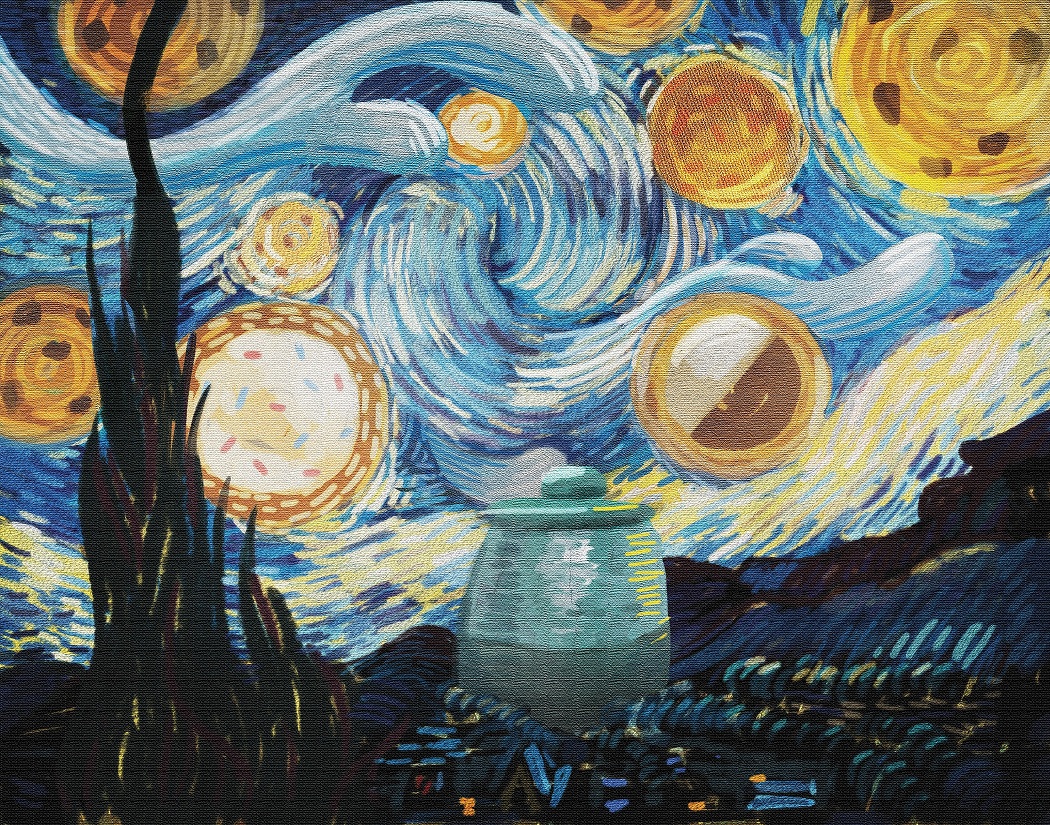
No more food bans.  I’m finished with their flimsy pretense of protection.  It’s like crawling into a tent to shield yourself from a lightning storm.  You’re as vulnerable as a vole naked in a meadow, but you choose to believe that half millimeter of nylon will hold back the sky.

I’ve banned cookies from my diet for so many years now, I’ve lost count.  Alcohol, just as long.  I’ve tried banning breakfast cereal, meat, and ice cream.  I’ve recently banned wheat.  I say I feel great.  Part of me does.

Meanwhile, the deeper and more integrated me — the me that’s more than parts — recognizes that there’s something seriously nuts about cramming myself into an ever narrowing range of acceptable foods.

Continue reading “Free Cookies”

Brain, Determination, Learning

Free Refills

unwavering

Contrary to the ego-depletion hypothesis, participants in the depletion condition did not perform worse than control participants on the subsequent self-control task, even after considering moderator variables. These findings add to a growing body of evidence suggesting ego-depletion is not a reliable phenomenon. . .


– John Lurquin et al, “No Evidence of the Ego-Depletion Effect across Task Characteristics and Individual Differences: A Pre-Registered Study,PLOS One, February 2016

Over the past several months, a number of studies have surfaced suggesting the popular idea of ego depletion may not be a real thing after all.  Possibilities of bias are showing up in the analyses of of studies from the 1990s and 2000s.  At the very least, no one has been able to replicate widely cited studies that led to the notion that willpower, like a muscle, grows fatigued with overuse.

This may be background noise for most of the thinking public.  After all, pop psychology is as ubiquitous as wellness and mindfulness.  The various trends are often jumbled up together, adding to the incessant self-improvement chatter that populates our news feeds.  The nuances are for the researchers, clinicians, and educators.

Maybe, too, for college personnel.

To a person who works with graduate students, this is a sonic boom.

Much of the advice I give students has to do with setting themselves up for academic and professional success.  Students who move steadily through a doctoral program tend to do little things well.  This involves putting in place many small systems across a life’s numerous and unique dimensions.  Implementing basic organizational tools, for example, and actually using those tools are tricky for most of us.  Effective students set up spaces that are conducive to studying.  They outline projects and manage time in a structured way, mapping out hours, days, even years.  In this way, they break a doctoral journey down into manageable chunks.

Students also perform better when their finances are in order, their families on board, their workplaces supportive, and their mental and physical health care structures sturdy.  Taking full advantage of the resources available to them at the university, successful students master research tools and set up study and writing groups with their peers.

These folks aren’t more intelligent or “better students” than their floundering counterparts.  They are simply more organized.  They persist with the systems they implement.

Organization and persistence are not qualities in an of themselves.  More like mosaics,   they are a collection of many small habits coalescing into a general way of being.  These are  habits of mind as much as behavior.  Many students come into a PhD program with skills suited to passing courses on the fly or excelling in their jobs.  Developing a scholarly MO is a different game with different rules.  Setting the pieces in place takes dogged attention to detail.

In order to advise my students effectively, I’ve immersed myself in literature on habit formation.  That branch of psychology has been awash in ego-depletion for the past 10-15 years.  It’s a compelling idea.  I bought into the paradigm that self-discipline, as a limited resource, must be conserved for the important things.  Barack Obama only wears his blue and gray suits and he has someone else select his outfits each day.  He has a country to lead, right?  He shouldn’t be tapping his store of willpower for fashion picks.

Because of this thinking, I’ve developed guidance for students that has to do with putting the hardest work in the early part of the day and reducing the number of “intersections,” or places where a choice is required.  To reduce decision-fatigue and keep that discipline muscle focused where it needs to be, students should cut out the complexity and stick with certain rules.  Pack the same lunch every day.  Take the same route.  Study in the same place.  Carry the same backpack, wear the same shoes.

All of these are great bits advice as long as two conditions are met: 1) ego depletion is a real phenomenon; and 2) a life is predictable enough to support invariability and routine.

I’ll get to point #1 in a moment.  Regarding point #2, let’s ask the next question, with the understanding that a PhD program is a commitment of anywhere from 5-10 years.  Has any of us ever lived through a  5-year period free of change?  Jobs change, rents go up, recreation morphs into addiction.  Partners come or go or get sick.  Families grow, shrink, move. Children need IEPs or swim lessons.  Bus lines get terminated, cars break down, knees blow out.  Libraries close.  Stock markets crash.  Babies are born.

Far more effective than simplicity and routine are adaptability and resilience.

Perhaps I need to look differently at my effective students.  They may have structures in place, and organization is still a critical skill.  That said, a focus on habits may miss a key contributor to the ability develop and stick with habits.  Underneath the external behaviors may be an effective mindset.  Self-concept unites with a particular framing of the world, creating the way we respond to change.  Yes, successful students implement sound structures.  They also adjust those structures as the ground shifts.  They dismantle the parts that were fixed in one place, then redesign and rebuild them to function on new terrain.

How can a person cultivate a growth and adaptation mindset?  It may be time for a new approach in my advising.  While habits are critical, the perceptions from which those habits grow may be equally, if not more, important.  Clearly, I have some work ahead of me.

Regarding point #1. . .

. . .it may not even really matter that much whether ego depletion is “real” or not. What matters is how you think about your own amount of willpower. A very intriguing direction of research is finding the power of a person’s own beliefs about willpower may be what makes the difference here. When people believe their willpower is limitless, they’re more likely to go after personal goals, they’re less likely to burn out, and they’re happier. In a sense, when people believe their willpower is limitless, it turns out to be true.


– Melissa Dahl, “If You Believe your Willpower is Endless, It Is” in New York Magazine

Students who persist and finish a PhD are most likely those who see themselves as capable of maintaining momentum under any circumstance.  It’s true for the rest of us, too, right?  What happens when we think of ourselves as fundamentally resourceful?  When we picture ourselves having a consistent and bottomless capacity for working through the tough stuff?

What happens is this:  As if by magic, the source delivers.  We find a way.


Image: Martin Klein, “Unwavering”


community, Determination

Show Up

People are getting live-killed on Facebook, y’all.  If we aren’t showing up now, then when?  It’s time to get out there.


SURJ Organizer, 7/10/2016

Over 70 folks came out for the SURJ (Showing Up for Racial Justice) meeting.  They had to bring in more chairs.  After last week in America, despair and outrage have combusted into something that refuses to stay contained.

The meeting was two hours of focused, efficient movement.  We engaged in small group discussions about concrete things we’ve seen white allies do to disrupt racism and cultivate justice in our communities.  We heard from the organizers about activities that have gained traction in the first year of this young organization’s life: immigration reform, police accountability, renaming buildings that celebrate the Confederacy, and coordinating a region-wide canvas in majority white neighborhoods in the run-up to the presidential election.  We then split into breakout sessions for a deep dive into each of these areas.  Finally, we learned about the next public action planned for this coming week.

Around the country, ally organizations are stepping up to make a stand for Black Lives.  The focus is on police departments, sheriff’s offices, and Fraternal Orders of Police.  Affiliated organizations led by People of Color have put out the call to SURJ and other white allies to take bolder action on issues of police brutality.  Facing our white privilege means more than talking about it on social media.

It means showing up.

It’s time to take our horror at what happened to Philando Castile and turn it into a movement.

And what happened to Alton Sterling.

And Natasha McKenna.

And Freddie Gray.  And Trayvon Martin.  And Michael Brown.  And Eric Garner.  And Tanisha Anderson.  And Tamir Rice.  And Zamiel Crawford.  And Dominick Wise.  And Frank Shephard.  And Vincent Valenzuela III.  And the 5 Dallas police officers, some of whom had stood with the protestors before the shooting began.

And so many more, each a story.  Each a neighbor.  Each a life blown short by a force whose call to protect has gone haywire.

The organizers asked who would be there for the coming action.

At a public protest, my skin and income lower the risk of abuse to negligible.  This fact does not make me proud.

It makes me raise my hand.

It’s time to show up.


Change, Determination, Mindfulness

Water, Light

garden woman

Deadheading flowers will encourage more blooms on flowering plants. The normal goal of a plant is to flower, set seeds and die. Since we want them to continue to set flowers. . . we want to discourage flowers from setting seed. Deadheading the flower as it expires will redirect the plants energy from setting seed to creating more blooms. Additionally, keeping your plants free of dying material will discourage disease and allow more parts of your plant to receive sunlight.


From Cedar Circle Farm organic farmstand and education center

Someday I will live where I can garden naked. For now I make do with stepping out onto the balcony at daybreak, damp from a shower and dressed in enough to mask my skin’s craving.

July’s rain is nothing to its glare.  A geranium in its pink pot drinks up half the jug without draining a drop. Everyone is thirsty.

A spider bobs on filament above a mess of thyme. Every time my clumsy elbows tear loose her spun walls, she rebuilds.  I take care to duck under her strands but she knows better than to trust me.  She skitters to the safety of the railing, her back an arrow of malachite flashing through a mica shield.

The thyme has tangled itself into the rosemary.  Both started from seed two years ago.  Now they are a wild fury.  Winter buried their leggy stems, spring drowned them in pools of choked mud, and now summer burns them raw. As determined as their spider neighbor, they go on.  New strands unfurl sometime in the night.  When sun steams open the sky, tiny leaves press towards light.  They grow even when the only sustenance is a stolen sip from morning’s turgid heat.   Even left forgotten in the corner, they climb out of their barren beds and peel open their seams to free a thin, bristling marrow.

The marigolds and petunias perched up in boxes have curled in and darkened. I deadhead the withered, closing my fingertips gently around each base and letting the dry tissue fall free. It is more of a coax than a tug.  Picking blackberries requires the same light touch.  The ripe ones slip loose.  Any that resist are left to darken their bite to sugar.

Ample rain and sun have kept these blossoms in a state of perpetual return. They begin even as they end.  The petunias are tricky this way.  Bud or compost?  At a glance, it’s hard to know which are closed for good and which are waiting to open.  The only way to tell is with a tiny stroke, just enough for the purple fullness to lay its pulse against the skin. The gesture is almost imperceptible.  Does it fold itself over and surrender to its end?  Or does it flex and hold inside its cocoon of flesh?   Touch has no influence on the dormant thing, only on me.  Its signal sounds through cell, through our common organelles, that it is bud and not corpse.  I let go and step back.  Somewhere deep in its furred sepal it clings to the threads of its root, churning sustenance into the shape of itself, murmuring, here, I am here, don’t rush me, I’ll know when it’s time to wake up.


Image: “Earth Goddess” from a 2013 exhibition at the Atlanta Botanical Gardens by Mosaïcultures Internationales de Montréal