activism, Change

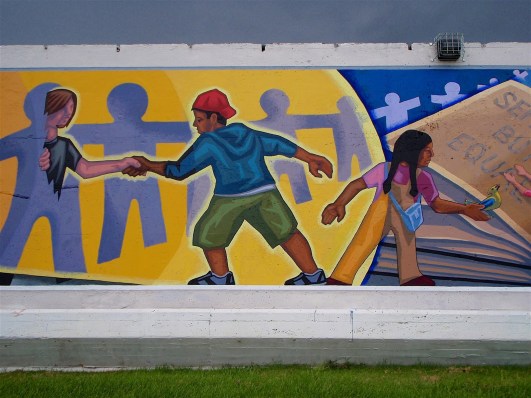
Up to Here with Liberal White Women

Mauro Malang Santos

Racism is the single most critical barrier to building effective coalitions for social change.

The People’s Institute for Survival and Beyond

Last night at an event focused on building support for immigrant communities, every single participant was a white person.

At a meet-and-greet at a local bar for Virginia Democratic Lieutenant Governor candidates, almost every participant a white woman.

At all the discussions of racial and social justice in my Unitarian Universalist congregation, the attendees are predominantly white people.

At an interfaith vigil that took place after the local JCC and UCC were vandalized with Nazi symbols and hate speech, all but a few attendees were white people.

At the university where I work, a place nationally recognized for the diversity of its student body, the faculty and staff meetings in my department are comprised almost entirely of white people.

At the local Huddle, every attendee is a white woman.

At the “Love Lives Here” family parade in response to Richard Spencer setting up shop in Alexandria, almost all protestors were white people.

At a dialogue hosted by the School for Conflict Analysis and Resolution to bridge the post-election divide, all but two of the student organizers and one student participant were white people.

At the Kitchen Conversations at my house, eight of ten participants were white women.

Anyone see a pattern here?

Continue reading “Up to Here with Liberal White Women”

activism, community, Take Action

Action 7: Kitchen Conversation

NOW poster makers

The main battlefield for good is not the open ground of the public arena but the small clearing of each heart.

– Yann Martel, Life of Pi

A handful of friends and neighbors gathered for a second time. We got together in my living room to share ideas and support each other in our efforts to become more politically active.

Our first meeting took place in early February. We kicked off with drive and energy and a fury of commitment. In the intervening six weeks, our national disaster escalated and many of us lost momentum. Speaking candidly with friends and peeking into my own heart, I notice that many are experiencing the outrage fatigue we predicted. The Republican administration continues to throw all its might into dismantling regulation, research, democratic checks, civil liberties, protection of the commons, and social safety nets. Those of us committed to these institutions as well as to the values that undergird them have lost our sense of direction. How do we respond when everything is a crisis?

First we admit the sense of loss.

Then we remember that these power mongers win if they paralyze us, so we must keep moving.

Continue reading “Action 7: Kitchen Conversation”

activism, Children, Parenting

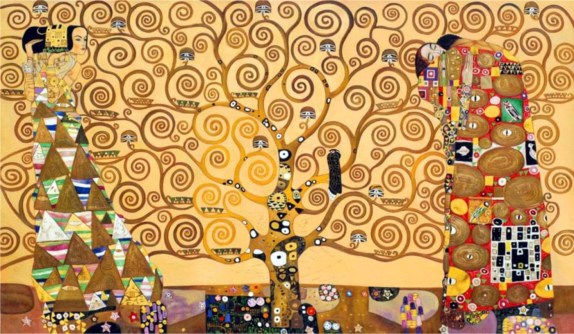
Inauguration Eve: Make Like a Tree and (Be)lieve

klimt-a-arvore-da-vida

He asks.  I fumble.  Events crash past, plowing under a vocabulary both dated and outgunned.  My words like vestigial limbs grasp at an extinct terrain.

As we drive the short distance home, NPR wallops us with our nightly load of federal ordure. The new Congress just voted to pave the way for a repeal of the Affordable Care Act.  Our representatives exhumed an old law which will allow them to slash the pay of any federal worker down to $1.  In a stage play of quasi-constitutionalism, those who ask the toughest questions wield no power.  The men in charge anoint a public opponent of civil rights as the nation’s Attorney General and an oil tycoon as Secretary of State.

Continue reading “Inauguration Eve: Make Like a Tree and (Be)lieve”

activism, Take Action

Act Now

vivir-sin-fronteras-colordsgfix.jpg

Here is a small selection of things that don’t work:

  • Wearing black
  • Fretting
  • Posting “Joe Biden: White House Troublemaker” memes (although a giggle is good medicine)
  • Wearing a safety pin
  • Returning to safe, familiar, more-or-less neutral patterns of work and social life
  • Conflating the expression of feelings with action
  • Rehashing outrage and fear in casual conversations with friends and family who agree with us
  • Repeatedly checking social media to watch horrors as they unfold
  • Waiting to see what else he does before doing anything ourselves

Here is what does work:

  • Asking the next question: What action will we take today — this very day — in the service of justice and our common future on this planet?

Continue reading “Act Now”

activism, Determination

The Power you Have

procession

Are you willing to use the power you have in the service of what you say you believe?


-Audre Lorde

We’d scheduled a White House tour for the morning after the election.  My 10-year-old son was already excused from school for the day. Through the night, the red stain bleeding across the map tangled me into a knot of sleepless apprehension.  It drew tighter every time I reached for the phone to pull up CNN.  As the unreality of our new president crystallized into fact, fear of what will happen to our nation, to my neighbors and our shared home — and the uncertainty about how to be a mother through it all — metastasized from compulsion to obsession.

Continue reading “The Power you Have”

body, Fitness, Learning

Power Forward

shavanaas

I take a deep breath and add another 2-1/2 lb weight to either end of the chest press bar.  These “graduation” days are bittersweet.  Each crossing of a threshold puts the lie to the comforting narrative that I’m only so capable, only so strong.  If I keep surpassing my own limits, I might start to believe that most of them are self-imposed.  How in the world can I avoid living my full life under those conditions?


Image: Mary Ellen Mark’s Photograph of Shavanaas Begum, the Indian Circus Strongwoman, 1989

Adventure, community, Determination

Audentes Fortuna Juvat

Baltic Human Chain

This is a story about a Metrobus and a jacket.

Yep, as primary returns roll in and the future of our too-fragile (we now realize) democracy hangs in the balance, this is fluff about public transit and rush hour stress.

Maybe this is the best I can manage. Maybe the chilling prospect of the Fourth Reich overtaxes a mind until it can bear no further weight. Maybe getting up early to vote means the work day was long and a girl is weary.

Maybe it’s just because this is what happened.

On a day when the temperature creeps up to 60 degrees, the leather jacket needed to ward off the morning chill becomes an encumbrance by 5:00. I heft backpack, lunch bag, jacket onto the bus to head home. It squeals to a stop, I hop off and walk about 50 yards before I realize.

Backpack (check). Lunch bag (check).

Jacket. . .?

I stand frozen for a full 15 seconds. The bus is long gone, heading north on that crowded rush hour artery. Riding quietly in the back is one of the nicest pieces of clothing I own. The fine leather was a gift from my sister maybe 15 years ago. Trim and versatile, it’s grown buttery with time. It’s one of those rare possessions that helps me feel less poor.

When it goes, I won’t be replacing it. Coats are like the rest of our wardrobe now: Hand-me-down, charity from Grandma, or Goodwill.

I start to run. Not towards the bus, though. Towards home. Backpack and lunchbag flopping against my back, I run through the park past the strollers and dogs and teens shooting hoops. The dog can wait. I pull out my keys and leap into my car.

Where does the bus go? Think think think. I’ve never taken it further than my stop. It must go to the Metro here before it heads further north. I wait at one light, then a 4-way intersection, lines of cars, a polling station. A bus pulls out onto the road ahead as I turn right before I realize — too late — that it was my bus. I crawl through the Metro parking lot back to the main road. Another red light. Another line of cars, another polling place. Idling, I pull out my phone and bring up the timetable. It’s 5:25 now, the next stop is a couple miles down the road, at 5:31. Can I get there?

Nope. Intersections, commuters heading home. Cars and bikes and pedestrians. More buses, the wrong buses. I just miss another light and sit there clutching the wheel for too many minutes. It’s 5:28, then 5:30.

Then the tears come.

They come riding a cold gale of thoughts: I hate rush hour, screw this soul-killing, congestion, this is why I take the goddamned bus, that jacket is one of the last nice things I have, somebody probably stole it anyway, why does everything suck?

And without even a blink of a transition, local winds swell to global catastrophe.

That self-promoting demagogue is going to be president and I’m so fried and weary I can’t even keep track of my stuff let alone do anything good for my kid’s future and here I am DRIVING a BUS ROUTE, as if the apocalypse isn’t coming fast enough already, Smirk.

I hear the swell of self-pity and anxiety, and just when it’s about to drag me under, my tears stop. Click, just light that. A quiet grin creeps up from somewhere buried. With it, this:

I choose my mind.

So I decide, right then, that chasing down this jacket is not a burden. It’s a quest. The light turns green. I crank DC101, roll down the window, and peel out.

Onto the main road, a snaking ribbon of taillights. The lanes widen from two in each direction to three then four. It is 5:37 now. The timetable tells me that my bus will be leaving the monstrous new Metro station at the heart of the mega office-commuter-consumer district at 5:45.

Eight lanes of bumper-to-bumper traffic fan out before me. Buses are turning in and out from every direction. The station is connected to a shopping mall and parking by an elevated footbridge over this surging mass of cars. I have no idea which way to go, so I turn right because why not? But all the buses are the wrong bus, and now it’s a mall entrance —  wrong wrong wrong.

I turn then turn again, back onto a different major road. I pass over the Beltway, its travelers trying to squeeze on and off its ramps into unbroken chains of cars. I cross eight lanes, turn again, go al-l-l-l the way around a second mall (they’re a matched set!) and now it’s 5:44, and the Metro station is somewhere ahead of and above me, and where are the buses? Where is the parking?

Another bus bay. Big red signs say “AUTHORIZED VEHICLES ONLY.” And there, at the end of the queue, is my blinking chariot. I swerve right, pull up behind, and hop out.

My driver is stretching his legs by the shelter, counting down his last minute.

My driver!

I jog up to him. “Hi! I think I left my leather jacket on your bus!”

“That’s your leather jacket?”

“Yep, it’s my leather jacket.”

He steps on board and opens up a cabinet near the front. There next to the fire extinguisher is my soft, folded baby. He hands it to me with a smile.

“Geez, thank you. That would have been one expensive bus ride.”

I stride back to my car with a stupid grin on my face. I pull back into traffic and my driver pulls right out behind me. We inch our way south now on the same road we just followed. He keeps going as I veer off into the first chain restaurant I see, order a plate of fish tacos, and wait out rush hour in the company of my New Yorker.

I am tired. Not like that bus driver is tired, driving back over that same loop again and again, but tired all the same.

Tired of nursing my precious helplessness. Tired of letting crippling thoughts limit my capacity for action. Of depression’s terrible lies. Of assessments based in archaic narratives no empowered person would ever choose.

Demagogues rise in part because each stunned and disbelieving individual fails to act in some way — any small way — to stem the tide.

This isn’t a story about a jacket. It isn’t a story about a Metrobus.

It’s a story about choice. And about power. And about the moment when those two snap together and the truth becomes clear: they are a force, a matched set.

A whole.

Choice + Power.

Choice = Power.

If a series of small acts can buck DC  area rush hour traffic, put the lie to the anonymous self-interest so easily ascribed to strangers, and land my beautiful leather jacket back in my possession, then maybe I — maybe we — have a little power.

Just a little.

But a little is more than nothing.

And that’s all we need, each of us, as long as we keep our purpose in our sights.

Even when we don’t know the way. Or when a thicket of obstacles blocks the view.  Or when — especially when — we break down and want to give up because we have no idea if we’re going to succeed or even if we’re doing the right thing at all.

As long as we choose to hang onto each other and keep tracking what we hold dear, we have power.

As long as we don’t let anyone — especially ourselves — steal our capacity to choose our minds.

We have power.


 Image: Baltic Way, a 600+ km human chain linking Latvia, Lithuania, and Estonia in 1989 as they demanded their independence from the Soviet Union be recognized.


Choices, Love, Relationships

Sky’s Limit

There is hardly any activity, any enterprise, which is started with such tremendous hopes and expectations, and yet, which fails so regularly, as love.

Erich Fromm, The Art of Loving

Nowhere in the Odyssey or Iliad will you find the color blue. Homer’s sea was dark as wine, his sky fingered rose. Indeed, the word itself is missing from the whole of ancient Greek.

This defies logic. The vast canopy envelops us in blue. What blindness could obscure those coruscating waves as the bolt of silk billows open to the day? Sapphire, azure, cobalt, cerulean. We see this now and maintain it must always have been so.

But this too: What name was glass when those first Mesopotamian beads fell from the fire? What did we call that handful of thatch when we ventured out from the cave and found ourselves in need of a roof? The people of Atacama never have foggy memories. And you, city dweller, suburban native, may live a whole lifetime without capturing in words the clank and groan of the pumpjack as it drinks up oil from under the broken steppe.

To know a thing is to name it. We describe what becomes familiar as our mind splits it from the mottled everything and our senses fight to trace its shape into being.

When a thing is everywhere it is nowhere. Sky becomes blue when we develop the capacity to make blue and the concurrent desire to trade in it. Indigo velvet, lush royal moire. Now we grind a once exceedingly rare pigment out to its dizzying extremes. Now we call up a spectrum of descriptors for the field across which the sun and stars make their journey.

Indeed, we have dozens of terms where we used to have none. These words pin our eyes to ever-finer slices of hue, and we discern every shade as a distinct and almost solid thing. It is impossible to un-see what’s fixed now on the canvas, so we assume these shades were born with the world.

We believe we name what exists, when really, we birth what we name.

Ask this: what might the sky be without lapis and cornflower? To the ancient Greeks, it could have been a copper valley laced with honeyed streams, or herringbone and almond root, or blood seeping through sheared wool. From dawn to dusk and around again, petal and wing and wine and jewel. The sky holds anything given a name.

But only that, and nothing more.

Now you pull the door closed as you leave.

You take our words, all the ones we’ve only just begun to distill and to weave and — yes, we were almost so bold, we came so close — to conceive.

You, one who was not until he was. In the anonymous swirl, a faceless other. I was as blind to you then as Homer to a 21st century sky. If my language had a word for you at all, it would have been as it is with “bird” until the plangent whipporwill calls down night, with “tree” until sweetgum briars bite tender feet. You were stranger, neighbor, father, man. The general is where things might have remained.

Then I saw you.

I see you.

You are.

Then we have in our hands the material of us, thread and patches, a whalebone form. But what is it? What word do we coin for this new architecture?

Do we even think to ask?

When the sand-burnt debris fell out of the fire, it could have been stone, it could have been trash. Its very existence was determined by the lexicon’s outer limits. Beyond that horizon line, all things embryonic swim in the invisible not-yet.

Until someone picks it up and says, this is something else.

The boundaries shift. The world expands.

Sifting through ash, someone finds it again, shares it, and someone else finds it yet again. They begin to recognize it as an it, to spin it and shape it, and the infant entity takes its place in the vocabulary of civilization.

How many beginnings are discarded or broken, how many — for want of notice — fail to hatch?

How many nameless wonders already walk among us that we are unable to see? What kaleidescopic marvels sing against our blind skin?

We can garnish our curiosity with courage. This ability is our human birthright, and we can let our minds split an almost imperceptible variance from the mottled everything. It is up to us to marshal the tremendous combined force of sense and choice, and to trace the shape into being.

Kinship becomes love when we develop the capacity to make love and the concurrent desire to trade in it.

Love becomes the invention into which we breathe life when we sift it from the ashes and say, this is.

We are.

This is something else.


Brain, Things I Can, Writing

87. Things I Can Exchange: Not for Is

Volunteers in the study were asked to hold a grip sensor as they heard a variety of verbs related to manual actions, like ‘throw’ or ‘scratch’, in different sentence structures. The researchers observed a significant increase in the strength of participants’ grip when words were presented in an affirmative sentence, but no such reaction when the same action words were presented in a negative context, such as ‘don’t throw’.

Writing advice from an unknown source: Replace any negative statement with an affirmative one.

“He does not go” becomes “he stays.”
“The delivery hasn’t shown up” becomes “the package has yet to arrive.”
“I haven’t showered” becomes “I need to shower” or “Let me clean up” or “I’m a fragrant mess.”

It seems simple enough. A game, really. It starts as play then becomes imperative. Then mission. Continue reading “87. Things I Can Exchange: Not for Is”