
To see is to love.
To love is to see.

Images: Andrew Wyeth’s Christina Olson and Wind from the Sea.
Gather. Discover. Cultivate.
To see is to love.
To love is to see.
Images: Andrew Wyeth’s Christina Olson and Wind from the Sea.


Eyes like a growling. Eyes like a treasure box. Storefront reflection, candid photograph, inverted glint on spectacle glass.
Eyes tethering me to corporeality.
They write their stories on my body. Make their confessions on my body. Cast the runes and decode the signs and plan their fortune on my body. Ink the map of their nightmares on my body. X the spot of their rescue on my body.
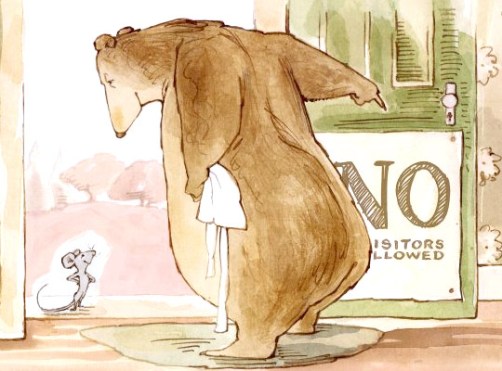
Little holes in the bag of rice gave it away. Three and half years living in this place, and here was the first sign of uninvited guests. On our next trip to town, we stopped at the hardware store for traps. Despite Bug’s insistence that we buy the $39 ultrasonic pest repeller, I opted for Tomcat traps. A four-pack for four bucks.
We smeared on peanut butter and tucked it into the cabinet corner. The next morning, we heard a snap. Big brown eyes, white fuzzy belly, limp broken body. “Oh, he’s so cute,” Bug said sadly. Into the weekday rush we crammed this death. We shrank it down to fit. School, work, a morning meeting and already late. I dumped the trap, mouse and all, into the garbage. Another dab of peanut butter on a clean trap, and off we hustled into our overfull day.
On the drive to school, regret hit hard.

We frame resilience. . . as the capacity of a system, enterprise, or a person to maintain its core purpose and integrity in the face of dramatically changed circumstances.
– Andrew Zolli and Ann Marie Healy in Resilience: Why Things Bounce Back
Having hit all the deadlines for Phase 1, I steered eagerly into Phase 2. Blocks of writing time for the season ahead peppered my calendar. Accountability buddies jumped on board. To celebrate the milestone as well as the momentum, My Mister dipped into the Treat Jar and agreed to host a game night.
Then on the second-to-last day of the first month, my project ran aground.
She scrapes bow across strings whose low moan rises to a shriek. Her elbow a piston, it turns the wrist in a blurred ellipse that frees a cry, a frenzy. Two boys appear from behind the stage, leaping sideways across the brush that separates this place from the garden plots where an old woman in a headscarf shambles between rows watering broad petals of cabbage. One of the children waves a stick like a flag. His face is a wide grin that says, see me, see me.
Another boy in a man’s body perches on the edge of a chair on this portable stage. Shaggy hair falls across his forehead as he leans into the music. He is from Ireland and lives in Portland where he has his pick of women. He does to the accordion what Kobe Bryant does to a ball. We call this thing “playing,” this version of play unlike anything the rest of us will ever experience.
Bent at the waist ever so slightly, he gazes far off towards what must be the west where a weary August sun peels back the day’s skin and exposes the pink, swollen flesh of dusk. The grown boy’s fingers are dervishes in harmonious riot, balletic and blind, somehow whirling an unbroken ensemble piece on that tiny stage of keys. I look where he is looking — in the direction at least because what he sees is all his own. I want to imagine his eyes fixed on a montage of hills, rain, soil-scarred hands lifting open a latch and reaching for him. Just as likely, behind his eyes growls a gauntlet of fractured traffic between the airport and the next gig. Or a dim wash of notes. When I look that way, I see only the deep outline of trees against a sky now a garnet throb.
Then the breath, the snared half-second of surprise when bow and key and string and drum, all stop —
it’s only a pulse of the heart yet it stretches, stretches like the still air across embouchure, its reverberation through a valley of brass. It stretches like a quantum measure that is neither real nor measurable. Swelling up into that pause (which may be the end of all history and also may not contain a single new beginning) surges the cry of cicadas thick in the shadowed branches. Through the crack too flaps the leather wing of one bat dipping for a moth then careening off, this also in the direction our accordion boy looks but doesn’t see. Not what I see see anyway, and certainly not what the bat sees, though his vision may be closer to that of his chiropteran brother, a sightless echoing that delineates a terrain through sound, through a chorus of shape and motion. Maybe he draws a whole universe like this, one round, rapid beat after another firing across a field of night.

Deadheading flowers will encourage more blooms on flowering plants. The normal goal of a plant is to flower, set seeds and die. Since we want them to continue to set flowers. . . we want to discourage flowers from setting seed. Deadheading the flower as it expires will redirect the plants energy from setting seed to creating more blooms. Additionally, keeping your plants free of dying material will discourage disease and allow more parts of your plant to receive sunlight.
From Cedar Circle Farm organic farmstand and education center
Someday I will live where I can garden naked. For now I make do with stepping out onto the balcony at daybreak, damp from a shower and dressed in enough to mask my skin’s craving.
July’s rain is nothing to its glare. A geranium in its pink pot drinks up half the jug without draining a drop. Everyone is thirsty.
A spider bobs on filament above a mess of thyme. Every time my clumsy elbows tear loose her spun walls, she rebuilds. I take care to duck under her strands but she knows better than to trust me. She skitters to the safety of the railing, her back an arrow of malachite flashing through a mica shield.
The thyme has tangled itself into the rosemary. Both started from seed two years ago. Now they are a wild fury. Winter buried their leggy stems, spring drowned them in pools of choked mud, and now summer burns them raw. As determined as their spider neighbor, they go on. New strands unfurl sometime in the night. When sun steams open the sky, tiny leaves press towards light. They grow even when the only sustenance is a stolen sip from morning’s turgid heat. Even left forgotten in the corner, they climb out of their barren beds and peel open their seams to free a thin, bristling marrow.
The marigolds and petunias perched up in boxes have curled in and darkened. I deadhead the withered, closing my fingertips gently around each base and letting the dry tissue fall free. It is more of a coax than a tug. Picking blackberries requires the same light touch. The ripe ones slip loose. Any that resist are left to darken their bite to sugar.
Ample rain and sun have kept these blossoms in a state of perpetual return. They begin even as they end. The petunias are tricky this way. Bud or compost? At a glance, it’s hard to know which are closed for good and which are waiting to open. The only way to tell is with a tiny stroke, just enough for the purple fullness to lay its pulse against the skin. The gesture is almost imperceptible. Does it fold itself over and surrender to its end? Or does it flex and hold inside its cocoon of flesh? Touch has no influence on the dormant thing, only on me. Its signal sounds through cell, through our common organelles, that it is bud and not corpse. I let go and step back. Somewhere deep in its furred sepal it clings to the threads of its root, churning sustenance into the shape of itself, murmuring, here, I am here, don’t rush me, I’ll know when it’s time to wake up.
Image: “Earth Goddess” from a 2013 exhibition at the Atlanta Botanical Gardens by Mosaïcultures Internationales de Montréal

The trees are stage set,
a Las Vegas cabaret
on this suburban strip.
Lightning bugs in their drunken throb
dip and tumble
loose as the purple rope
of night falls
open. They couldn’t care less
who lurks here gaping
at their naked hunger.
Oblivious to the shape of you
emptying out of me,
they fill it the way they do
every hollow place, the way light
always does
but for just that blink
no matter how long we want it
bright and no matter how tight
we seal the lid. It goes out
again, a strobe
pulse, a chemical
flash burning to photon
guttering to black
before we can pin it in place
on this map of shadows.
Somehow the flicker
is enough, more
than enough, each firefly’s rutting
insistence a fizz that tickles full
the belly like sky
even with all that air
between each burst of light.
Image: Wolfepaw, “Pregnant Lightning Bug” at Deviant Art

2 hawks burst from the upper branches
1 doe steps, pauses, steps again into the brush
1 neon-green bug skitters under the cover of a fallen leaf
On its back, 1 tiny frog pinwheels its legs until I toe it upright and it springs into the weeds
3 patches of vines curl around their stash of not-yet-ripe raspberries
5 fingers of thorns twist across the frothy pink blush of not-yet-ripe blackberries
1 pond plucks and echoes with the calls of rubber-band frogs
2 tractors packed with children and parents wave and rumble and sway and wave some more
12 rows of new corn cascade up and out, as high as a goat’s belly
1 creek warbles along its stone bank, becomes another as it bends into shadow, another as it reappears in a cut of morning light
100 blades of grass tickle four bare calves
1 lone cow glances up and continues to chew, 1 ear flicking at a half dozen flies
1 roller truck with 2 steel wheels makes 6, 7, 8 passes over the gravel lot pressing its noise over every other word
3 children sit in 3 patches of shade eating 3 mounds of shaved ice in 3 meting stripes of flavor
4 children in helmets lead 4 stoic horses into a barn
8 children with bare heads ride 8 plastic horses in lazy circles
2 women step between damp sponges of earth into the cascading chiaroscuro of leaf and web and wing
Image: Walt Curlee, “Appalachian Blackberry Patch Farm” from Walt Curlee Art

Blue-white needles frosted with summer rain squat fat and still over the roar. Every passing growl is a Doppler crescendo lifting away another earthling. One, maybe two. Each made the choice to ride. Every roar for days, hours into night, dawn into searing noon. The rumble approaches and retreats, again, approaches and retreats, again. Each one another one. Each one new. Each one here, each already gone.
This freeway usually crouches behind its soft noise, a wash becoming nothing. Surf without storm, wind over low dunes scoured clean of all breaks. It fades into air itself, hiding passage in the press of blank white. Ears become deaf by necessity or maybe laziness here on the other side of the sound wall, deaf to each human pressing on towards the singular objective of a fragment of day.
Now, here, these motorcycles demand attention. They are designed for notice. Each growl is a call to the hairs to rise, the jaw to stiffen, voice ready. Who’s that? What’s there? When is this?
Now, it is now, it grumbles, it rumbles. Another now, here it comes! There it goes. . . A neighbor, a choice, a journey, a calling.
What now?
A pleasure. A burn. A rebirth.
Coursing over the tarmac and weaving through white gashes, each in a pair, a pack, a battalion, or one lone rider. Glove and leather, denim and chrome. Each thunder roll is a choice to grip between thighs that saddled machine. To clutch at gears, to stay upright, to cling to blacktop while soaring up, past, through and away.
Who’s that? What’s there? Time, one moment.
When is this? Choice, forward motion, action, revolution.
Drive in, charge in, bite in and swallow the same air that churns out from belly, esophagus, throat, motor, rubber, grease, grit, sky. The growl is gulp and belch. It is breath and howl. This is another man’s life here, passing, gone. This is another woman’s ascent, crest, recede. Each a doppelganger in flag starred ink and road scarred steel.
Claim it.
The rumble barks.
Claim you.
Each single ticking humming second, each imperceptible sweep of the minute hand is one that only goes forward no matter how hard you press against the brakes and crank into reverse the resistant gears. You can’t erase the odometer, can’t fly backwards down the on-ramp and start again with open road.
You only have this stretch here, the one outside your window behind a spill of ivy and shattered glass, this low sun bleeding over the sound wall and carrying your stunted roar up to smash like shell, yolk, skull, and cry against the day’s vanishing light.
Image: Vladen Antonov, AFP/Getty in Huffington Post from the Memorial Day 2014 Rolling Thunder ride in Washington DC
Annual income twenty pounds, annual expenditure nineteen pounds nineteen and six, result happiness. Annual income twenty pounds, annual expenditure twenty pounds nought and six, result misery.
-Wilkins Micawber in Charles Dickens’ David Copperfield
The last slide on the budget PowerPoint lays out our school’s financial plan:
(Seriously?)
The boss man knows enough to apologize for it but not enough to skip it altogether. None of us wants to hear it again. We are familiar with the formula. Every pixel of internet clickbait loops us back around to yet another listicle that peddles yet another version of the same recipe.
Want to get fit? Exercise more, eat less.
Tackle the day? Fewer screens, more sleep.
Be a good friend? Listen more, talk less.
A good lover? Less grasp, more give.
Scale it up and the formula breaks down. Good luck giving global overpopulation the “less babies, more birth control” treatment. Large-scale social problems have to reckon with the complexity of human cultures, histories, and economies.
This is why we love the personal self-improvement principle almost as much as we loathe it. While its simplicity balms the wounds of chaos, its refusal to acknowledge complexity drives us batty.
Too hooked on your fix? Use less, breathe more.
Struggling with social anxiety or loneliness? Isolate less, connect more.
Stuck in your career? Hide less, lead more.
Anyone who has ever come up against a tough challenge knows that paths are crooked and terrain that at first appeared solid turns to quicksand in a blink. It’s only when we’re far on the other side of it — or perhaps when we’re judging some other poor sucker’s fight — that we apply the simplicity principle.
I’m not the only one in the room looking at those PowerPoint bullets through rolling eyes. As if.
As if all our problems could be solved so easily.
But now I wonder.
What if Mr. Micawber is right after all?
Not for everything, but for one thing in particular: when it comes to this life-choking, spirit-sucking, too-many-decades-in-residence depression, what if Mr. Micawber’s formula is exactly the one I’ve never really tried?
More happy, less misery.
Of course it can’t be that easy. Not for most of us anyway, and definitely not for the hard core clinical pits into which I stumble, body and mind shattered, bruised and slick with mud. . .
Yeah, that’s exactly the kind of metaphor that costs me twenty pounds nought and six.
Happy = revenue. Misery = expense.
How might this look? Here’s an example: When I remember yet again that awful phone call from Friday in which I learned that Bug and I missed an opening from a many-years waitlist for family camp because I called one minute (the registration lady told me) after the last person who got in. . . I say to myself, “Rehashing this makes me sad. I’m going to think about something else now.” Then I cast around for something nice to notice and remind myself that we’re going to have our own adventure this summer, whatever it is.
Or it looks like this: When my kiddo scowls and tells me yet again that he doesn’t love me and in fact I stink like a rotten poop-eating skunk, I consider how much better laughing feels than fussing. I clap my hands in delight and say I love eating rotten poopy skunk carcasses, they’re even better if they’ve been marinated in worm puke. Then we’re giggling and tickling, and our smiles bounce off the walls.
Or it looks like putting on music when I’m home alone and dancing while I do the dishes. Or texting a girlfriend just to say hello. Or carrying colored pencils in my bag so I can doodle while my son carries on with his buddies at a birthday party.
Or just frittering away my time stuck in traffic counting off the day’s 100 blessings.
It looks like noticing when I’ve started to pay the inflated cost of ruminating while missing an opportunity to generate some pleasure revenue. A person who tends towards depression needs only one thundercloud to knock the account all out of balance again. Building back up from that kind of debt is a wearying toil — an avoidable one, as it may happen.
When I have enough attention to notice, I might choose to forgo the temptation. Do not overthink, do not give in to self-pity. Like walking past the Cheetos at the supermarket. Just don’t. Sure, those things are familiar but they make me feel disgusting, and really, they don’t even taste that good.
Can it be this stupidly, improbably simple?
Give it a shot, Smirk.
Choose happy whenever possible. Or colorful, or musical, or goofy. Choose anything that lifts and ignites over anything that weighs and chokes. Marvel at the beets, smell a bunch of dill. Imagine what new recipe to make. Flirt with the butcher. Hum while trundling down the aisles. If it increases the happy income, do it. If it exacts its price in misery, walk on by.
It makes me smile just to begin.
See? Already, I’m saving for happy.
Simple as that.
 Shannon E. Williams