Change, Writing

Carry On

taylor-glass-head

Poor as sin, a bottle of wet, two friends dead. A man outside her window. Wallet on the car floor, wheels spitting asphalt, WaWa bathroom, brown tile walls. Lady pushes her girl into the stall, “You go even if you don’t have to.”

First book with chapters: Sweet Valley High. Which one, all the same. Skin dry, skin slick, so pretty before but realized it too late, that’s always the story. She borrows makeup from a friend, color off. Friend is a generous term. They had been small enough to fit on the same block.  Once.  Adults now, those girls, dulled but also steady.  Selective memory to fill gaps.

New shoes she didn’t buy. Two quarters and a dime, a pack of gum gone soft, the name of the baby they took or she gave, who remembers. The recipe for making him stay, the back of a stained receipt, a language she learned to whisper but never to speak. Paycheck stub, proof of value, plastic troll with hair, once blue.

Continue reading “Carry On”

Change, Determination, Purpose, Uncategorized

Making Way

flying bike

On bike, top of hill, foot down.  Red light.  It was green as I was climbing but turned yellow before I could get through.  It’s a quiet Saturday, holiday weekend.  A few cars cross in front of me, no one behind me.  The rotation complete, my turn next, I step on the pedals and inch out.  The light stays red, though.  It is red as oncoming traffic starts to enter and turn left.  Because no drivers had joined me on my side of the intersection, the signal never kicked to green.  I could wait here all day at a red light that stays red.  Instead, I press through.  The oncoming drivers pause for two extra beats to wait for me before turning left across the empty lane.

A man jams his body halfway out of his driver’s side window.  His head, arm, torso look like they’re about to climb out after me.  He screams across the road, “Why don’t you obey the law, you fucking idiot!”

I catch my breath and keep riding.

Through my head race all the answers I would say if his were a real question.  Louder than my imagined response is the clang clang clang of his fury: “You fucking idiot, you fucking idiot, you. . .”  For the next mile at least, I tense at every approaching engine, sure he’s whipped around to come after me.  Will my helmet work when he clips me and I flip onto the side of the road?  It’s a quiet, leafy neighborhood.  People are out.  Surely someone will see it and call 911.

You fucking idiot, you fucking. . . Continue reading “Making Way”

body, Relationships

Press Through

cave woman

Downstairs is the Cave of Dudes.  It is where the free-weights line up in rows by the mirror, where contraptions pierced through with grimy iron bars and corsets of straps hunch in the corners and dare you to approach.  Someone has squeezed a couple of treadmills in at the back.  They are the wireless kind that run on human power instead of electricity.  The robot machines are quartered in the vast gallery upstairs, a whole army of them blinking out their perfectly calibrated, simulated tracks on LED screens.

Down in the cave, incline benches.  Pull-up bars.  Clangs and grunts.  Some days, most days, I’m the only gal down there.

Continue reading “Press Through”

body, Creativity, Growing Up

Drink Loose the Noise

What young self didn’t know was that cool is a lid that screws down tight on the swelling delight of yes.  From the edge of her ancient eye, older self notices women in the dark corners of the bar bouncing in their seats.  Girls titter near a post trying not to sway — girls who are surely women but seem so far from their fullness.

The dude in an oversized plaid suit and orange ponytail hollers into a microphone while the bassist ducks his eyes under his fedora and yanks on steel strings.  Two spaghetti-armed boys blow brass right through the back wall.

Older self stands and strips off her sweater.  She steps toward the unnamed sister, the one in a cherry red tank top and spiked gray hair. She touches her arm and draws her onto the space in the center of the room.  The worn Persian rug there is a far cry from a welcome mat, but carpet is no great challenge.  Years earlier, she sent her young selves scurrying off to road-test every surface. Concrete, rooftop, mountaintop, pier.  Boardroom, waiting room, snowfall, bed.  Every floor is a dance floor when it’s time to dance.

It’s always time to dance.

She pops her hip and snaps her hand, beckoning to the one across the room who’s been having trouble sitting still.  They are three now.  Soon they are five.  Soon nine.

Low ceilings press in on the battered cafe.  Amateur pencil sketches hang crooked the walls. Light shifts and a gleam slices across the bowl of the saxophone.  Soon it’s a glittering ballroom.  Soon the pulse of the Cotton Club on a Saturday night.

The wall of dudes collectively holds confines itself to straight faces and non-committal postures until one man, pushing 70 easy, steps into and sheds 10 years. The young women form a ring of cool, turning their taut backs out for protection.  The rest shimmy and grin knowing there is no outside and no in.  Guarding one’s soft parts is a survival skill for certain,  but the older ones have learned the taxonomy of danger.  They can differentiate battlefield from playground now.  It wasn’t always so clear.

Here, the belly is free to roll towards the snare’s smash and crack.  That’s lightning for sure, but older self unfurls anyway inside the grounded body of her scars.  She twists the lid loose and drinks the song’s bright rain.  She is growing older still.  Time is running out, so she runs out into it.  She fills her bones until they spill over with dance.


body, Letting Go, Love, Poetry

Cooking for One

kitchen witch

my tongue craves skin, my skin
tongue.  how to eat when the only flavor
is salt? too poor for the extravagance
of a meal served to me, i recall the logic
of giving the beloved what you want
for yourself.  this woman
is her own again, my only lover
here.  In the kitchen i peel
off my clothes and wrap around my hips
an oceanic gust from the cotton bolt
i brought from Zimbabwe
half this life before
and gave to a dear one who returned to me
one yard in thanks, tiny stitches,
this skirt. heat tears through
onion silk. with the long blade
i slice gold threads of ginger. oil pops
as punjabi mc strips the carapace
and wings unfold from my hips.
roil and scrape. peanut, coconut, turmeric, cumin.
cabbage, tomato, cauliflower, honey.
masala dust clings to raw arms, ribs
sweat red clay heat. mouth gorged
with song, the feeding precedes
the eating. my tongue thrills at the naked
steam curling into its hidden cells, my skin
tilts towards the kaleidoscope
of scents. i serve my beloved
a dish and she returns to me
one  birth  in thanks, tiny bloodbeats,
this night. the only flavor
is never the only flavor. the body can taste
every texture of loss. the body can learn
to boil sugar
from the heart.


Fitness, Things I Can

70. Things I Can See: Her Beat, Mine

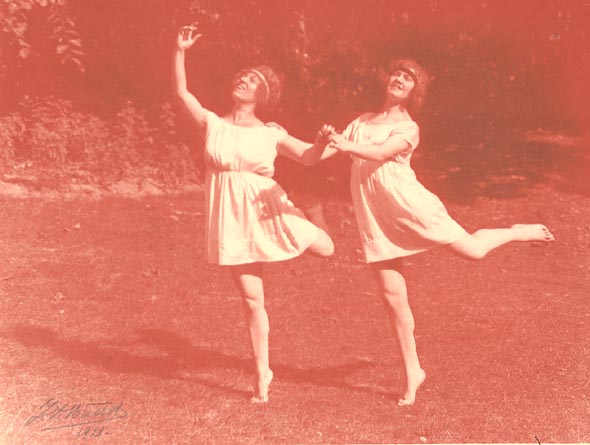
Two Women Dance

The girl who drove the Volkswagen bus plastered in Dead stickers fell off the face of the earth after graduation. West is what I heard. Community bordering on cult, new name. I pictured her in a homespun dress drawing water from the well for backwoods apostles.

She popped up on Facebook — as we all do — 25 years later. No bonnet, no copper kettle. Her profile shot is blazing female Gumby, bronzed flesh arched in a yoga bridge against the setting sun. The other photos are strappy heels, flashing sequins, rhumba beats and a man in a fedora testing the limits of her psoas muscle by pressing her stretched leg flat against his chest before dropping her into a dip.

Continue reading “70. Things I Can See: Her Beat, Mine”

People Watching, Things I Can

57. Things I Can Smooth: The Lines

She perches on the powder-blue cushion that pads her brass vanity chair. Lifting her chin, she smooths a dab of cold cream into the barchan expanse of her throat. The tray on the counter is mirrors and filigree. It holds the fluted light, reflecting back a tessellation of silver lipstick tubes. They stand alongside brow combs and kohl pencils, upright in frames whorled with beads and rhinestones.

Fanning out on the glinting surface are brushes thin as needles and broad as petals, brushes as coarse as thistle and fine as down, virgin brushes and brushes worn to nubs. For the baser applications, tissues the color of an Easter sky pop from the top of a crocheted box. Cotton balls in a nesting tower press their breathy faces against the glass.

At her back, a wooden cabinet with worn brass handles opens to stacks of folded washcloths and bath towels. The linen fits in a perfect geometry between containers holding a disco-flash plastic spectrum: Pert and Gee Your Hair Smells Terrific, Aqua Net and Johnson’s Detangling Spray. There, too, extra bars of scented soap, boxes of band-aids for every joint and laceration, hair nets and pink sponge curlers and shower caps and amber tonics with squat-lettered labels fading into oily glass.

Up around the ceiling and down to the chrome fixtures and hidden pipes drifts a perfume of clay dust and crushed flower, spun cotton and wood stain.

From a round box, she lifts a fluffed ball the size of a kitten. Powder whooshes just inside the low lace neckline of her satin slip. She plucks from a bouquet of combs and hairbrushes a pick to fluff her thinning auburn curls.

On the side of the makeup case she carries in her purse is a tiny mirror. She chooses a tube from among the silver array and twists it awake, tracing color across her mouth before dropping the lipstick in the case and snapping it shut. In the small rectangle of glass, her lips peel back. She frees a blue tissue and dabs a coral smudge from her teeth.


Learning, Reading

Woman, Mine: Eat, Drink, Overthink

When women are faced with a difficult situation, they turn inward to control or change themselves rather than focusing outward on the environment and individuals that need to change. Whereas men tend to externalize stress — blaming other people for their negative feelings and difficult circumstances — women tend to internalize it, holding it in their bodies and minds. When something bad happens to women, they analyze everything about the problem — how they feel about it, why it came about, and all its meanings and ramifications for themselves and their loved ones.

– Susan Nolen-Hoeksema, Eating, Drinking, Overthinking: The Toxic Triangle of Food, Alcohol, and Depression — And How Women Can Break Free

The self-help stacks are my first stop. Over in biography and history, the finds are nourishing but bland in comparison. Substance rarely wins. On any given week, some bestseller on living the full life accompanies me home. I gulp down the first chapter for a fix of the hottest therapy-couch trend. When I get up to run the dishwasher or my fidgety legs, I plop the earnest analysis on the coffee table as a reminder of all that needs to be explored. It’s three days overdue when I dig it out from under the board games and magazines. I’m still the same stumbling, unpolished creature I was five years ago and undoubtedly will be in another twenty.

Sometimes these finds are good, a few are great, and most hover somewhere below mediocre. I paw through them, hopeful and willing. The self, after all, is a mine. A precious vein cuts a find thread through acres of the most primitive matter. It’s hard to resist skimming to see if any can offer up a new kind of pickaxe.

Nolen-Hoeksema is a diamond drill bit.

First, the qualifiers: her writing falls short of art and her research is miles from the cutting edge. Much of what she’s exploring has already turned itself inside-out in every issue of Psychology Today. That said, she strikes oil in her depiction of this one woman’s experience: mine. I doubt the insight ends here —  this work must speak to others or it wouldn’t have made it to the shelf.

If you are out there experiencing what I experience. . . well, you have my deepest sympathy.

Also, go find this book.

Nolen-Hoeksema layers description of the emotional experience of depression with the behavioral coping strategies that are common among women. The dynamic interplay of thoughts, feelings, and actions is not a new concept, yet the insight here strikes a bright chord. I have tried to pick each of these predilections apart as its own unique concern. In my disordered world, here are the areas of most pressing need: Food issues, compulsive/addictive issues, depression issues. Also, motivation issues, anxiety issues, perfectionism issues. Daddy issues are as loyal and true as gum stuck to my shoe. Oh, then there are the communication issues along with trust issues which contribute to sleep issues… You get the idea.

Culture, biology, and family paint the backdrop upon which these actions and reactions play out. While my sleepless internal critic insists otherwise, it is not all just chaos in here, and none of us is a hopeless mess. Indeed, giving up is another form of indulgence. It’s no small gift that Nolen-Hoeksema writes for popular consumption. Those of us who are working on something-or-other all the time would wilt at the idea of another task, even while reaching for it. The analysis here requires little more than a shot of receptiveness and a few quiet hours.

The book begins at a point central to the ways women cope. At that place, a kind of behavioral and cognitive Bermuda triangle — depression, drinking, and compulsive eating — draws other aspects of the self into it. With the same insidious force, it infiltrates what seem to be unrelated spheres of our lives. Careers suffer, bodies weaken, marriages falter, children pay.

Rooting out sources, subsequent chapters explore the patterns of over-identifying with other folks’ feedback and perceptions, the role physiology plays in stress and emotional responses, and the tendency even among successful women to swallow anger but wallow in sadness. These lines of inquiry will be familiar from feminist theory, neurobiology, clinical psychology, and human development theory. Nolen-Hoeksema tugs loose the component parts and assembles them into a new mechanism for self reflection.

After digging up the thickets and landmines, it’s time to lay new ground. The final section dedicates several chapters to concrete strategies for designing an alternative to the triangle. Practical guidance complements theory, providing tips for replacing avoidance and remorse with “approach goals,” and walking through simple problem-solving skills. The book finally urges the reader to think forward and beyond herself. The closing chapter guides offers readers tools for supporting girls and teens — particularly daughters — in developing practices and vocabulary for a healthy adulthood.

As I write this, I notice a force that seems to want to pull me away from focusing and finishing. Giving in to it would lead me to the refrigerator, or bed, or wandering through an electric smog of doubts and plans and urgencies about the unfinished business of my life. The force, of course, is less than an “it” and exactly as strong as the breath I waste fighting it.

Mine, this mind. I’m grateful Nolen-Hoeksema pieced this tool together and handed me the map. With them, I might be able to reconfigure the landscape to invite the bold step and a lifted gaze.

 

Growing Up

Twin Sighting

Then she realizes it is not man. It never has been man. The one whose gaze she has been seeking all this time, alert to it feeling its way up her spine, it is not one or another. It is only a gaze, an entity all its own taking on some kind of psychic presence in her orbit. It moves from eye to eye, brain to brain, sketching her into background or foreground depending on preference, on mood, on the light slanting across the edge of day.
 
The outsideness of it she never questions. She simply submits to it, as if only that exists: submission to the forever slipping away line of sight. Her form, laugh, posture, texture all move about like a bit player, an extra only. Just a hash-mark on the canvas, one of the legion, a soldier of oil drawn into nameless formation alongside interchangeable others down a mountainside waiting for the slaughter. She is one. She is all of them.
 
It is never a man at all, is it? The origin of the gaze, it never really is him placing her, taking her measure. No, it is not living tissue with intention, not even an actual eye in an actual skull.
 
Instead, it is the piece of her she left behind. The missing Y, the twin who was next in the queue and swam out against its will in the next tide, out into the sea, out to be lost to Marianas trench. Later, eons later, geyser force, thrust (again, unwillingly!) a briny and brimstone singed speck of what she lost back to the surface. Now this He (or, rather, her) watches, watches.
 
Not to take her measure, no. Not to judge or even manipulate. These are the assumptions of the simple mind. He (or is it She?) only comes to covet. For corporal life? Yes, for the depth of the bend, the unchained laugh, even – yes, even this – the pain. Deep in the bones, the age and accumulating disease, the sorrow – yes. He would take all of it. Give everything. His universal access, the boundless roaming, for one minute in her skin.
 
This twin, a houri, thunders in astride some winged steed made of nothing but smoke and the dried rinds of tangerines left on the riverbank. She loved him before she knew love but was gone before he ever knew her at all. Now she begins to wonder. Now, the dawning awareness.
 
The he is her He, and he is only just everything she traded for life. Is she wrong? Is it possible he is not the one who came after her? They lose their beginnings and endings, out there in the nothing of not-life. Maybe he was shed before? Did he, in fact, precede her by a fortnight, out into the gnashing maw of the world? Did he roll out the crimson carpet? Did he bury the landmines in his wake, just for her, just for spite?
 
Jealous thing, this unborn brother. No wonder he stares with such assessing frost. He hovers like an odor yet he refuses to resolve into view. Would that be his undoing? To let her see him? She dares to believe he can be undone, that she has some agency in the situation, but perhaps she is fooling herself (as is He). Surely, surely, no one would instill such power in a creature as weak and foolish as she. That would be a muck-up on a cosmic scale. She has no managerial skills, no executive privilege, no armaments (that she knows of).
 
He fears something. This much is slowly becoming clear. She can’t imagine what. How could it be? His everything, the whole of the skies, the diamond planet, all of Davy Jones’ locker and the soft thighs of the unclaimed farmer spinning wool in the wooden room by a window streaked with oil and light, all of this at his fingertips, and he stands there watching her? Is this the best he can do?
 
So finally, she turns on Him (who is her and who is surely there, even if only seeing but not seen) and speaks:
 
In this world you choose to crave this erratic pulse, this weak will, this drifting imagination and coarse flesh? You have nothing to constrain your wanderings – not body and its hungers, not child and the chains of toil, not the need and the clutching, relentless thirst of the ones to whom you belong. You are neither bound by gravity not checked by time. Yet still, ghost, gaze, you linger here in the doorway of my unremarkable boudoir?
 
And then he speaks in her voice from her own throat:
 
What shall we trade? One crumb each from the other plate?
 
They both consider.
 
The night is long.