community, Things I Can

79. Things I Can Rescue: Our Republic

Lawrence Lessig asks, “Do you have that love?”

Do you claim your urgent and aching love for this great democratic project? Do you turn towards what it can still be instead of what we’ve already lost?

Do you fight with everything you’ve got?

For their 2014-18 Congregational Study/Action Issue, the Unitarian Universalists have chosen Escalating Inequality:

Challenging extreme inequality is a moral imperative. The escalation of inequality undergirds so many injustices which our faith movement is committed to addressing: from economic injustice to mass incarceration; from migrant injustice to climate change; from sexual and gender injustice to attacks on voting rights.

In study groups and conversations, we learn root causes and undo myths, all with the aim of taking effective action.

Up the street from here is a UU church. Members of an Escalating Inequality group meet monthly to engage these hard questions and think together about how to reclaim what is precious to us, and what may ultimately be all that saves us: our voices, our power, our hope.

Our love.


Choices, community, Things I Can

78. Things I Can Wear: This Garment of Ours

While work hours declined dramatically during the first half of the twentieth century, thanks to higher wages, economic growth, trade unions, and progressive legislation, they have increased during the last three decades. Americans now work an average of one extra month per year than they did in 1980, and single mothers work an extra six weeks. Employees often work overtime and outside their job descriptions for fear of losing their jobs if they refuse. Cutbacks and downsizing have further increased workloads, making it all the more necessary to operate at the top of one’s game all day long, without any lapses. Fear of what one night of lost sleep could do to one’s appearance and performance the next day has become a common concern.

Kat Duff in The Secret Life of Sleep

We know it is zip code and native tongue, it is the body that houses the name. It is a solid school building and a safe walk there. It is scouts and sports and skate parks and dance troupes with coaches as supplemental mentors. It is a small stack of cards: library and HMO, towing and voting, ID and credit. It is the transcript and the stamp of the alma mater, and the names of the friends collected in those four years. It is the legs and the shoes at the bottom of them, it is a specialist with attention enough to notice the gap and intervene early, it is refrigeration, it is screened windows, it is the magnetic attraction of luck to fortune already acquired. It is all of this as water to a clownfish.  Continue reading “78. Things I Can Wear: This Garment of Ours”

Fitness, Things I Can

77. Things I Can Honor: The Body’s Cry

Sleep is one of the most important predictors of how long you will live — as important as whether you smoke, exercise, or have high blood pressure or cholesterol. . . Unhealthy sleep remains American’s [sic] largest, deadliest, most costly, and least studied health problem.

Sleep scientist William Dement in Secret Life of Sleep by Kat Duff

It’s possible to plug my ears and soldier on, but who’s the hero of that story? Push too hard for too long and you end up with blistered hands and a dead battery.

The weary frame begs for rest.

This family, this work, this creature living out her days in this one-and-only body has to release her stranglehold on momentum. It turns out that the slick promise of Forward Harder Better More actually pays out in stumbling weakening poisoning collapse.

What we knew once we can know again:

Sweet dreams invite sweeter days.

I return to chapter one to learn this lesson all over again.

Last night, I clocked eight hours. Tonight I will do the same.


community, Family, Things I Can

76. Things I Can Lead: This Pack

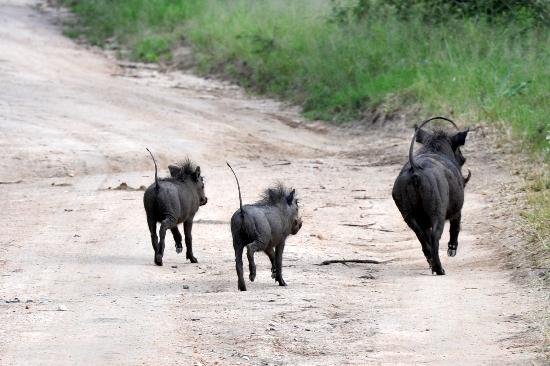
warthog-family

I sit cross-legged on the path and fold Noodle into my lap. A little boy who was stroking her with such a soft touch continues. Two others — younger, toddlers — step closer. One with a mop of curls squats in front of her and stares with the focus of a hypnotist. Unwavering, he peers along the length of her snout and into her steady eyes. She is so still. He ventures a touch, two fingers on the side of her head. She barely blinks. He steps closer and touches her flank. “Ga-ggie,” he says.

“Yes,” his dad smiles. “She’s a nice doggie.”

This is enough for the small one. He steps back and considers Noodle from a safe distance. His brother keeps that rhythm along her back, as regular as a metronome, as soothing as surf. Noodle’s fur drifts and settles, blanketing my black work trousers. She shifts ever so slightly and surrenders her weight to my belly. I feel her exhale. The third boy — another toddler — stands at his daddy’s shin. He grins and squeals then shoves a finger up his nose.

Behind me, Bug snaps off his rollerblades and tosses his helmet in the grass. I hear a basketball. Voices.

It is nearing dusk. Neighborhood moms call to summon their stray men home for dinner. I dump Noodle back onto the trail. She gives passive resistance a shot but her dead weight is more pliable than she thinks. Soon she falls into step beside me.

Bug is trotting around the blacktop in his socks, his blonde surfer hair flopping. Another boy passes him a basketball and Bug shoots then passes it back. I circle the park a few times watching while the boy’s dad stands and texts from center court. The duo abandons the game and strolls back and forth across the pavement. Bug trails a long stick. His companion holds the ball tucked beneath his arm. Their heads are bent together in a conspiracy of murmurs. They walk the length of the court at least six times over, six times back.

“Hey you,” I call. Noodle and I cut across the grass. Bug scratches his pooch under her chin and shoves his feet back into his skates. I chat with dad and boy. I’ve never seen them here before, although they live a block over from us. We talk schools and child care and pizza. Tomorrow, they kick off a week-long hiking trip in the Monongahela National Forest.

“I’m going to play on the playground equipment,” Bug says, rolling away. I love that he calls it that. Playground equipment. “Okay,” I shout after him. “But not in your blades.”

“I’ll take them off,” he hollers back. When the dad and I make our way over, I see helmet, wrist guards, socks, and wheels lying in a heap at the bottom of the slide. Bug is up high, straddling the outside of a suspended tunnel. His buddy is swinging from a bar. A third has joined them, a preschooler.

The small one points to Noodle. “Is she curly too?” He asks.

“Curly?”

“Yeah,” he poofs his arms around him. “Fluffy. Like that.”

I shrug. “She sure sheds a lot. You know how I know when she’s been sneaking up on the couch?”

Bug grins from his perch. “She can’t fool us!” He cries.

“She’s tricky,” I shake my head in disapproval and glare at Noodle who is straining, straining to play with the kids. “Fur all over the sofa!”

The preschooler stomps a foot. “My bro-zher is the smartest of all!” He declares.

“Are you sure? I think you’re the smartest of all.”

“No my bro-zer is! He teached me math. See?” He holds up two fingers on one hand and two on the other. “One -two-free-four.

Bug is swaying way up high. “Do you know how to do squares? You know the square root of 100 is 10?”

The one from the basketball court swings then plants his feet. “I can divide.”

Then it’s time to go home. A mom collects her mini math whiz. Hiker dad answers a text from home. “Dinnertime, buddy,” he says. He and his boy wander off in the direction of the townhouses. Bug clambers down and slips mulched socks over filthy feet. Buckles, helmet, wrist guards, off we go. Noodle trots along beside us.

“So that boy goes to your school, huh? Did you know him from school?”

“No,” Bug says. “He’s in first grade.”

“You just met him today?”

“Yeah.”

I picture them again, whispering as they strode off together like they’d been buddies since kindergarten.

“You know what? That’s a really cool talent,” I say. “You find friends everywhere you go.”

Bug shrugs but I see he’s sort of smiling.

What a marvel.

To my right, this clickety-rolling kiddo who enters every setting as if the place has been waiting for him to arrive. He strikes up a conversation. He jump-starts a game. He conjures up companions, assuming friendship is a given.

To my left, Noodle the Wonder Dog, a magnet for toddlers ready to face their fears. A touchstone for kids who still believe that contact with a fellow earthling is the high point of any day.

And me in the middle, a mama leading this bold pack out into the world.

This force, small yet mighty.

My family.
 

.


Growing Up, Poetry, Things I Can

75. Things I Can Lay Down: A Nest under Sky

From the dining table of a rich absent landlord,
from a rooftop tilting over
screaming streets,
from the hide of a man
whose soft fangs belie
battles he claims
as the source of his scars,
I plucked splinters
and locks of discarded hair.

I was ravenous
even for hollow breath
echoing against a bare wooden
belly. Strings cut flesh to callous
and every song clanged
like paper against my hunger.
I tried to pry frets
from the neck. I tried to harvest
spider legs.

A sign was necessary. A silver
ring or maybe a strip
of fur curling on the tip
of a thorn. I walked
not away. Something else.
Out.

Towards.

Under
a canopy of sumac, bent like a crooked
house, I passed
through to the first division
and pressed petals
back into their seed.
I swaddled my thighs
in creek water. I bled
into moss.

I lay down a bed like a bow
to the half open moon.
The voice I used to call
up the shape of a home in the sky
Goodnight you moonlight ladies
was the same lunatic jabber
of coyotes coursing through folds
in a mist forever closing
between us.

I wake now to the face of a frozen sun,
my bones young and brittle, hung
with crystal globes and gloved
in frost. I glitter like grass
and shatter in the light. Blowing
out from a depression
in the earth shaped like someone
exhumed,
I catch a full spectrum
of morning

in each one
of my birth’s hundred
billion prisms
every time
I refuse
to die.


Career, Determination, Things I Can

74. Things I Can Backstop: On-the-Job Training

I think breakthroughs come from putting an inordinate amount of pressure on yourself and seeing what you can take, and hoping that you grow some new muscles. It’s not really that mystical.

Ta-Nehisi Coates in The Atlantic Monthly
 
 
When my two star students poked their heads in my door four years ago, I bit back the “no.” Their half-apology for just a few minutes had a red flag flapping over it. They wanted something big. Bigger than anything in my job description.

“A graduate student research conference,” they said. “Students run it. Students present. Faculty moderate the panels.”

Students? Faculty? I wouldn’t trust them with a bake sale. Please. Leave the administering to the administrators.

But I turned from my other work. “Come on in,” I said. “Tell me more.”

So they did. They talked about networking and research collaborations, about presentation practice and scholarly community.

I pictured catering orders and room setup, abstract review and program tracks.

The students wanted practical experience in more than just presenting research. This was the toughest part. I could get us from zero to showtime in a snap. Add the task to my list and make it happen. Anyone who manages programs and people knows that an event is an event is an event. Steering committee, marketing, budgets, presenters, tech and space. Hire a wage assistant to make calls and print name badges.

Whatever the substance of the work — in this case, graduate student advising, but it could be affordable housing advocacy or the international association of clown car manufacturers — a thousand details large and small keep the machine chugging (sometimes hacking) along. People like me pull those levers.

People like my students? They get to do cool research and write about it.

In truth, my students’ brains intimidate me a little. These folks are digging into some of the most pressing topics facing our world. Poverty, climate change, security, infrastructure, health care. They conduct research that shapes policies and legislation. As for me? Inside the university, my role is to clear paths. If I can help students through the briar patch of public higher ed bureaucracy with their skin intact, they can get on with their research.

But those two students knew better. Doctoral grads today are stepping off the stage into a 2015 world, and it’s far from Kansas or 1975. The protected academic research-and-teach career has died on the vine. Folks with PhDs today are expected to know how to do things. Like lead people and projects, like find and manage money.

Like organize conferences.

Those two students wanted to do more than show up and present ideas. They wanted to make the thing happen.

We began.

Like parenting, mentoring is agony. Every stage, every step, takes twice as long and breeds three times as many mistakes. A mentor has to will herself to sit back and let meetings unfold through hours of jumbled conversation that could easily find resolution with a few simple facilitation tricks. A mentor must step with care through one-on-one conversations to offer opportunities for reflection. Mentoring requires pointing people in the direction of resources and contacts, and letting them seek out the tools they need. Like a parent, a mentor must stand at attention behind the curtain, poised to pull the nose up if the machine takes a dive.

I did my part so they could do theirs. The students ran that first conference, and they were giddy with pride. Emerging scholars traveled from around the region and country, and the event exceeded every one of its aspirations.

Then next year, two new students showed up at my office.

And the next.

Every year for four years, I bit back the “no.” I fought through weariness and overcame painful resistance to the colossal undertaking that has yet to appear on my job description. Every year for four years, I faced a fresh opportunity to hone my mentoring skills.

Every year for four years, I sat in on panel discussion and listened as new scholars shared research and ideas on everything from labor policy to gender violence. I watched my students shine as they handed out awards and tallied the number of attendees.

The conference grew. A major TV news personality gave a keynote. A student joined us from Japan. The organizers got hold of funding from other parts of the university. They joined forces with a larger student organization to pool talent and resources. Last year, they reached out to a major international policy association to find out about partnering on the conference. The association sent a representative to spend the day shaking hands and taking measure.

Then the big national association decides they want in.

And the world bucks under my students’ feet.

Four weeks ago.

They show up at my door.

“Help,” they say. “What does this letter mean?”

A fait accompli. The national association lays out a plan for a regional graduate student conference. It will be a consortium event with nine participating schools.

I read and re-read the letter. The phrase hostile takeover hisses through my brain. I look at their baffled faces. I look at the 472 other items in my inbox that are far more pressing than this.

I bite back the “no.”

I turn from my other work. “Come on in,” I say. “Let’s sit down.”

We do. I take a breath, rub my face, then begin.

“Okay,” I say. “What matters most?” I apply facilitation and advising techniques. I guide them through their complex and understandably histrionic responses. I help them hatch a plan of action. I sift around in myself for some kind of map, knowing that from my perch behind the curtain, what matters most is reflective practice. These students have before them a chance to manage conflict and lead change with strategic and effective dexterity.

I have before me a chance to help my students learn how to pull the levers. And how hard. And which way.

In the four weeks between that letter and the association’s big conference call, the students come by. They poke their heads in. Individually. Pairs and trios. They hover around the door. They want more.

I don’t have time for this crap. We’ve talked, we only know what we know, we’ll deal with it on the day of the call. I bite so hard against the “no” that I nearly split my tongue.

“Come on in,” I say. “What do you need?”

An ear, a sounding board, an easy out?

A firm grip? A soft word?

A hand?

“Enter that call like you’re sitting at the head of the table,” I say.

“Do your research,” I say. “How can you find the budget and planning models for the other two regional conferences?”

“What matters most to you?” I say.

“Write it down,” I say.

The day of the call, four of them come. We take over a room. They take over the call. The nine other people on it — faculty and administrators from both the national association and seven regional universities — wake right up when these students chime in. With force I’ve never heard in those emerging voices, the students lean in and articulate a clear vision. They name their questions as opportunities.

I sit back and watch it unfold.

The students have swagger and expertise. Halfway in, the faculty and administrators are directing all inquiries to them.

Somehow, the students claim every part of the shiny new regional conference they’d chosen to keep, and delegate every part of it they’d chosen to surrender.

At the end of the hour, folks on the call begin talking RFPs and laying out a timeline. One of the students interrupts. “I want to say how important it is to have students involved in the planning.”

Isn’t this a given? Apparently not. The nine other people on the call marvel and fumble.

“You mean on the steering committee?” someone asks.

“Sure,” I say.

“So, you mean students will be the ones voting on things? Actually planning everything?”

“Yes,” I say. I glance around the table. Four students are rolling their eyes and suppressing giggles.

“You feel comfortable leaving budget decisions in the hands of students?

To my left, one shoves an invisible gun in his mouth and pulls the trigger. Everyone else chokes back laughter.

“Look,” I say, leaning into speaker. “Students have built this thing and led this thing for four years on their own. All I’ve done is sign the forms. They are responsible and capable. I trust them completely.”

Silence on the phone. Beaming faces around the table. I take the advantage. “The thing is, our students need this experience. Academics, professionals, whatever they do after they leave school. This conference is supposed to be a learning experience. I figure, let them learn all of it.”

What I really want to say is Dude. People rise to the expectations you hold out for them. How high are you willing to go?

The grudging decision is to let each school figure out for itself who will represent it on the conference planning committee. We all know who will sit at the head of the table here.

And because no one is going to ask me, I can give my “no” a rest.

But only for a minute.

Because it’s clear that word is missing from my job description.
 

Choices, Things I Can

73. Things I Can Outlast: The Muzak

I do indeed want to receive the same high quality service you are currently providing other customers. Yes, I will continue to hold, thank you for asking so nicely. A wait time of greater than seven minutes is completely manageable.

Please don’t worry. I’ll stay right here on the line.

As you experience high call volume, I am enjoying the pleasant anticipation of severing any need for future attention from your eager representatives.

I do appreciate the musical distraction you’ve generously supplied. A goat hamstrung in the soundboard of a baby grand is fine accompaniment this evening.

I have 26 days remaining on my car registration. Please, take your time. Continue reading “73. Things I Can Outlast: The Muzak”

Poetry, Things I Can

71. Things I Can Let Be: Spider Brother

Fine as needles and just as quick.
But for the ants, the broom,
I say, yet the company is welcome
such as it is. A beating heart
of any size, really.

Silence outmanned Eros
and he left for the second time
today. The dog paws at the patio door,
bends her head
and tries to peel back
with her teeth the intractable pane
on which a cousin clings.
This one is fatter by degrees,
brown as the wilting marigold
stems where it tatted lace
bedclothes and sampled
from the all-you-can-eat breakfast buffet
mosquitoes, midges, mites.
To the dog, this one is meat.

She eschews shadows
inside where domestic kin live,
whole families of them,
behind the woodpile, under the toy bin,
tucked below the lip
of the bathroom cabinet
where my bare toes
trouble their determined stillness.

She pivots and tries again to press
through glass. I understand
this fascination with the promise
waiting outside, even if that promise
has better things to do
than wait
or be a promise
at all.
 

Fitness, Things I Can

70. Things I Can See: Her Beat, Mine

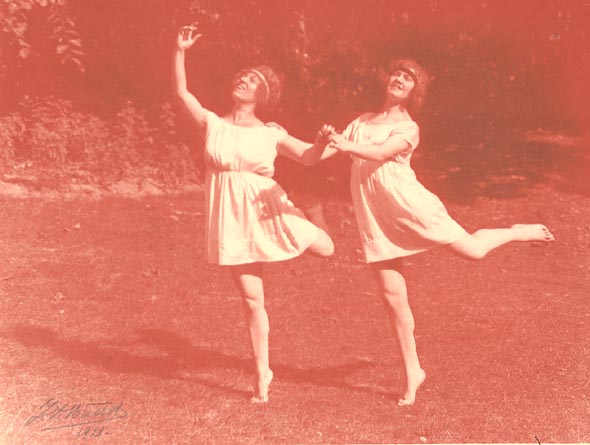
Two Women Dance

The girl who drove the Volkswagen bus plastered in Dead stickers fell off the face of the earth after graduation. West is what I heard. Community bordering on cult, new name. I pictured her in a homespun dress drawing water from the well for backwoods apostles.

She popped up on Facebook — as we all do — 25 years later. No bonnet, no copper kettle. Her profile shot is blazing female Gumby, bronzed flesh arched in a yoga bridge against the setting sun. The other photos are strappy heels, flashing sequins, rhumba beats and a man in a fedora testing the limits of her psoas muscle by pressing her stretched leg flat against his chest before dropping her into a dip.

Continue reading “70. Things I Can See: Her Beat, Mine”