Family, Learning, Parenting, Relationships

He is of Us, as am I

turkus mother son

. . . a discouraged child tends to focus increasingly on her anxious desire to fit in and quickly loses sight of the needs of others in the family.  Children are always trying to improve their sense of securely belonging as valuable members of the group, and they fear losing that connection.  Therefore, the more the child’s discouragement deepens, the less capable she feels of interacting with others in useful ways.  Instead, she is more likely to resort to misbehavior to connect inappropriately, to feel negatively powerful, and finally to gain at least a perverse sense of respect before giving up when her attempts fail.


– Linda Jessup and Emory Luce Baldwin, Parenting with Courage and Uncommon Sense

My boy has been back with me for a week.  During that time, I have not screamed once.   I have not stormed out to cool down.  We have been on time for camp drop off every morning without a fight.  Bug has gotten himself out of the bath, teeth brushed, and into bed before 9:00 every night without me raising my voice or lifting a finger.

On July 7, I made a commitment to heal our family.  This is a tall order.  A family is more than just one mom and it would seem that one mom alone can’t overhaul a whole family culture.  Each of us can only control ourselves.  As it turns out, this may be the concept that brings the most significant change to our family.

When children are very small and dependent on us, we can haul them out of troubling situations and put them in their cribs at specified times.  We can decide what food is in front of them.  As they get older, this control shifts.  They fight their own playground battles.  They can get up out of bed and turn the light back on.  They can snub dinner and sneak treats from the fridge behind our backs.

A parent cannot control a child.  Control is an illusion.  Dominance as a method of control is an illusion. A parent can withhold, wheedle, punish, threaten, bribe, and ignore, but even with these dangerous tools, a parent cannot control a child.

What a parent can do is model healthy choices and guide a child to build the capacity to navigate the world.

I made a commitment to learn whatever I could to strengthen our family.  The past few weeks, I have planted this commitment into the center of my days.  Between reading and journaling to reflect on the approaches I’ve taken (and might like to try), I’ve immersed myself in a 16-hour Parenting Encouragement Program class.  The process has been intense and even transformative.  That word that usually makes me roll my eyes, but in this case, “transformation” about captures what’s happening here.

My son comes off the day camp bus in a foul mood and immediately lays into me for some perceived slight, like asking him to please hand me the tablet so I can charge it.  He is furious, steaming, telling me he hates me.  These are his steps in our standard friction-filled dance, one we’ve been perfecting for years.

Now, I choose a different dance, one that improvises and responds.  First I catch my breath.  No reaction.  I ask myself quietly to note that Bug’s behavior is a textbook version of discouragement, that he is actually seeking connection and a sense of belonging through a mistaken goal of taking revenge on me.

A parent cannot control a child.  A parent can only control her own choices.

I choose my words with care.  “It seems like something is really bothering you.  I’m sorry it’s hard.  Remember that it’s not okay to call me names or hurt me.  When you are ready to talk about what’s bothering you in a less hurtful way, I am here to listen.”

He continues to simmer and spit but it’s cooling down.  I sit quietly and breathe, remembering that my son is a creative child, he’s bright and resourceful.  That he is learning, as I am.  Even in my silence, I keep my mind on the goal of encouraging him and helping him feel connected and capable.

After a little while, after we’ve moved on to the next phase of our evening, he quietly — almost distractedly — says, “You should write a bad review of that camp.”

“Really?” I say, just as casually.  “And what would I write in this review?”

Then he opens like the sky.  Something happened this morning at the high ropes course.  A misunderstanding, a punishment he felt was unfair.  We talk it through and I match his tone.  Attentive but calm, like this is any old conversation on any old day, not a huge issue.  I do not come up with a list of solutions or reprimand him for what most likely stemmed from his failure to listen to instructions.  I reflect back what I’ve heard and capture what his feelings might have been about this.  Finally, I say, “Would you like to think through what you could do if this happens again?  Or to keep something like it from happening next time?”

Bug shrugs and says “maybe,” then turns to his crafts.  He’s had enough for now.  Enough is fine.  Enough is miles ahead of where we were a month ago.  Enough is a victory.  When and if he does want to tackle the issue, I’ll be ready to help him tap his courage and find his way.

I can only control myself.  The choices I make contain the threads that stitch together this family.  When Bug and I were stumbling through our difficult 9-day stay-cation together in June, this was my commitment:

I am determined to sustain a creative, positive planning attitude for the duration of this stay-cation with my son.  This means I am equally determined to postpone any self-improvement initiative that might divert energy from our formidable endeavor.

Now I see that these two journeys — family health and personal well-being — are part of the same whole.  Indeed, they turn on the same axis.  The more skillful a parent I become, the more loving our relationship, the more encouraged my son, and the more nourishing our home.  From this place, we all grow.  In this place, we thrive.


Image: Pristine Cartera Turkus, “Mother & Child”

Family, Learning, Parenting

Nine Days

Those of us who experience ugliness in our family dynamics often prefer to remain concealed. There is less shame when one stays underground.


– Tracey Watts, “The Explosive Child” in Brain, Child Magazine

In two months, the school year ends. I’ve scheduled the vacation from work. I’ve cancelled the trip to Myrtle Beach. My son and I will have nine uninterrupted days together.

This is a luxury. Most working parents crave time like this, time with our over-scheduled and growing-too-fast kids. Be grateful, Smirk.

Gratitude yes, it is here. It just happens to be mixed with a shot of dread. I am mystified about how to make the nine days anything but miserable for us both.

How many parents are sitting on a locked vault of tangled up feelings? It can’t just be me.

(Maybe it is just me.)

I’m not very skilled as a parent. Loving, sure. Dedicated and creative and willing to learn. But bumbling, too. Perplexed. The issues that arise are rarely what I predict and never what I’m prepared to face. My responses miss the mark. I careen around our home, swinging between tight-lipped and screeching, in the face of my boy’s constantly shifting needs.

The loving bond that grows dense and loose in my friends’ families is, in ours, a stunted thing. At the end of our weeknights together, when Bug finally stops arguing about homework, bath time, and how many chapters we’re reading, when he finally conks out, I’m sapped. The thought of facing a mere weekend together wears me out.

Nine days?

The thing is, I’m willing to learn. I’ll eagerly dedicate these next two months to preparing for those nine days. My son is nearing tween-hood.  This may be our last best chance to cultivate the trust and connection that he’ll need as he slogs through the tar pit of adolescence. I have a stack of books. And blogs. And habits to practice both in anticipation of what might come and in response to what does. When I turn to it and start learning, it all makes sense. The way forward is clear.

Then almost as soon as it appears, that clarity begins to blur. In creep the other responsibilities. Up goes the volume on their demands. The fact is, only so much of the strife in our home is a result of “parenting” as some discrete set of techniques. Of our troubles, far more than I’d like to admit, arise from me.

I live 23-1/2 of every 24 hours in a state of low-level panic. A thirty minute cardio high is the only thing that reminds me of the world outside my hall of mirrors.

Unresolved financial concerns haunt me. How can I leverage my skills and energy to move into a higher-paying position? With this question nagging, I push harder at work. I submit a conference proposal, step up on a search committee, and get involved in the new DC undergrad internship initiative. None of this I have time for, of course, but I do it because I need to ensure that Bug and I stay a few feet back from the financial cliff.

The anemia of my social life concerns me. How can I give Bug a strong community of peers if I don’t build one around us? With this question tugging, I reach out to the people around me. I schedule a walk with a girlfriend, volunteer at the Unitarian church auction night, plan a weekend playdate, and put a potluck on the calendar. None of this I have time for, of course, but I do it because I need to ensure that Bug and I are woven into a rich and supportive community.

The paucity of my creative efforts prick at me.  So, too, the half-assed attempts at mindfulness, the chaotic closets and filthy windows, the short shrift I give to the relationship with my Mister, the public meetings I fail to attend for the condo association and local school board and VDOT as they make decisions that upend the value of my home,  the urgent call to action for racial and economic justice, the runaway bad habits of eating too much and staying up too late that destroy my sleep and mood and ability to manage any of this with grace. . .

Does growing into a better parent begin with focusing on “parenting”?

Or with 10 minutes of morning journaling? Or with a commitment to a professional development plan?

With daily exercise and 8 hours of sleep?

With a counselor?

With breath?

With less?

What heals a frayed bond between a 9-year-old boy and his mama?

We love each other, of course. All of this begins and ends in love. This hard work, these questions about how to proceed, they pull at me to build a home that can be my son’s sanctuary and his launch pad. Every question comes down to love.

In its most active, living form, what does love need? As it tries to push itself up from the root, how do we cultivate it?

This question churns under all the others. Sometimes I forget this simple truth, and the details topple me. That is when I roar until my throat fills with mud, and I am swamped with shame. That is when I want to sink into the earth.

And that is precisely when I most need to remember that my love for my son is under everything. It won’t let me sink. It catches me and helps me find my way back to the surface.

Then I — then we — get to keep on learning.

In two months, my son and I will have nine uninterrupted days together.

I have no idea what to do to prepare.

My son and I have nine uncertain years left together.

I have no idea what to do.

I guess I’ll do it anyway.


Children, Learning, Parenting

Back To Each Other

BlessedNest

Think of your child as a plant who is programmed by nature to grow and blossom. If you see the plant has brown leaves, you consider if maybe it needs more light, more water, more fertilizer. You don’t criticize it and yell at it to straighten up and grow right.

Kids form their view of themselves and the world every day. They need your encouragement to see themselves as good people who are capable of good things. And they need to know you’re on their side. If most of what comes out of your mouth is correction or criticism, they won’t feel good about themselves, and they won’t feel like you’re their ally. You lose your only leverage with them, and they lose something every kid needs: to know they have an adult who thinks the world of them.


– From “Building a Great Relationship with your Child” in Aha! Parenting

On our spring break trip to California, my son rounded up other kids at the hotel pool and played for 4 hours without pause.  At the San Diego Botanical Gardens, he climbed up into tangled two-story treehouse and built a shelter out of balsa wood.  On one bright morning, he hiked with his grandma and me through the hills at Torrey Pines as Pacific tides lapped at the cliffs.

He also fought, screamed, raged, cried, hit, kicked, and hurled insults.  Every single day at every point of conflict, his body went rigid with defiance.  He said hateful things.  He brought his grandmother and cousin to tears.  Me, to worse.

Continue reading “Back To Each Other”

Family, Home, Learning

Boxed Blocks Equinox

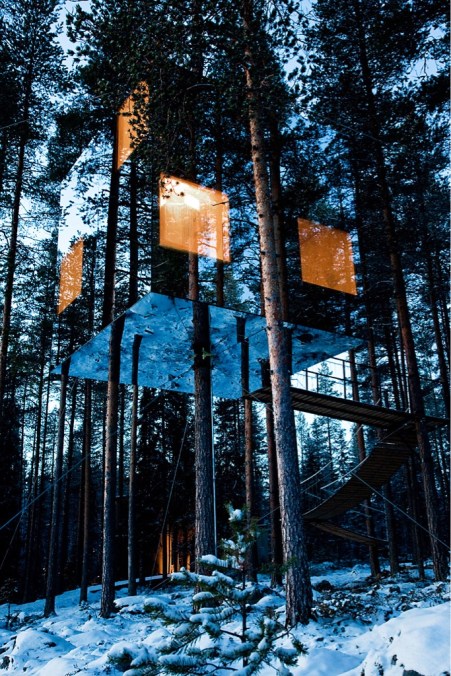
mirror tree house

My boy wants me near.  I want to be near.  The sun is low in the sky. We have come inside.

He taps his pencil against the worksheet. Someone somewhere crafted this shoddy crossword puzzle. Someone believed it to be an adequate stand-in for learning, or at least believed others could be made to believe. This is how we teach the vocabulary of soil.  The Rorschach of blocks (dinosaur? metro map) lacks symmetry. It lacks even the pretense of design.

Wood pulp pressed flat extrudes the texture of earth.  What’s left is surface and the imagined mines we spell ourselves into digging.

We ask so much of our children. Continue reading “Boxed Blocks Equinox”

Career, Change, Learning

Teach As If

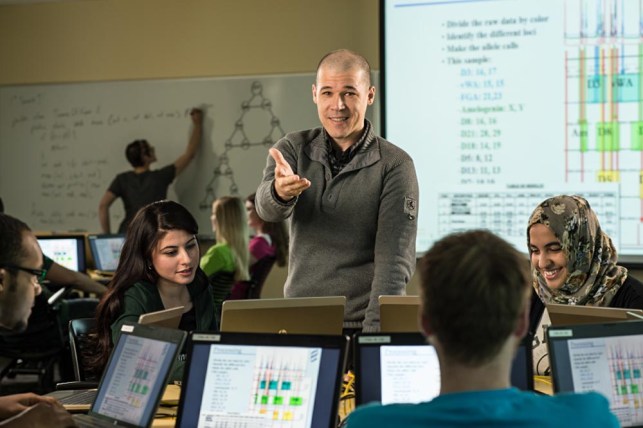
Classroom Active

The path of least resistance and least trouble is a mental rut already made. It requires troublesome work to undertake the alteration of old beliefs.


John Dewey

If only we still believed students were containers. We could pump them full of data and deposit them, ready to perform, on the job market. Our task would be so much easier. We could rely on the old models. We could stand at the front of the class and, through sheer force of will, hold court on subject matter we have mastered.

Sometimes we tell ourselves that because our professors taught us in the traditional models and we managed to learn something, our students should be able to do the same. Even as we try to convince ourselves that we can coast on familiar habits, we know better. We know too many students who have fallen through the cracks. We see students able to perform problem sets but unable to function on a team. We notice how they arriving at the end of a semester having somehow missed the skills they most need to flourish as professionals, creative thinkers, and contributing members of our communities.  Continue reading “Teach As If”

Brain, Choices, Growing Up, Learning

Border Guard

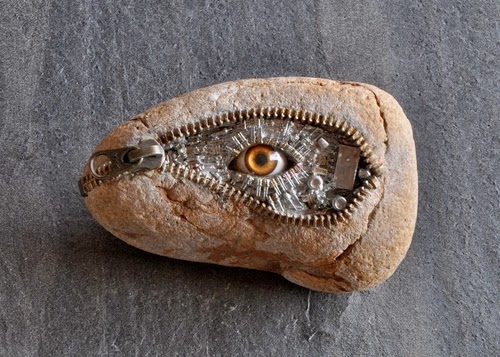
Stone Eye

Suddenly frightened by her hatred, she said to herself: the world is at some sort of border; if it is crossed, everything will turn to madness: people will walk the streets holding forget-me-nots or kill one another on sight. And it will take very little for the glass to overflow, perhaps just one drop: perhaps just one car too many, or one person, or one decibel. There is a certain quantitative border that must not be crossed, yet no one stands guard over it and perhaps no one even realizes that it exists.


 – Milan Kundera, Immortality

Here we must trust ourselves that the weight we feel is real.

Yes, it is only one milligram at a time. The increase is almost imperceptible. Those who want our resource will claim there is no change. They will suggest we are just anxious or imagining things.

When a true accounting gives evidence of the creeping escalation of our burden (and depletion of our stores), they will change course. They will try to convince us that we can handle the accumulation. They will flatter us that we are strong and our capacity is limitless.

Nevertheless, like any vessel, like any ecosystem, we do indeed have a threshold. If demands on our time and attention swell unchecked, the increase will become unbearable. We will have to pay the cost of the load, every pound of it.

So we must stand guard over that quantitative border and measure choice in terms of consequence. We must prepare ourselves for cunning maneuvers and seductive story lines. When we enumerate potential gains and losses, they’ll say that life is random, that we never know how events unfold. Things will change in ways we can’t predict or even imagine, hasn’t it always been so?

This argument is compelling. We’ll rethink history and wonder if perhaps complex forces beyond our control actually got us here. It will start to seem more true than our limited experience, more bearable than our uncomfortable insight. We might let that reasoning turn our focus away from what sits heavy on us.

The idea of unforeseen outcomes is a relief, really, and it will nudge us towards acting on whims and allowing brighter lights to guide us. We want to give ourselves permission to let things “just happen.” It would be unnecessary to identify the source of our unease. We’d be justified in skipping the difficult questions. We’d be free to dispense with complicated endeavors like seeking truth and living with integrity.

We could take a break from sowing discord. We could be agreeable and well-liked.

For these reasons, we are wise to be wary of any implication that our perception is misperception. We have to be suspicious of those who claim our attempts at setting limits are misguided and likely fruitless. We have to ask, How do they benefit when I ignore my instincts?

When I surrender to “fate,” who wins?

Only when we are able to articulate the choices in front of us can we make explicit trade-offs. This requires courage. It needs us to give voice to our intuition even as it is taking shape. With the careful inventory we’ve taken, we can decide what resource to tap and where to yield. We can consider how to fortify our depleted areas before we give over or take on.

But if we let the delusion of unlimited capacity carry us headlong into more, we will find that what we believe to be permanent is actually far from guaranteed. The repo man will come to collect something much more precious than we would have ever parted with by choice. It is up to us to claim the choice at the moment of the exchange or — better yet — well ahead of it.

We have the power to bargain with intention. We can be effective in planting and cultivating what we value most. This is true as long as we retain agency over our body, our time, and our determination of what’s worth saving in this beloved world.


Image credit: Horoshi Ito, I Know You


Learning, Mindfulness, Relationships

Frame

swing dance feet

He walks the dog while I pull on tights and boots. He leads me to the car then drives us through mist and rush hour traffic to a studio were a purple chandelier glitters in greeting.

We stumble through box step and salsa until motion from inside carries us like small waves lapping. Slow, quick quick, slow. His elbow lifts just enough to suggest an invitation. I twirl once around a maypole of light before alighting one beat shy of our next shared step.

The instructor praises us on our gaze. He can’t know our determination to master seeing. We speak across night, three years of two homes, voice as proxy for proximity. When we are together, we sometimes sit near each other and pluck up the threads of formerly disembodied conversation and spin them around the shape of us, looking, looking. We fill our stores with images that will warm us later. These eyes are accustomed to bridging the gap.

On this polished floor, our bodies have a new exchange. Slow, slow, quick quick. While I listen through his skin for the lead, it’s his eyes that signal our direction. These lessons build on a language we already speak. When parted, we fall into step. When still,  we are dancing.


Learning, Poetry

Preparing for Bed

FERGUSON February Snow Compton Downs _1

This is the prying open
This is the aeration
Who said sleep would be painless?
Down here something like earthworms
turn open
settled places
that would
given the choice
compress
to stone.

The merciless law
of this dark place
withholds that choice.
The next seeds
will have their chance
after all.
The soil beneath will churn
like water
like everything else
up there.

But this is winter, you say.
Hibernation? Rest time?
You have been awake
in your dreams
so you know
better. The turning goes on
and on. The surface arcs
in spectral color,
splits along seams
invisible in the dazzle
of daylight.
Detail falls away.
The blind, blunt nose of the soul
comes drilling through
to open a story
in the dense fabric, to force
breath between threads
and tease loose
what holds you
to you.


Image Credit: Andrew Ferguson, “February Snow, Compton Downs from the Ridgeway,” Woodcut.

Career, Determination, Learning, Things I Can

100. Things I Can Captain: This Boat, These Waters

mother child at sea

It’s taken two years to get here. I’ve skirted the edges of this reckoning so long I know every stitch in its hem. Now I sit in front of a screen, a calculator, and a pile of paperwork to ask the question straight out.

Can we make it on my salary?

I asked the same question back in 2012 when the house hunt began. The answer was a definitive “no.” Buying this home was a hard push into a choppy sea. I did the full assessment then and knew that my income would fall short. To cover our expenses over the long haul, I’d need to earn more. Continue reading “100. Things I Can Captain: This Boat, These Waters”