body, Choices, Determination

Free Cookies

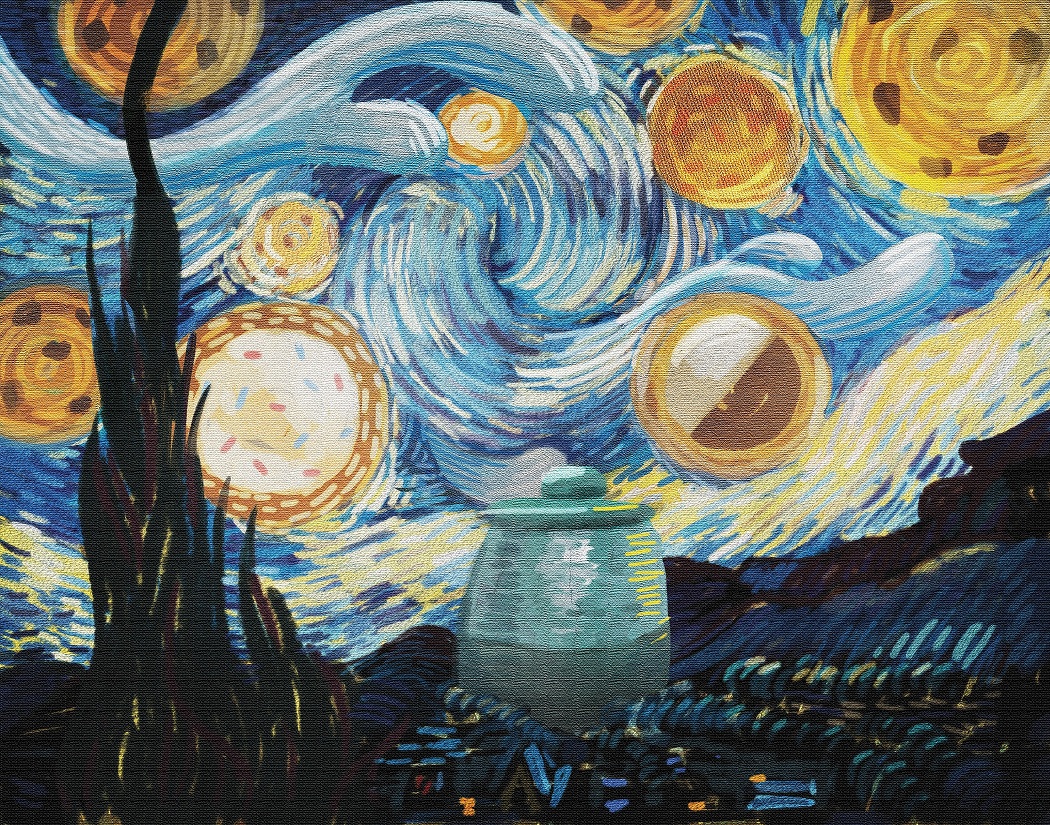
cookie starry night

No more food bans.  I’m finished with their flimsy pretense of protection.  It’s like crawling into a tent to shield yourself from a lightning storm.  You’re as vulnerable as a vole naked in a meadow, but you choose to believe that half millimeter of nylon will hold back the sky.

I’ve banned cookies from my diet for so many years now, I’ve lost count.  Alcohol, just as long.  I’ve tried banning breakfast cereal, meat, and ice cream.  I’ve recently banned wheat.  I say I feel great.  Part of me does.

Meanwhile, the deeper and more integrated me — the me that’s more than parts — recognizes that there’s something seriously nuts about cramming myself into an ever narrowing range of acceptable foods.

Continue reading “Free Cookies”

Children, Choices, Determination, Home, Parenting

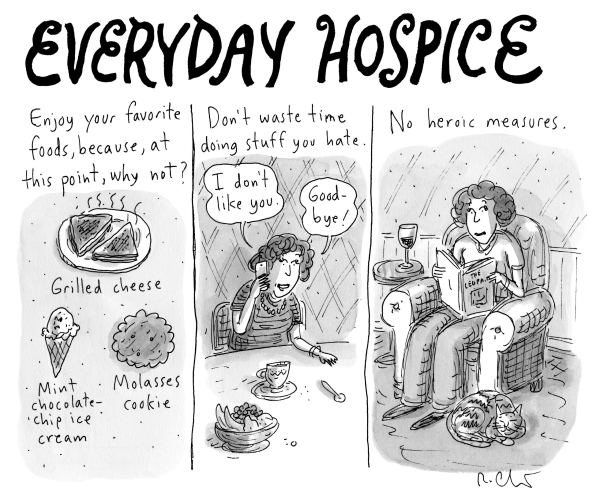
Don’t Waste Time Doing Stuff you Hate

everyday hospice 2

We are at the midpoint of our nine days together.  On the first night, I arranged to pick up my son’s little buddy from down the hall to join us for the free Seldom Scene bluegrass concert at a local park.  Bug snarled and fussed while I packed up watermelon and blankets.  Then at the show, the banjo twanged, the audience swayed.  Bug and his buddy rounded up a half dozen other kids and played soccer in a clearing until the trees twinkled with lightning bugs.  He rode home flushed and grinning.

Yesterday morning, when packing up to go to the Spark!Lab at the Smithsonian, Bug fought until he cried.  Then on the train, he thrummed with questions and leaned forward in his seat peering out the front window down the dark tracks.  At the museum, he spent 2-1/2 solid hours building laser mazes, a sonar rover, a helmet with night vision and echolocation.

Continue reading “Don’t Waste Time Doing Stuff you Hate”

Adventure, Choices, Living in the Moment

Thunder Roll

US - MILITARY - MEMORIAL DAY - ROLLING THUNDER

Blue-white needles frosted with summer rain squat fat and still over the roar.  Every passing growl is a Doppler crescendo lifting away another earthling.   One, maybe two.   Each made the choice to ride.  Every roar for days, hours into night, dawn into searing noon.  The rumble approaches and retreats, again, approaches and retreats, again.  Each one another one.  Each one new.  Each one here, each already gone.

 This freeway usually crouches behind its soft noise, a wash becoming nothing.  Surf without storm, wind over low dunes scoured clean of all breaks.  It fades into air itself, hiding passage in the press of blank white.  Ears become deaf by necessity or maybe laziness here on the other side of the sound wall, deaf to each human pressing on towards the singular objective of a fragment of day.

Now, here, these motorcycles demand attention.  They are designed for notice.  Each growl is a call to the hairs to rise, the jaw to stiffen, voice ready.  Who’s that? What’s there? When is this?

Now, it is now, it grumbles, it rumbles.  Another now, here it comes! There it goes. . .  A neighbor, a choice, a journey, a calling.

 What now?

A pleasure.  A burn.  A rebirth.

Coursing over the tarmac and weaving through white gashes, each in a pair, a pack, a battalion, or one lone rider.  Glove and leather, denim and chrome.  Each thunder roll is a choice to grip between thighs that saddled machine.  To clutch at gears, to stay upright, to cling to blacktop while soaring up, past, through and away.

Who’s that? What’s there?  Time, one moment. 

When is this?  Choice, forward motion, action, revolution.

Drive in, charge in, bite in and swallow the same air that churns out from belly, esophagus, throat, motor, rubber, grease, grit, sky.  The growl is gulp and belch.  It is breath and howl.  This is another man’s life here, passing, gone.  This is another woman’s ascent, crest, recede.  Each a doppelganger in flag starred ink and road scarred steel.

Claim it.

The rumble barks.

Claim you. 

Each single ticking humming second, each imperceptible sweep of the minute hand is one that only goes forward no matter how hard you press against the brakes and crank into reverse the resistant gears.  You can’t erase the odometer, can’t fly backwards down the on-ramp and start again with open road.

You only have this stretch here, the one outside your window behind a spill of ivy and shattered glass, this low sun bleeding over the sound wall and carrying your stunted roar up to smash like shell, yolk, skull, and cry against the day’s vanishing light.


Image: Vladen Antonov, AFP/Getty in Huffington Post from the Memorial Day 2014 Rolling Thunder ride in Washington DC

Brain, Choices, Mindfulness

Positive Account Balance

Annual income twenty pounds, annual expenditure nineteen pounds nineteen and six, result happiness. Annual income twenty pounds, annual expenditure twenty pounds nought and six, result misery.


-Wilkins Micawber in Charles Dickens’ David Copperfield

The last slide on the budget PowerPoint lays out our school’s financial plan:

  • Increase revenue
  • Decrease spending

(Seriously?)

The boss man knows enough to apologize for it but not enough to skip it altogether.  None of us wants to hear it again.  We are familiar with the formula. Every pixel of internet clickbait loops us back around to yet another listicle that peddles yet another version of the same recipe.

Want to get fit?  Exercise more, eat less.

Tackle the day?  Fewer screens, more sleep.

Be a good friend? Listen more, talk less.

A good lover? Less grasp, more give.

Scale it up and the formula breaks down. Good luck giving global overpopulation the “less babies, more birth control” treatment.  Large-scale social problems have to reckon with the complexity of human cultures, histories, and economies.

This is why we love the personal self-improvement principle almost as much as we loathe it.  While its simplicity balms the wounds of chaos, its refusal to acknowledge complexity drives us batty.

Too hooked on your fix? Use less, breathe more.

Struggling with social anxiety or loneliness? Isolate less, connect more.

Stuck in your career? Hide less, lead more.

Anyone who has ever come up against a tough challenge knows that paths are crooked and terrain that at first appeared solid turns to quicksand in a blink.  It’s only when we’re far on the other side of it — or perhaps when we’re judging some other poor sucker’s fight — that we apply the simplicity principle.

I’m not the only one in the room looking at those PowerPoint bullets through rolling eyes.  As if.

As if all our problems could be solved so easily.

But now I wonder.

What if Mr. Micawber is right after all?

Not for everything, but for one thing in particular: when it comes to this life-choking, spirit-sucking, too-many-decades-in-residence depression, what if Mr. Micawber’s formula is exactly the one I’ve never really tried?

More happy, less misery.

Of course it can’t be that easy.  Not for most of us anyway, and definitely not for the hard core clinical pits into which I stumble, body and mind shattered, bruised and slick with mud. . .

Yeah, that’s exactly the kind of metaphor that costs me twenty pounds nought and six.

Happy = revenue.  Misery = expense.

How might this look?  Here’s an example:  When I remember yet again that awful phone call from Friday in which I learned that Bug and I missed an opening from a many-years waitlist for family camp because I called one minute (the registration lady told me) after the last person who got in. . . I say to myself, “Rehashing this makes me sad. I’m going to think about something else now.” Then I cast around for something nice to notice and remind myself that we’re going to have our own adventure this summer, whatever it is.

Or it looks like this: When my kiddo scowls and tells me yet again that he doesn’t love me and in fact I stink like a rotten poop-eating skunk, I consider how much better laughing feels than fussing. I clap my hands in delight and say I love eating rotten poopy skunk carcasses, they’re even better if they’ve been marinated in worm puke. Then we’re giggling and tickling, and our smiles bounce off the walls.

Or it looks like putting on music when I’m home alone and dancing while I do the dishes. Or texting a girlfriend just to say hello. Or carrying colored pencils in my bag so I can doodle while my son carries on with his buddies at a birthday party.

Or just frittering away my time stuck in traffic counting off the day’s 100 blessings.

It looks like noticing when I’ve started to pay the inflated cost of ruminating while missing an opportunity to generate some pleasure revenue.  A person who tends towards depression needs only one thundercloud to knock the account all out of balance again. Building back up from that kind of debt is a wearying toil — an avoidable one, as it may happen.

When I have enough attention to notice, I might choose to forgo the temptation.  Do not overthink, do not give in to self-pity.  Like walking past the Cheetos at the supermarket.  Just don’t.  Sure, those things are familiar but they make me feel disgusting, and really, they don’t even taste that good.

Can it be this stupidly, improbably simple?

Give it a shot, Smirk.

Choose happy whenever possible.  Or colorful, or musical, or goofy. Choose anything that lifts and ignites over anything that weighs and chokes.  Marvel at the beets, smell a bunch of dill.  Imagine what new recipe to make.  Flirt with the butcher.  Hum while trundling down the aisles.  If it increases the happy income, do it.  If it exacts its price in misery, walk on by.

It makes me smile just to begin.

See? Already, I’m saving for happy.

Simple as that.

Brain, Choices, Growing Up, Learning

Border Guard

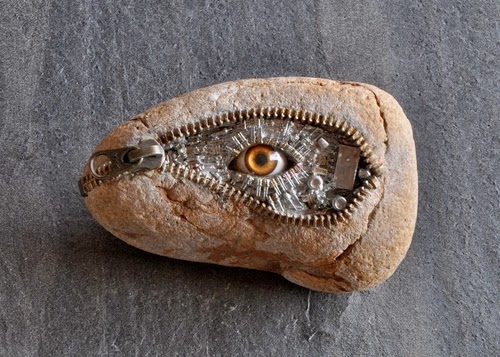
Stone Eye

Suddenly frightened by her hatred, she said to herself: the world is at some sort of border; if it is crossed, everything will turn to madness: people will walk the streets holding forget-me-nots or kill one another on sight. And it will take very little for the glass to overflow, perhaps just one drop: perhaps just one car too many, or one person, or one decibel. There is a certain quantitative border that must not be crossed, yet no one stands guard over it and perhaps no one even realizes that it exists.


 – Milan Kundera, Immortality

Here we must trust ourselves that the weight we feel is real.

Yes, it is only one milligram at a time. The increase is almost imperceptible. Those who want our resource will claim there is no change. They will suggest we are just anxious or imagining things.

When a true accounting gives evidence of the creeping escalation of our burden (and depletion of our stores), they will change course. They will try to convince us that we can handle the accumulation. They will flatter us that we are strong and our capacity is limitless.

Nevertheless, like any vessel, like any ecosystem, we do indeed have a threshold. If demands on our time and attention swell unchecked, the increase will become unbearable. We will have to pay the cost of the load, every pound of it.

So we must stand guard over that quantitative border and measure choice in terms of consequence. We must prepare ourselves for cunning maneuvers and seductive story lines. When we enumerate potential gains and losses, they’ll say that life is random, that we never know how events unfold. Things will change in ways we can’t predict or even imagine, hasn’t it always been so?

This argument is compelling. We’ll rethink history and wonder if perhaps complex forces beyond our control actually got us here. It will start to seem more true than our limited experience, more bearable than our uncomfortable insight. We might let that reasoning turn our focus away from what sits heavy on us.

The idea of unforeseen outcomes is a relief, really, and it will nudge us towards acting on whims and allowing brighter lights to guide us. We want to give ourselves permission to let things “just happen.” It would be unnecessary to identify the source of our unease. We’d be justified in skipping the difficult questions. We’d be free to dispense with complicated endeavors like seeking truth and living with integrity.

We could take a break from sowing discord. We could be agreeable and well-liked.

For these reasons, we are wise to be wary of any implication that our perception is misperception. We have to be suspicious of those who claim our attempts at setting limits are misguided and likely fruitless. We have to ask, How do they benefit when I ignore my instincts?

When I surrender to “fate,” who wins?

Only when we are able to articulate the choices in front of us can we make explicit trade-offs. This requires courage. It needs us to give voice to our intuition even as it is taking shape. With the careful inventory we’ve taken, we can decide what resource to tap and where to yield. We can consider how to fortify our depleted areas before we give over or take on.

But if we let the delusion of unlimited capacity carry us headlong into more, we will find that what we believe to be permanent is actually far from guaranteed. The repo man will come to collect something much more precious than we would have ever parted with by choice. It is up to us to claim the choice at the moment of the exchange or — better yet — well ahead of it.

We have the power to bargain with intention. We can be effective in planting and cultivating what we value most. This is true as long as we retain agency over our body, our time, and our determination of what’s worth saving in this beloved world.


Image credit: Horoshi Ito, I Know You


Choices, Parenting, Purpose

Single Mom Playbook

Stormy Sea

Be a more attentive friend. Make meals at home. Save every penny. Walk. Take the metro. Clip coupons. Go to the gym, to Zumba, to the mountains. Find a group. Be the least awkward. Breathe through the irritation.

Lift weights. Smile at everyone. Ignore the men. Take the pills. Take the vitamins. Go to counseling. Go to church. Bike there. Carpool. Pack water bottle, reusable mug, hand sanitizer, glasses.

Respond without yelling. Appreciate out loud. Remember mom. Remember all the birthdays.

Get to work on time. Stay on task. Buy the groceries on lunch break. Run on lunch break. Walk on lunch break. See friends on lunch break. Take lunch from home. Stay until the last possible minute. Leave with enough time to get to child care. Run for the train. Push through the crowds. Run for the bus. Shake it all off. Greet your child with serenity.

Empty the sink, the dishwasher, the backpack, the laundry basket. Meditate. Pet the dog. Give her a long walk. Look over homework. Manage dinner, shower, teeth, clothes, packing up, settling down. Read to the kid. Watch the clock. Ignore the clock. Speak gently. Breathe. Don’t cry in front of him.

Write in the journal. Post to the blog. Update the resume. Go to a social event. A networking event. A lecture. Take a class. Get a certificate. Learn a new skill. Read something edifying. Plan a party. Be mindful of the guest list. Befriend successful people.

Respond to the emails. Upload the photos. Pay the bills. Track the money. Notice the steady shrinkage. Resolve to create wealth somehow. Rethink the financial plan. Resolve to apply for all the jobs. Try not to notice the absence of jobs.

Speak with positive problem-solving language. Ignore feelings. Schedule a meetup. Wash. Iron. Fold. Put away. Keep the wardrobe up to date. Make a hair appointment. Restock the toilet paper, the dish soap, the dog food, the baking soda. Use less. Shop smart. Read ingredients. Note materials. Consider the planet. Eat vegetarian. Think of landfills. Think of Indian trash-picking children. Do we need it? Can we make it at home? What is a less toxic alternative? What other store sells it? How much? Unit cost?

Feel the pull to be doing anything but this. Ignore the pull. Inhabit the aisle. Save pennies, save packaging, save for college, save the world.

Pay attention to the calendar. Note the upcoming holiday. Figure out summer vacation. Hope the money will come. Map out the weekends. Sign up for after-school activities. Show up for basketball practice, for karate, for games. Pay for all of this.

Make new friends. Remember names. Don’t give male friends the wrong idea. Be kind but not flirtatious. Check the pantie line. Check the body language.

Remove dog hair. Patch worn places. Get another year out of the coat, the shoes, the Goodwill purse. Blow dry. Apply lips, cover blotches, rinse the pits, glow. Count calories, calcium, miles, pounds. Brush, floss. Walk with bold steps. Don’t scowl.

Kiss better. Send sweet notes. Remember to ask questions. Learn the love languages. Appreciate. Communicate. Pause. Give the benefit of the doubt. Speak your truth.

Don’t complain. Don’t gossip. Bear the weight of this list alone. Shut the door when you cry.

Resist the craving. Sleep more. Shut off the phone. Look past magazine covers and success stories and smiling facebook families. Try not to notice the cracks. Avoid schadenfreude.

Learn their secrets. Trust yourself. Live your full life. Don’t measure yourself against them.  Aim high. Simplify. Dream big. Think less. Take account. Shed what you don’t need. Be honest. Know your heroes. Listen to the still, small voice. Follow in the footsteps of great ones. Be yourself. Picture your future self. Know that what you have is enough. Strive. Be quiet. Create. Count blessings. Resist inertia. Meditate. Spark a revolution. Fake it til you make it. Honor your shadow side. Write your own story.

Keep moving. Be here now. Be kind. Be fierce. Be better. Be you. Become someone. Surrender. Fight on.


Image: Joseph Mallord William Turner, 1801, “Dutch Boats in a Gale” (The  Bridgewater Sea Piece) from the National Gallery, UK.

Choices, Poetry, Relationships

Whispering Wild

A boy is digging
his hands down under the surface
following one root
after another to a place
that gives. Finished here, he moves
further down the bed and I follow,
raking the mulch smooth. Except
every stroke combs free
what the boy missed, one green stem
after another gripping hard
to life. I squat and pull
a trowel from my muddy pocket
then cut through, feeling
for a soft joint, a pop. Shoots
thick as fingers, long as limbs.
Down there they go on, snake
through a warren of tunnels,
drawing towards each other
and together, to their source.  Continue reading “Whispering Wild”

Choices, Love, Relationships

Sky’s Limit

There is hardly any activity, any enterprise, which is started with such tremendous hopes and expectations, and yet, which fails so regularly, as love.

Erich Fromm, The Art of Loving

Nowhere in the Odyssey or Iliad will you find the color blue. Homer’s sea was dark as wine, his sky fingered rose. Indeed, the word itself is missing from the whole of ancient Greek.

This defies logic. The vast canopy envelops us in blue. What blindness could obscure those coruscating waves as the bolt of silk billows open to the day? Sapphire, azure, cobalt, cerulean. We see this now and maintain it must always have been so.

But this too: What name was glass when those first Mesopotamian beads fell from the fire? What did we call that handful of thatch when we ventured out from the cave and found ourselves in need of a roof? The people of Atacama never have foggy memories. And you, city dweller, suburban native, may live a whole lifetime without capturing in words the clank and groan of the pumpjack as it drinks up oil from under the broken steppe.

To know a thing is to name it. We describe what becomes familiar as our mind splits it from the mottled everything and our senses fight to trace its shape into being.

When a thing is everywhere it is nowhere. Sky becomes blue when we develop the capacity to make blue and the concurrent desire to trade in it. Indigo velvet, lush royal moire. Now we grind a once exceedingly rare pigment out to its dizzying extremes. Now we call up a spectrum of descriptors for the field across which the sun and stars make their journey.

Indeed, we have dozens of terms where we used to have none. These words pin our eyes to ever-finer slices of hue, and we discern every shade as a distinct and almost solid thing. It is impossible to un-see what’s fixed now on the canvas, so we assume these shades were born with the world.

We believe we name what exists, when really, we birth what we name.

Ask this: what might the sky be without lapis and cornflower? To the ancient Greeks, it could have been a copper valley laced with honeyed streams, or herringbone and almond root, or blood seeping through sheared wool. From dawn to dusk and around again, petal and wing and wine and jewel. The sky holds anything given a name.

But only that, and nothing more.

Now you pull the door closed as you leave.

You take our words, all the ones we’ve only just begun to distill and to weave and — yes, we were almost so bold, we came so close — to conceive.

You, one who was not until he was. In the anonymous swirl, a faceless other. I was as blind to you then as Homer to a 21st century sky. If my language had a word for you at all, it would have been as it is with “bird” until the plangent whipporwill calls down night, with “tree” until sweetgum briars bite tender feet. You were stranger, neighbor, father, man. The general is where things might have remained.

Then I saw you.

I see you.

You are.

Then we have in our hands the material of us, thread and patches, a whalebone form. But what is it? What word do we coin for this new architecture?

Do we even think to ask?

When the sand-burnt debris fell out of the fire, it could have been stone, it could have been trash. Its very existence was determined by the lexicon’s outer limits. Beyond that horizon line, all things embryonic swim in the invisible not-yet.

Until someone picks it up and says, this is something else.

The boundaries shift. The world expands.

Sifting through ash, someone finds it again, shares it, and someone else finds it yet again. They begin to recognize it as an it, to spin it and shape it, and the infant entity takes its place in the vocabulary of civilization.

How many beginnings are discarded or broken, how many — for want of notice — fail to hatch?

How many nameless wonders already walk among us that we are unable to see? What kaleidescopic marvels sing against our blind skin?

We can garnish our curiosity with courage. This ability is our human birthright, and we can let our minds split an almost imperceptible variance from the mottled everything. It is up to us to marshal the tremendous combined force of sense and choice, and to trace the shape into being.

Kinship becomes love when we develop the capacity to make love and the concurrent desire to trade in it.

Love becomes the invention into which we breathe life when we sift it from the ashes and say, this is.

We are.

This is something else.


Choices, Growing Up

Unadorned

window decay

The chance you had is the life you’ve got. You can make complaints about what people, including you, make of their lives after they have got them, and about what people make of other people’s lives, even about your children being gone, but you mustn’t wish for another life. You mustn’t want to be somebody else. What you must do is this: “Rejoice evermore. Pray without ceasing. In every thing give thanks.” I am not all the way capable of so much, but those are the right instructions.

– Wendell Barry, Hannah Coulter

Growing up requires you to let go of seeing things the way you want them to be and seeing them instead as they are. I understand the same rule applies to giving thanks and, as it happens, to rejoicing.


Career, Change, Choices

81. Things I Can Celebrate: Five Years

Anniversary Bed

August 23, 2010: first day on the job. This was another shift in the surge between a tidal wave of beginnings and a fierce undertow of endings. Landing a position at a university — one that had deigned to give me a graduate degree before I took off on a fateful, cross-country marriage odyssey — meant more than compelling work with college students. It meant benefits and a way to rebuild a gutted financial base. At a time when the best I dared hope for was chalk dust, this was gold.

So many things whirled and roiled to push me onto the metro that morning in August. Selling everything, leaving a home in the mountains, separation and divorce, going back to work, single parenthood. . . Every stroke felt like the last one I could possibly take. Then I took another, just as grueling. And another.

I wish I could tell my sisters that the other side of divorce is less of a slog. Isn’t that the line? “It gets easier.” Much like what my boss has been telling me every time the pace picks up at work. “Things will slow down soon.”

Five years, they still only ramp up.
Five years, single motherhood is still a steep ascent.

That said, the frantic anxiety about how to make it all work has quieted. When I press the gas on my work week each Monday morning, my mind leaves much of the domestic uncertainty behind. Eventually, my boy and I did manage to buy a home. We know our neighbors. He is rocking the classroom at school. We have a rhythm to our days, plenty of eggs and veggies in the fridge, a little cash in the college fund, a little more in the 401K. Within the few realms we control, we are doing as well as we can. Truthfully, we are faring far better than I ever imagined.

This relative peace at home allows for full presence at the office. I have attention to tackle the new set of pressures and commitments that greets me each Monday. Change keeps churning, wicked as whitewater. Like many universities, mine is trying to grow its influence under suffocating pressure to shrink its operating budget. Resourcefulness is as important as a bold voice; careful consideration as necessary as high-octane exertion. Most critical of all lately? Blind faith in the germination of sloppily but copiously scattered seeds.

I nourish and water. I pray to an absent god.

At this milestone, I can see and even feel what has broken the surface. Sturdy roots, infant limbs. Promotions and raises, geographic flexibility, new projects. People making decisions include me in conversations about the direction of our school.

All of this has meant growing up hard and fast. Five years is really just a blink. I understand now that maturity — at least “maturity” as it takes shape here at the 40+ year chapter in the story — involves going after more and more of the hardest stuff even when presented with the option to coast. This is a tough lesson to learn and a tougher habit to establish, especially when the young adult tendency is to dabble and blame, to shift responsibility and do a good-enough job. To hold out vague hope for something better down the line.

Growing up means understanding that “down the line” is stamped on the ticket I already bought and the miles I’ve already covered. My choices on Monday morning, on every morning, forge my destination.

I am learning to take on creative and difficult tasks that I’ve long assumed were the domain of people with talents and capacities entirely different from mine. I would sooner imagine myself capable of learning Mandarin than write computer code or keep tabs on a several million dollar research budget. But here I am.

This all comes at a cost, though, and it is a cost I still struggle with accepting. My days increasingly belong to tasks I would rather leave to someone else. The work I most love is crammed into the spaces between. My body is weary, my mind is sapped, and my sense of pleasure in just about everything is so far beyond reach it may as well be dandelion fluff in the last gust of summer.

So I celebrate in the least celebratory way imaginable.

I sleep.

This one weekend on the 5-year anniversary of life catapulting me into a foreign land, I finally let myself rest. Two nights ago, I clocked a solid eight hours. Yesterday, I took two naps. Last night, I managed 10-1/2 hours, and today, another nap. I dream long and luscious stories about dusty road trips and strange mountain men in dapper white suits. I wake up exhausted, walk the dog, and go back to sleep.

Tomorrow is Monday morning and I head back to the office. I’m excited to kick off the next half of this decade refreshed and restored. If the first half has taught me anything, I’ll need all the fuel I can get.