Letting Go, Outdoors, Poetry

The First Walk After Goodbye

pregnant_lightning_bug

The trees are stage set,
a Las Vegas cabaret
on this suburban strip.
Lightning bugs in their drunken throb
dip and tumble
loose as the purple rope
of night falls
open. They couldn’t care less
who lurks here gaping
at their naked hunger.

Oblivious to the shape of you
emptying out of me,
they fill it the way they do
every hollow place, the way light
always does
but for just that blink
no matter how long we want it
bright and no matter how tight
we seal the lid. It goes out
again, a strobe
pulse, a chemical
flash burning to photon
guttering to black
before we can pin it in place
on this map of shadows.

Somehow the flicker
is enough, more
than enough, each firefly’s rutting
insistence a fizz that tickles full
the belly like sky
even with all that air
between each burst of light.


Image: Wolfepaw, “Pregnant Lightning Bug” at Deviant Art

Brain, Choices, Mindfulness

Positive Account Balance

Annual income twenty pounds, annual expenditure nineteen pounds nineteen and six, result happiness. Annual income twenty pounds, annual expenditure twenty pounds nought and six, result misery.


-Wilkins Micawber in Charles Dickens’ David Copperfield

The last slide on the budget PowerPoint lays out our school’s financial plan:

  • Increase revenue
  • Decrease spending

(Seriously?)

The boss man knows enough to apologize for it but not enough to skip it altogether.  None of us wants to hear it again.  We are familiar with the formula. Every pixel of internet clickbait loops us back around to yet another listicle that peddles yet another version of the same recipe.

Want to get fit?  Exercise more, eat less.

Tackle the day?  Fewer screens, more sleep.

Be a good friend? Listen more, talk less.

A good lover? Less grasp, more give.

Scale it up and the formula breaks down. Good luck giving global overpopulation the “less babies, more birth control” treatment.  Large-scale social problems have to reckon with the complexity of human cultures, histories, and economies.

This is why we love the personal self-improvement principle almost as much as we loathe it.  While its simplicity balms the wounds of chaos, its refusal to acknowledge complexity drives us batty.

Too hooked on your fix? Use less, breathe more.

Struggling with social anxiety or loneliness? Isolate less, connect more.

Stuck in your career? Hide less, lead more.

Anyone who has ever come up against a tough challenge knows that paths are crooked and terrain that at first appeared solid turns to quicksand in a blink.  It’s only when we’re far on the other side of it — or perhaps when we’re judging some other poor sucker’s fight — that we apply the simplicity principle.

I’m not the only one in the room looking at those PowerPoint bullets through rolling eyes.  As if.

As if all our problems could be solved so easily.

But now I wonder.

What if Mr. Micawber is right after all?

Not for everything, but for one thing in particular: when it comes to this life-choking, spirit-sucking, too-many-decades-in-residence depression, what if Mr. Micawber’s formula is exactly the one I’ve never really tried?

More happy, less misery.

Of course it can’t be that easy.  Not for most of us anyway, and definitely not for the hard core clinical pits into which I stumble, body and mind shattered, bruised and slick with mud. . .

Yeah, that’s exactly the kind of metaphor that costs me twenty pounds nought and six.

Happy = revenue.  Misery = expense.

How might this look?  Here’s an example:  When I remember yet again that awful phone call from Friday in which I learned that Bug and I missed an opening from a many-years waitlist for family camp because I called one minute (the registration lady told me) after the last person who got in. . . I say to myself, “Rehashing this makes me sad. I’m going to think about something else now.” Then I cast around for something nice to notice and remind myself that we’re going to have our own adventure this summer, whatever it is.

Or it looks like this: When my kiddo scowls and tells me yet again that he doesn’t love me and in fact I stink like a rotten poop-eating skunk, I consider how much better laughing feels than fussing. I clap my hands in delight and say I love eating rotten poopy skunk carcasses, they’re even better if they’ve been marinated in worm puke. Then we’re giggling and tickling, and our smiles bounce off the walls.

Or it looks like putting on music when I’m home alone and dancing while I do the dishes. Or texting a girlfriend just to say hello. Or carrying colored pencils in my bag so I can doodle while my son carries on with his buddies at a birthday party.

Or just frittering away my time stuck in traffic counting off the day’s 100 blessings.

It looks like noticing when I’ve started to pay the inflated cost of ruminating while missing an opportunity to generate some pleasure revenue.  A person who tends towards depression needs only one thundercloud to knock the account all out of balance again. Building back up from that kind of debt is a wearying toil — an avoidable one, as it may happen.

When I have enough attention to notice, I might choose to forgo the temptation.  Do not overthink, do not give in to self-pity.  Like walking past the Cheetos at the supermarket.  Just don’t.  Sure, those things are familiar but they make me feel disgusting, and really, they don’t even taste that good.

Can it be this stupidly, improbably simple?

Give it a shot, Smirk.

Choose happy whenever possible.  Or colorful, or musical, or goofy. Choose anything that lifts and ignites over anything that weighs and chokes.  Marvel at the beets, smell a bunch of dill.  Imagine what new recipe to make.  Flirt with the butcher.  Hum while trundling down the aisles.  If it increases the happy income, do it.  If it exacts its price in misery, walk on by.

It makes me smile just to begin.

See? Already, I’m saving for happy.

Simple as that.


body, Creativity, Living in the Moment

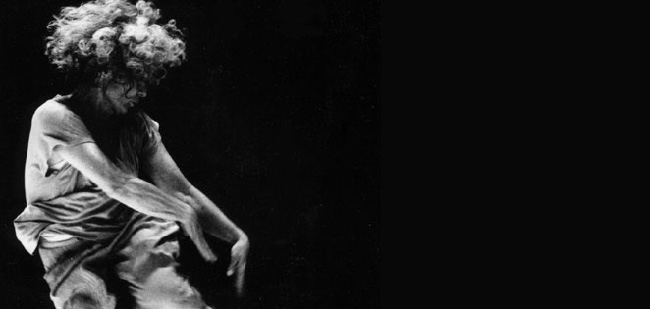
This Dance

Simone Forti

Only after the herd thunders past, then the chewing snapping locust swarm, then the boulder storm, only after all of these have carried themselves off into the collapsing distance does the gesture peek out from its hushed cave.

The ribbon unfurls from my wrist. A glass staircase bears the weight of fear. A feral pup  in its winter wool climbs to the cliff edge and readies its throat.

The wing, first opening, closes.

Opens again.  Continue reading “This Dance”

Growing Up, Mindfulness, Poetry

First Taste

collard greens 2

I tear from their stems
leaves as big as elephant’s ears,
dino kale, mustard, Russian red.
Friends came
bearing this plastic sack of plants.
I hugged close
the friends then lifted out
one giant collard leaf
and pressed it against my cheek.

These succulent greens grew
in a stark suburban yard
stripped bare of topsoil
and shade. It took a few years
and the season’s first frost
to draw sweetness up through veins
threading bitter lamina.

The tough, cold fiber
yields to a tug,
its surprising suppleness
as porous as my own
skin, as ready
to give.

I did not want
to cook something new. Dinner fuels
me, most days that is
enough.
In the pan, oil spits
at the intrusion
of garlic and broth.
The spatula’s flat wooden blade
gilds ashen leaves
and they shine with the sharp scent
of roots, ice, chlorophyll, flame.

The flavor makes my mouth
ache like when I’m close
to crying. I eat
slowly, marveling at how far the comfort
of routine has carried me
from pleasure.

It is wonderful to see you
is what we say. It used to be the other way
when sensation raced
to the side of the bed, bouncing
on its toes,
get up get up, come look.
Taking notice comes first
now. This is the shift
that marks the start
of growing up. We wake
to walls and grab
at threads of hunger,
at any texture that can mimic
or at least stand in
for wonder. We pause
still hoping for a surge
until we surrender and step out
as first light
splits the horizon and say
It is wonderful
to see
you.

We learn to lift
ourselves towards desire. We learn to proceed
with our hands
extended, feeling
through weed and loam, inviting
something to stroke our wrists
and yank us over
into the bright fat flesh
of the world, the place
all around us
where explosions as fleeting
as one leaf
against tongue, skin,
or sky can make us catch our breath
in a thrill of awakening, breaking
us open in gratitude
for a visit
from that part of our heart
that left home
we thought
for good.


community, Friends, Home, Mindfulness

It’s Marvelous to Be Alive in This Time and Place

20151129_154608

It’s worth fighting through the inertia.

True as that may be, my self-pity disagrees. In its defense of digging a deeper rabbit hole, it would rather filibuster than concede. Its zealotry twists the mere suggestion of celebration into an offense against reason.

Birthday? Bah. What would you be celebrating anyway? Your troubled finances? The end of your relationship? The last dozen fights with Bug, an anemic field of job prospects, your dearest friends in crisis?

The silk-throated devil reminds me that I’m stretched too thin as it is. “Tired” is no longer an adequate descriptor for the perpetual state in which I exist. Wouldn’t you rather just rest, read, heal? Wouldn’t your time be better spent re-tooling your resume?

And:

Once you’ve had 40-something of them, birthdays just become days. Throwing yourself a party at this stage is both tacky and desperate.

No parties. No people. No no no.

But also yes. Because every reason to skip out on pleasure is a dolled-up version of submission. In fact, the more convincing the justification for staying low, the more I should suspect — and upend — its dominance. A toxic mood relishes its alpha dog position, growing in power unless I subvert it.

Cognitive Behavioral Therapy has a simple and ingenious approach to this. Just choose the opposite.

To break this feedback loop, we need to engage in a behavior inconsistent to the emotion we’re trying to manage. This is a technique called opposite-to-emotion behavior. To do this, identify the emotion (sadness), identify the mood-dependent behavior (inaction/isolation), then do the opposite of that.


Opposite to Emotion Behavior from Cognitive Behavioral Therapy

A snap, right? Take the stairs. Don the cape. Put a friggin foot on the gas and go. Even when it seems like the most useless act in the world. Especially then.

So, snarling and irate and certain the endeavor will fail, I hurl a few names at Evite.

Fixing a time and place leads to tidying, menus, asking for help. I cobble together activities. I send personal invitations to a new neighbor and to old family friends going through a tough time. My mother gets on board — bless that lady — and then I am dashing around, slapping on lipstick and jamming in earrings as the first guests knock on the door.

20151129_154453

As with so many actions, motion generates momentum. It’s almost irrelevant the direction of travel. Any push will do.

The friends arrive. More follow. They hug and meet and hoot and gossip. They bring wine, sweets, kids, dogs. A few play along with my contrived icebreaker activity, milling around five zones of the house where markers and paper on the wall invite joyful thinking about our community and our time together here.

As with so many choices, intention determines outcome. It’s almost irrelevant the details of the text. Any welcome will do.

Earlier in the day, Tee whisked Bug off to a college basketball game. Halfway through the party, he’s dropping the kiddo off. When half-ass planning this whole shindig, I’d been wearing armor of thorns and stink. My invite list failed to catch half the people I love. I’d also been too tight-hearted to ask Tee if he’d like to come. If I have to throw this stupid party, I don’t want my ex husband here. My birthday. My party.

Mine mine mine.

Then my son walks through the door and the room erupts in a cheer. Bug’s face lights up and he skips into the Studio 54 buzz and music and sparkle. Tee is already backing out, saying good night. “Come in,” I say. “Eat. Have a beer.”

“I’ve got a lot of school work still to do. . .”

I gesture wide. “There’s hot cider, Moroccan veggie stew.”

“Okay, just for a minute.” He steps inside and stays for an hour.

Tee is still there when my loved ones gather in a circle around the room. Everyone speaks out loud their wishes for the year ahead as well as their thanks for the right-here-and-now. My mom. The junior-high pals. The Zumba instructors who’ve become sisters. The new neighbor, the writing group fellow, all these the people who just happen to be my people. Even Tee shares how happy he is that we are parenting together as friends and that our son is thriving. Words upon words brushed with almost-tears and lots of chuckles weave their light web around the room.

Bug and the neighbor’s son, chasing down dogs who are chasing down crumbs, dart through the throng decked out in sunglasses and bandit masks, mercifully demolishing our grownup drift towards solemnity.

20151129_154649

It’s an extraordinary and dizzying experience to stand inside the metaphor of a circle of love manifesting in real life.

That incessant need to be on, to get things right and be just so, has slunk off into some forgotten corner. In my home with these dear ones, I feel at ease. It is as if I really am — for the moment — okay as me. Clumsy, gushing, nerdy, cutting, tempestuous, so-very-lucky me. . . just a gal entering her 43rd year in the happy company of her tribe.

20151129_154523

(And, as I remind several perplexed friends and my son: Yes, a 42nd birthday is the beginning of a 43rd year, because math, people).

As the music starts up again, the circle dissolves and takes on new shapes. Small pockets of conversation dot the room. People who just met giggle like old friends, a baby is passed to a new set of arms, men talk coaching and gals talk travel. Folks who haven’t seen each other in years cover lost ground. The first roots take hold under nascent relationships.

Orientation determines truth. I tilt my head and the whole thing resolves into sharp-edged clarity. Throwing oneself a party is also giving a party. A birthday is just another day, yes. It is also a gift, a perfect excuse to open a door and invite a fledgling community to weave itself into being. This circle is so much more than mine. It holds my son, parents, neighbors, and all the friends who show up with attention, voice, and story.

My girlfriend says that each year is “a free vacation around the sun.” Even so, it can also feel like an extended solo trip. It can take a few revolutions (or a few dozen) before it becomes clear that we have always been in this together.

This time I can see how many are at the helm, how strong the crew, how wide open the skies.


Career, Mindfulness

Leap Frog

leapfrog
The Provost’s office announced it is offering up to half million dollars to a lucky PhD program at our university. My team received the news with a collective wave of nausea. Great prize, slim odds. A seventeen page proposal would be due in less than a month.

We’ve hacked through the dense foliage of earlier iterations of the RFP for three years running, and the only thing to show for our noble effort has been “great language we can use elsewhere.”

We accept the challenge this fourth time. Despite unfilled positions, anemic staff, maternity leave, and faculty stretched to breaking (or maybe because of all these things), we have to try. We tell each other to phone it in because other programs always win anyway. We say it knowing the idea is absurd, knowing we will give it our all. Because this is us, an earnest clutch of A+ students.

Also, $475,000.

My first impulse is approach-avoid this the way I do so many other tasks I despise: evade, excuse, put off, then CRAM. My rather irritating Better Self reminds me that as appealing as procrastination is, a more effective tactic might be to eat the frog. So I carve out half a day from my overtaxed schedule, shove everything else to the side, and start working.

A few hours in, I realize something marvelous.

This is a blast!

How lucky can a girl-writer get? The boss decrees that I ignore all my other business and spend my workday drafting and reworking a writing project — one whose goal is to land cash for my students. It’s a pain in the ass but it’s total flow. Challenge, creativity, reaching past my abilities to generate something meaningful. It’s a test.

A game.

So I play.

Only when I look up at the clock, close out, and plunge back into my burgeoning to-do list does the sickening stink of workplace misery engulf me.

And right there as I descend into the morass, I understand the mistake of my perception.

It’s not the task that sucks.

It’s all the tasks.

It’s the clutter, the questions with their missing answers, the half-complete puzzles waiting for someone else’s missing piece.

The desk-turned-junk drawer.

The “Do you have a quick minute?”

It’s the persistent drumbeat of financial crisis, and the knowledge that piles are growing while help is shrinking.

The hissing awareness that the only way out of a slow but steady downhill career grade is to eject from the vehicle and get behind the wheel of something else going somewhere else.

It’s the anxiety.

I carry the burden of all the tasks all the time, keeping myself frantically aware of everything un-done even while in the midst of doing. The irony? Evidence suggests this is a totally pointless expenditure of effort. All the things I set aside while tackling the Provost Award waited patiently enough. When my attention returned to those tasks, I took care of them just fine.

The world continued to turn. I continued to do my work.

As for the Provost Award? We wrote a fabulous proposal.

Our jobs are tangled up with so much of who we are. Work is values and perceptions. Work is what we believe to be real, and it holds so many of our wishes for ourselves, our families, the world. How is our performance? Are we making a contribution that matters? Can we afford the mortgage or will we find ourselves sick, broke, and homeless? Is there any joy in the work? Are we filling gaps and creating new paths?

Our livelihood is means and end simultaneously, existing in a thicket of uncertainty. Does protecting time for our families threaten our ability to support our families? Are we making a positive impact or making enemies? During the day-to-day minutiae, can we tell if our chosen methods are effective? How, under so much pressure, do we learn to do things differently?

Anxiety grabs all these drifting questions and presses them into one dense, throbbing, mass. What if I’m not good enough? What if I can’t cut it? These __________ (vague but terrible) things will happen to my family and me if I fail.

I can see the bold edges now of the lines that hitch anxiety to controlling behavior. It’s a comforting illusion. If I can clean up this mess or present this shiny object as an example of my capabilities or get this person to fall in line with my clearly superior M.O., then the giant black hole of chaos seems a little less threatening. The world feels safe (for the moment).

The problem, of course, is that this constant vigilance about every possible danger fails to keep that danger at bay. It also makes for a wretched existence, and it turns a person into rather miserable company for everyone in (her) orbit.

Life IS uncertainty and chaos. We know this. I know this.

Every so often, like when an award application turns a bright light on the flaws in my perception, I remember again that only one thing matters: This thing right here.

Like paragraph 3 of the Provost Award. Or composing this outline of a presentation. Or winding my way through one maze of inquiries that leads me to an answer a student needs.

Or sitting in the other room petting the dog while my son turns the kitchen inside-out so he can make his own eggs for dinner.

Or holding still the slack thread between my love and me.

Because I know the reel in my hands is a stage prop, and the only way to capture the shape of my longing is to let go.

When I keep such painstaking track of all things that need doing, and catalog all the possible disastrous outcomes if they are bungled or forgotten, then every single moment of my life is toil. Carrying around all that responsibility means that my feet are too heavy for skipping, my neck to bent for lifting, my eyes too fogged for seeing the wash of morning light on the willow branch across from the bus stop.

The only control I have is to give my full attention to what’s unfolding right here, engaging it as it is and freeing it from all the hooks of what it might cause or become. When I am here, I can do a much better job assessing what is effective. I can sense what brings value to my life and to the lives of the folks around me. When I see how we are faring right here, right now, I can choose my next move.

Keeping my head in the game means admitting it’s only a game.

Choosing a play.

And then leaping in.
 

Home, Mindfulness, Things I Can

94. Things I Can Whisper: Become, Surrender

I do my work. I do my best to make the small decisions well, and I try not to hunger for the great things, for the deeper explanations. For I am sentenced to keep watch over this small patch of earth, to judge its miseries and tell its stories. That’s who I am.

– From The Plague of Doves by Louise Erdrich


Brain, Mindfulness, Things I Can

92. Things I Can Shift: The Focus

Trailhead Road

With respect to learning, the one law that is absolute is that in order to learn we have to attend to what we are learning.

I expected to spend my one free Saturday this month slogging around the greater metro area to test-drive used Civics. Instead, I am flying west towards the Shenandoah mountains with the pooch panting out the back window.

I pass two Mazdas — one a hatchback, one a little Mazda 3 coupe. The tires really are shallow, just like my mechanic said. A Sienna bears down on me so I move over, then a smaller Matrix passes behind. An Accord — probably an 04 or 05 — slides past followed by a late-model Elantra with its sleek body and moonroof, then a Lexus SUV.

I catalog vehicles for a good 15 minutes before I realize what I’m doing. It’s been a week since I signed the check. No need to look out there anymore. My little 2009 Corolla’s new tags are a perfect complement to its azure sheen. Continue reading “92. Things I Can Shift: The Focus”

Brain, Things I Can, Writing

87. Things I Can Exchange: Not for Is

Volunteers in the study were asked to hold a grip sensor as they heard a variety of verbs related to manual actions, like ‘throw’ or ‘scratch’, in different sentence structures. The researchers observed a significant increase in the strength of participants’ grip when words were presented in an affirmative sentence, but no such reaction when the same action words were presented in a negative context, such as ‘don’t throw’.

Writing advice from an unknown source: Replace any negative statement with an affirmative one.

“He does not go” becomes “he stays.”
“The delivery hasn’t shown up” becomes “the package has yet to arrive.”
“I haven’t showered” becomes “I need to shower” or “Let me clean up” or “I’m a fragrant mess.”

It seems simple enough. A game, really. It starts as play then becomes imperative. Then mission. Continue reading “87. Things I Can Exchange: Not for Is”