Family, Friends, Home

For This

Kulturgeschichte / Essen / Belle Epoque

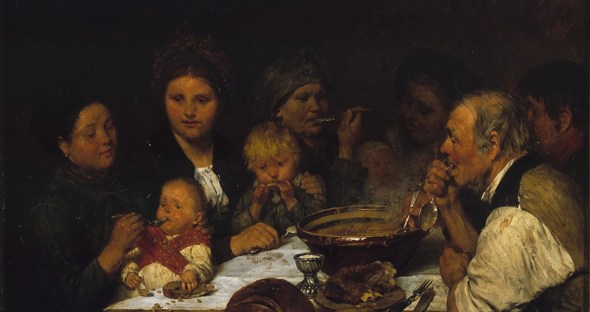
For more than one of the eleven around the table, the year left bruises. For more than one, tears choke the blessing. Words that begin as thanks are threaded with veins of dense and nameless matter.

Loss is a removal that adds weight.

Chuckles accompany each small confession. We are older now. Pleasure hits the tongue in the bitter spots too. Years distill gratitude to its sharpest potency.

We round the corner and my turn is seventh. I say that I most often describe myself as a single mother. I say this is inaccurate because a tribe holds my son and me. We are not doing this on our own, we never have been alone. I say that family is like a story. It ends up looking entirely different than what we expect and somehow ends up looking exactly as it should.


Image credit: Otto Günther, Am Tagelöhnertisch (1875)


Children, Growing Up, Love

Overboard

Slow-Swinging Sea
He stirs as I tiptoe past. It was the quietest of midnight bathroom visits, but sensing proximity, he surfaces. The butterfly nightlight gilds the unfurling comma of his body. He mumbles and I bend down close. Is this just a ripple as he passes beneath or is it a call up to his divemaster in the waking world?

“I had a nightmare.” A moan chokes the almost-whisper, tears bubble under the almost-plea. He asks still sometimes. More frequently now, he turns into himself and finds uneasy comfort in his approaching PCS.

He reaches for me from the small bed we’ve tucked into a nook in my room. For one night, this night, he is here. I must remember what I so easily forget: Tonight is the only night.

The only guarantee is this.

When does it go? Does the wind change, do we get any warning at all? The story has its own arc and rarely does it show mercy to the players.

Our neighbor died last week. Every day, he walked his goofy dog named Mulligan. Every day, he beamed out a smile. So many of us here lock our gazes on the ground as we stride headlong across the face of the day, but he spared a moment for a hello.

We rode the bus together to the metro in the mornings. This summer, along with his tattooed son, intermittent daughter-in-law, and 5-year-old grandson, he went camping in Minnesota. We rode together then too, taking bus to metro, the clan lugging duffel bags and airline tickets. He came back with sunburned cheeks.

The tattooed son walks Mulligan now. He smiles and says hello just like his dad did. Mulligan wags and sniffs and strains at his leash, doing the same.

In the great green room, there was a telephone, and a red balloon.

When was the last time we read aloud the book we used to know by heart? Who can call up the final Sweet Baby James?

Tonight is the only night.

Tomorrow, my boy will sleep in another place. Behind a closed door, in a dorm room, alongside his troubled lover. He will rest on the shore of the cove he’s found following his own songlines. He’ll plunge into caves that crack open in his private sea floor. He’ll battle the Leviathan that has fed on his leaked blood and whispers.

I sit down on the carpet next to him. Our dog is curled into a ball on a tattered wool blanket on the other side of me. She is a soft pulse, a shuddering exhale. I stroke my son’s hair, its tangled gold, its damp heat. He sighs. Then he touches my arm and pulls it down across his middle. Turning, he tucks me in under him, extending my reach, strapping my slender weight across him like a harness. I lay may cheek against the warm place his head left on the pillow. His discarded breath is my oxygen. His scent, my surf.

Soon he is rhythm and release. When his grip relaxes, I plant a kiss his slack cheek then roll away.

It is deep night and I am so very tired.

I fall into the passing current of sleep, drafting in the slipstream of my son’s swift descent.

Image credit: Asleep in the Arms of the Slow-Swinging Sea by Ruby Levick

Children, Creativity

Cornsilk and Cloak

vampire intense
Karate class runs late and we stumble through the door 30 minutes before bedtime. Homework still needs attention, as do dinner and shower and lunches for tomorrow. It is into this briar patch of demands that Bug announces he’s changed his mind.

“I do want to wear a costume to the Monster Bash.” Continue reading “Cornsilk and Cloak”

Choices, Growing Up

Unadorned

window decay

The chance you had is the life you’ve got. You can make complaints about what people, including you, make of their lives after they have got them, and about what people make of other people’s lives, even about your children being gone, but you mustn’t wish for another life. You mustn’t want to be somebody else. What you must do is this: “Rejoice evermore. Pray without ceasing. In every thing give thanks.” I am not all the way capable of so much, but those are the right instructions.

– Wendell Barry, Hannah Coulter

Growing up requires you to let go of seeing things the way you want them to be and seeing them instead as they are. I understand the same rule applies to giving thanks and, as it happens, to rejoicing.


Growing Up, Learning, Things I Can

98. Things I Can Follow: His Opening Play

ice bridge card
Three triangles adorn his shirt, each framing a fairy wizard holding a sword of light. He passes behind the man carrying in a cardboard box of 20 chicken nuggets and a tub of soda. Bellies and waifs, long necks and hoodies, scruff and Adams apples. One wears a cowboy hat, several slouch under baseball caps, one comes banging in through the glass door in a full-length black trench coat.

At first the chatter deafens as it ricochets off linoleum and drywall. Cards are shuffling and chairs are scraping and players peer over shoulders at plastic-sheathed pages in stacks of three-ring binders.

“You don’t want your Shambling to run into a Foul-Tongue.”

“I got a foil ruler. I hope someone finds a way for that card to be good.”

The one with tight curls and meaty limbs is in charge. He strides through the pack, surprisingly nimble for a man so large. His orders boom out and the chatter quiets. “Modern and Standard, you’re at tables 1-12. Your pairings are posted by the thermostat.” A stir, a rush. The rest jostle for space by the door. Backpacks droop from shoulders. Darting eyes, laughing eyes, eyes that focus entirely in the fan of cards in hand. Playing mats unfurl — rubber-backed masterpieces painted with purple volcanoes or lush forests or distant flashing battles.

“Draft, you are at tables 13 up to 25. You have 50 minutes to build a 40-card deck.” Groans, chuckles. They rip open the mylar sleeves, they peer in and assess options. The room is now murmur and hush.

My boy with his surfer hair is focused with an intensity I only see when he’s facing a screen. This child can barely sit still for homework without slumping into an Oscar-worthy posture of exhaustion. Now he is perched on the lip of his chair, silent and poised for action.

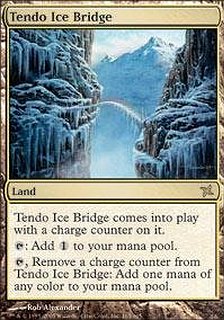
When something is hard, he whines and pouts. “It’s so boring.” Then he gives up. When a new skill is just beyond his reach, he says, “I don’t like it.” Then gives up. The suggestion of a new project — “Hey, let’s go to Michael’s and get that cool glass etching kit we saw at the party!” — leads him first to take measure of the gap between what he knows and the work required. The shortest span is a bridge too far.

He gives up.

Then we are here, and everything I thought I knew about my kid’s relationship with motivation turns inside-out.

An hour passes. Then another 30 minutes. And another.

Bug only just learned about Magic the Gathering from other 8-year-old boys at camp this summer. I bought him his first cards a few weeks ago. He plays a bit with kids at school, but they make up their own game. To do otherwise is daunting. The beginner rule book for simple play contains passages like this:
 

An enchantment represents a stable magical manifestation. This means two things: you can cast one only at the time you could cast a sorcery, and after you cast one, you’ll put it on the table in front of you, near your lands. . . Some enchantments are Auras. An Aura enters the battlefield attached to a permanent and affects that permanent while it’s on the battlefield. If the enchanted permanent leaves the battlefield, the Aura is put into its owner’s graveyard.

These “basic” rules cover 36 pages. The more comprehensive guide runs to 207.

I mill around in the shop next door to the gaming annex. So many people have turned out that they’ve set up yet another long table in the middle of the store. Through their turns, the players mutter and evaluate.

“Demon’s grasp, killed the first three preachers.”

“Amaria? You’re running something new in Modern? I didn’t realize.”

“I ran Squadron Hawk for a while.”

The volume begins to rise. People razz each other, knock back Mountain Dew, stomp in out of the rainy night.

“I have too many spells in my deck!”

“And I’m all like, ‘fuck that guy.'”

“Hey, language!”

“Yeah, language, dude.”

“Sorry. Hey I’m zombie-ing my way out the door.”

It’s nearing 11pm. We’ve been here since 7:20. I walk back into the annex with the firm intention of gathering Bug up and hustling him out. It’s hours past his bedtime, and tomorrow is going to be a battle. He is seated across from a guy that looks like half the engineering undergrads at my university. “I don’t know,” the young man says, spreading his hands wide with a smirk and a shrug. “What are you gonna play?”

“Oh yeah,” laughs Bug. “It’s my turn.”

Next to him, the pink-haired player — one of only three women out of the 70 attendees — glances over and grins at my boy. She is looking up a rule, tracing her chrome-tipped finger across the face of her phone.

Bug slaps a card face-up on the table. He and his opponent lean in to study it. The man rolls a many-sided die and it tumbles across the padded mat.

I take a seat nearby and start sketching in my journal.

Beyond the rudimentary components of the cards and their procedures, the game’s Multiverse involves a level of intricacy that would make Tolkein proud.
 

The Blind Eternities are a chaotic, logic-defying place of quasi-existence filled with raw potential called Æther. Only Planeswalkers can survive there, and only for a limited time. Mortal beings without the Planeswalker spark are soon destroyed by raw entropy and uncontained mana that suffuses the Blind Eternities.

It’s some heady stuff. The minimum recommended age is 13.

Yet here is my boy, just days before his 9th birthday, stepping over the border into this labyrinthine world. He peers out across that canyon between what he knows and the skills required.

He takes its measure.

He decides.

One knot, one board, one play at a time, he begins building his bridge. 

Family, Home, Love, Relationships, Things I Can

96. Things I Can Witness: Sickness, Health

My mother was in a severe car crash yesterday. I say “crash” because of course it was an accident. Also, two drivers slammed their vehicles into each other. Damage and injury ensued. Crash it is.

I learned about this crash from a text. “I’m sorry I won’t be able to walk Noodle today. I’m at the ER waiting for a cat scan.” This is my mom. The request for help is ever-so-gently implied and braces itself for disappointment. Also, she cares always that others are okay. Concern for everyone else gets top billing even when she’s just wobbled out of an ambulance.

I called and texted to dead air. I was already en route (though it was anyone’s guess which hospital), having left a garbled message for my supervisor about missing our afternoon meeting. Then my mother called back.

“I’m mostly okay.

“Is Dad there with you?”

“He’s at a lunch meeting. He said he’ll come when they release me. I just got out of X-ray and now I’m waiting for the scan.”

“So you’re there alone?” I’m already turning off campus and heading north. I have to press because I know she’ll cover for him. It’s a ridiculous charade. Hell, Bug and I were their housemates for three years. She knows and I know that my father puts work first, so I ask again and she half apologizes for him even while pinching her lips at his absence.

“Oh, it’s fine. I was worried my teeth were broken, but it turns out I only had a mouthful of glass.”

We hang up and a few minutes later she pings me back to let me know my dad is out of the meeting and on his way. Sure enough, he arrives before I do, so I turn back and land at my office in time for my boss.

After a diagnosis of bruised ribs, a goose-egg, and random surface havoc, they send her home. When we talk later, Vicodin drags her speech out and she assures me she’s fine. “The shower stung a little.”

“What do you need?”

“Your dad’s here. I had a can of soup. Really. I’m fine.”

I’m sure she is, though I’m less than certain of his capacity to keep her so. She takes very good care of my father. Even around the edges of her own career, she always stocked the fridge and made the vacation plans and supported my sister and me well into our respective adulthoods. She tends to her chaotic extended family, schedules the carpet cleaning and window replacement, and feeds the cat. She keeps everything humming along.

My dad has his own ways of contributing, and I see this a little more clearly now that the fog of my adolescent daddy issues has (mostly) lifted. When my mother’s frustration with her husband’s obliviousness makes her want to explode — she was in Scotland for 2-1/2 weeks and returned to a fridge full of rotten food — she repeats her mantra: “He is a good provider.” Indeed, he is better than anyone I’ve ever known in this regard. He would have made his own daddy proud.

True to the gendered roles of his generation, my father takes care of all the outside chores and most of the structural/mechanical/HVAC aspects of the house. True to the equality rebellion of that generation, my parents work towards their financial and retirement goals together.

It is as surprising as it is obvious that my father would leave off work halfway through the day to care for my mom. In his way, he is her warm (if itchy) blanket. As she convalesces, she’ll have to give him a grocery list and remind him to take out the garbage, and he may forget to follow through on both. Even so, behind her voice on the phone, I hear his. He’s there next to her on the sofa, cracking jokes and laughing with her at Bill Maher.

For most of my life I have run in the opposite direction of my parents’ relationship. I’ve sought out intimacies that were so dissimilar, they may have been a different species altogether. Certainly my marriage was an odd imitation. It outgrew its costume in less than a decade.

The friction my parents generated in the first half of their marriage led to a separation and almost-divorce when I was in my teens. The concessions they both made to repair that rift seemed far too pricey. I have been determined to be more communicative, less gendered, more adaptable, less childish. Along the way, I’ve build expansive and byzantine and ornate and enchanted romances with people who were wildly unsuited to me.

But I have yet to build a home.

And this, I hear through the phone, is where my parents live.

My father is there for her. Sure, this comes after a pause to complete the work which occupies at least 75% of his attention. Nevertheless, he comes. And she asks now for only a smidge more than she ever hopes to receive. Sure, the longing for a more complete union is forever pressing from beneath, stretching taut the skin of her diplomacy. Nevertheless, she accepts what he has to give.

He stayed and worked from the house today. They took a break and he ferried her to the lot where the tow truck stashed her totaled Honda. After emptying the glove box and trunk, they headed back, stopping at the supermarket together to stock up. He will be with her when she starts test-driving new cars. She will be with him when they review their bank accounts to decide what they can afford. He’ll go back to work. She’ll return to her book clubs and volunteer ESL classes and (fingers crossed) walks with Noodle.

For as long as this chapter of their lives together lasts — and we all see with more sharpness today how instantly the book can close — they will be the ones who take care of each other.

Here I sit, quiet and a little stunned in the solitary place that contains the whole of me. It is night here. My son is at his father’s. The dog dozes by screen door. A retreating rain and the thrum of the interstate are the only voices that pass by. They dance at the windows then slip away.

It’s a marvel. Somehow, for all their mistakes and failings, my parents have fashioned a partnership, a love, a home. I pick up some of the discarded garments and turn them over in my hands. Split seams, yes. Stiff stays and rough hems and oversized buttons. Still, they could fit. If I arrange them to my form, if I piece them together with my own tattered wardrobe, I might find they suit me after all.


Children, Family, Learning, Things I Can

80. Things I Can Clear: A Place for Him

Ewe and Lamb

He likes daddy’s house better. “I get to be in the same room,” he says.

I like sleep better. So here, he has his own room. He is almost nine, and still, he begs for me to stay. He pulls me in after books and cuddles, “Just one more hug,” he pleads. “Just one more minute.”

On weekends, he tries all over again. “We can go to sleep in your room tonight, right?”

No. I tell him again, no. Not this night. No every night, two years of no in this house, eight years of no in this life. No, mama needs to sleep alone. No, Mama has trouble resting when she shares the bed. Mama is a monster who trips into a churning, troubled cauldron of demons night after night after night after night. Any chance this mama has of sleeping soundly, she’ll protect with all her might. Even if this means earplugs, eye masks, a bolted door, a lonely son.

No.

Then suddenly, my boy wakes with the dawn and pads into my room. Hair wild and eyes gummed with dreams, he crawls into my bed and folds himself into the warm pocket of comfort around me.

Gangly, humongous, heavy as stones.

A boy? My boy?

I feel the height and weight of him, the crackling and waking up of every surging cell in him.

My boy is finished being small.

Forever.

From here, he only grows up. Out, older, taller, away. He grows into himself.

How much longer will he want to be so close?

How many chances do I have to be his home?

His longing for nighttime company is more than a craving, more than a passing interest. Beyond the clutchy acquisitiveness children have for Pokemon cards and pizza nights and winning at Stratego, this hunger is something deeper. Primal even.

Every time he begs and cries for me, every time in all of his eight years, he is asking to feel bound up in something, to feel tethered to place and kin.

In the purest form of humanness — mammal and existential alike — he needs to be held.

Now, in this quickly closing chapter of his life, I can be the one who holds him. This web I weave around him — alternately flimsy and rugged — tightens into the vault from which he launches the man he will become.

This web I weave around him — alternately capacious and secure — sinters into the vault in which he stores the stars and wounds and whispers that he gathers along the way.

Tonight I decide: We will find a way to climb in close together. Close, so he can worm his way deep into the heart of the comfort he needs. Close, so I can protect my precious sleep and still love my boy the way he wants to be loved.

Tonight, I ask: “Do you want to make a nook in my room?”

He stares, checking my face for tricks. Then his spreads into a grin and he actually shivers with delight.

In record time, he finishes dinner, stacks dishes, helps walk the dog, and lops nearly 20 minutes off bath time. Then we plop ourselves on the floor of my room. The rack of toy bins in the corner needs to go.

“Okay,” he says picking up a matchbox car. “Donate.” He tosses it in a bucket.

“Easter bunny ears?” I ask.

“Trash,” he says.

We go like this. Legos, mardi gras beads, pirate eye patches. Toss, donate, keep. The box of trinkets he wants to hold onto is far emptier than I imagined. The toys are meaningless. What he wants is the absence of them. What he wants is the treasure their departure promises.

By bedtime, we’ve done it all. Vacuumed, dragged in extra mattress, unfurled sheets. He carries in a stack of books to line the windowsill, fetches the lamp with its denim shade. He keeps smiling at me. Smiling and smiling. “It’s so comfortable,” he beams, settling himself into a heap of red and turquoise linens. “Want to come try it?”

I bring my pillow and cuddle up in his nest. We are tucked into an alcove under the window across from where my big-girl bed lives. Bug can look right into Noodle’s crate. A few moments later, she tip-taps in and sniffs around the new setup, talks at us, then heads over and curls into a ball on her blanket.

Bug thrums with sleepy rightness, with a satisfaction rare in his bull-headed, only-child world.

He sighs and rests a damp head on my hip. “Put your arm around me,” he says. “All the way across.” He draws my hand over his chest, slips it into the fold between his torso and the blanket. In my other hand, I hold Cornelia Funke’s Thief Lord and pick up where we left off last night. The conniving Barbarossa has spun backwards on a carousel and toppled out as a toddler, while Scipio — wounded and obstinate — has chosen to careen past adolescence and emerge as a man.

We stumble towards infancy and whatever comes before. We surge towards dying and the end we refuse to imagine. On either side of us, these memories, these wishes, they stretch like corridors lined with swords and feather beds, disappearing into dark. When fortune spits us out against unforgiving walls, when moments choose us before we have a say, we carry our soft landings with us. We bear our own rending.

For our children, we dull what blades we can.

Even when they are certain they are done needing us, we tuck beneath them a pallet of silken rope and down.

We hold them anyway.
 

Image from “The Nursery,” March 1881.


Growing Up, Things I Can, Writing

69. Things I Can Tell Myself: One Small Truth

I am not going to read Jared Diamond’s The World Until Yesterday.

Never mind that he’s on deck for a Monday evening book group at the Unitarian church right up the street. And I have two full weeks until then, which is more than enough time. And it’s an opportunity to talk ideas and raw human family concerns with like-minded, world-eyed liberals right here in my community.

And that I want more than anything to disrupt this aching lonely purposeless robotic toil-consume-pick up-drop off-sort-pay-do-it-all-again-tomorrow middle aged existence by weaving myself into a project bigger than me, and attending this group is one simple step towards a richer life.

Because that’s a lie.

I want other things. This I want, yes, but only as much as other things, not more than. Maybe even less than, if I’m really honest.

My 7am Zumba is a few notches higher. That’s why, instead of reading past 11pm, I turn off the light and quiet myself down.

Also higher on the list? Long, meandering walks through the neighborhood with Noodle.

Making my own hummus from scratch is up there too.

Drawing crayon doodles on the envelopes into which I fold letters to Bug at camp. And scritch-scratching in my journal. And tip-tapping here: All higher.

Also whirling through loops and riding over soft plateaus in nighttime phone conversations with My Mister. And deadheading the basil. And transplanting the peppers. And mining the deep vein of creativity when the tough tasks come calling during my 8 hours.

Lunchtime yoga. That’s higher too.

If I really want that book club and the currency I imagine it carries — I mean, if I really want it — the choice is simple. Kick Jared Diamond up to the top of the list. Let something further down fall off.

And here I am, standing at the local library about to wave my key-card under the scanner. I look at what I’ve got. An Alice Munro collection of short stories, a thin volume of poetry exercises, a Stewart O’Nan novel called Last Night at the Lobster.

And Jared Diamond.

I think, What would it hurt to just take him home? Maybe if he’s there on the bedside table, I’ll pick him up. He might enthrall me. Just imagine how edifying, how engaging that discussion group! Fourteen days? No problem.

But why do this to myself?

Why this relentless work to repair, mutate, improve?

(Or prove?)

Somehow, I still fear the call chorusing through me is a siren’s song. The desire I drive so hard to override must be Peter Pan at the window, stunted id and stars for eyes.

Somehow, I am still trying to get this growing-up thing right. And still doubting that the woman right here in this skin is actually enough.

You do not have to be good.
You do not have to walk on your knees
For a hundred miles through the desert, repenting.
You only have to let the soft animal of your body
love what it loves.
Tell me about your despair, yours, and I will tell you mine.
Meanwhile the world goes on.

from Mary Oliver’s “Wild Geese”

I’ll do better (because doing better seems to be so damned important) if Jared Diamond makes his 512-page case somewhere other than my bedroom. I set his down on the re-shelf cart.

The moment I do, two quick but powerful currents rush past from opposite directions. The first says, Rock on, Girl! You’re free of that pointless assignment!

The second one is harder to decipher, but I still manage to catch its gist. It says, There goes another chance to be a person of substance. Have fun playing in the shallows, my friend.

And because my father earned a PhD, lists dozens upon dozens of publications on his CV, and spends a good chunk of his weekends reading not only the entirety of the Washington Post but a good portion of the works of nonfiction reviewed in its “Book World” — because of all of this, I am forever falling short of the mark.

That mark written on the bones of ghosts.

That mark mapped in disappearing ink.

I beep through the library checkout with only poetry, short stories, and a novel. As I do, I take a deep breath and tell myself the true small truth. This one has nothing to do with Jared Diamond.

It is this:

I will never be my father.

The heart shivers, resists, cries out for the comforting lie.

Then lets go.

I carry home my works of fiction and image. I walk my dog, slice peaches and cherries, talk on the phone with My Mister, then come here to write.

Fiction. Image.

Lyric. Story.

(So much closer to nonfiction than anyone let on.)

Something alights outside my bedroom window. It calls softly.

This song, I’m learning.

This song, mine.


Children, Growing Up, Things I Can

60. Things I Can Give Up: My Claim of Ownership

inline jump

He fits into my rollerblades now. It’s true that this actually happens. A moment comes when an eight-year-old kid zips off in his mama’s grownup skates. Then the moment goes racing off along with him.

Given the origin of these blades, it’s disingenuous to say I’m giving up my claim. The title was hardly mine. I swiped them from my own mother a decade ago, so it’s fitting (pun intended) that my kid wears them now. We’ve just transferred custody. No doubt this is a temporary arrangement until my kiddo outgrows them.

Which he will.

Because he’s eight, and he’s the tallest boy on his basketball team. He towers over every kid in second grade at his overpopulated suburban school. Around here, “outgrow” is a verb on par with “breathe.” This year alone, he’s done away with his booster seat, basketball shoes, an entire fall and spring wardrobe, all his swimsuits, and every pair of underwear and socks. He’s also outgrown half the pop songs he used to love along with any interest in legos, Pokemon, picture books, lullabies, and G-movies.

One thing he hasn’t left behind? His lust for speed.

As a toddler, we parked him in a spring-loaded Johnny-Jump-Up hanging from his bedroom door. As soon as those feet launched, his eyes went wild and his squeal cracked glass. He bruised his 18-month-old shins on the doorjamb and roared even louder. We put up pillows. He kicked them away.

He hasn’t touched down yet.

The scooter I gave him when he turned four still bangs its way around our living room and out along the busted sidewalks on the way to the park. His skateboard travels with us to the playground. His bike is a required conveyance for grabbing a mint-chococalte-chip cone from the Italian restaurant up the street.

And the rollerblades?

His rollerblades?

As soon as we’re in the door, he kicks off his sneakers and shoves on those wheels. He rides all over the neighborhood, his big helmet encasing his most precious parts. Just two weeks ago, he was wobbling along, stepping through grass to keep from actually gaining speed. Now he aims for the hills and finds his center as he goes. He has two skinned knees, a bruised rump, and scuffed palms, but he bounces up now. I watched him today as a wheel caught a crack in the sidewalk. He whipped a 180 with his arms pinwheeling. Catching himself on two hands, he lowered himself into a sort of 4-point squat and pushed up to standing. Then off he zipped, brushing away dirt and picking up speed.

My boy has yet to break a bone. I figure it’s a when rather than an if. It’s really okay if he falls (I tell myself). I know the shortcut to the ER. The last time I claimed those rollerblades as my own, I passed the better part of the evening with the residents there wrapping my wrist in a cast.

As it is, the mantle of Speed Demon conveys with the skates.

It’s all his.

I’ll stand on the sidelines with the car keys and ice.