Art, body, Creativity

Pleasure Bank

Muffin Bank

The hunger for sensation collapses into craving.  The call seems to rise up from somewhere inside my flesh.  It is deafening.  My mouth obsesses.  Sweets, yes, and the feel of pastry on the skin of my tongue.  Nothing satisfies but the hook is in and pulls me from my desk, my book, my deeper pleasures. Continue reading “Pleasure Bank”

Art, body, Creativity, Writing

Bowl Cut

MudMaid2

“Can bowls swim?”  a question asked.  I knew the answer they wanted was No.  But bowls could float, even heavy bowls, if flat and large enough. The large, flat-bottomed bowl of an ocean liner, for instance.  If Paul thought like that, too, he’d give the wrong answer.  They meant small inanimate household bowls.  Not the bowl of the deep ocean, say, holding currents, coral, plants, and creatures — itself floating on the earth’s liquid core of iron and nickel, whose swaying produces Earth’s magnetic field. Not the bowl of the earth floating — or, with so many life forms, was it swimming? — in space.


— Diane Ackerman, One Hundred Names for Love

It is all okay, just the way they say it is.  By every measure, it is fine.

Rise weary.  Shower off the animal, dress in unremarkable cloth.  Speak in operation manual dialect.  Meet only the eyes of the bus driver and snap straight the helicoid moment as you stride to claim your seat.

Write like a man, the librarian says.  She scrubs her emails now.  Each is an écorché peeled free of padding.  Each correspondence a naked, muscled machine, its purpose laid bare.

Maybe we danced before.

Maybe we pretend we haven’t forgotten the petronella turn.  Continue reading “Bowl Cut”

Brain, Creativity, Poetry, Writing

How to Use a Rotary Phone

Rotary Phone

Paint it white. Remove the bottom and peer into its whispering guts. Lay out the parts in a row and dare your child to build a robot.

Make it ring.

Hang the dial in a sunny window. Measure spaghetti with the holes. Braid the cord into the unruly mane of a wild pony. Replace the numbers with photographs of monuments and dead jazz singers.

Walk through a train station talking into the receiver. For dinner, serve a bratwurst on the cradle. For dessert, a cannoli.

Put a tiny baby down to sleep. Ring the operator and ask for a line to Newark.

Scroll down.

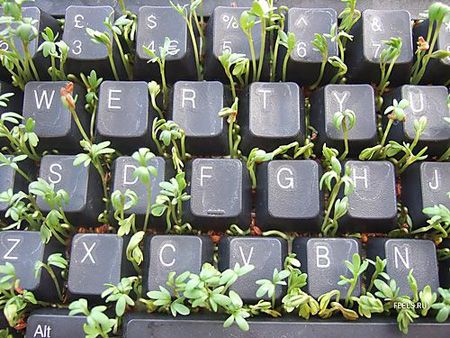
Plant rosemary in it.

Call off the Enola Gay.

Scavenge parts to fix a radio. Smack an intruder in the head. String it across the door to catch your teen trying to sneak out.

Speak into it all the things you wished you’d said.

Hold it to your ear and hear the wheels and waves, Coney Island, Venice Beach.

Carry it into a small closet and put on your tights and cape. Fill it with birdseed and set it out after the first thaw. Open the front and store inside a tiny book filled with photographs of switchboards and phone booths.

Replace the dial with a mirror. A clock. A contour map of Mt. Kilamanjaro.

Stack tinder into its corners to prepare for winter. Stuff the seams with the names of those few still alive who knew you when you were young.

When you have lost your way (or maybe when you’re most sure of it), lift the receiver. Listen for the voice of an absent god.


Learn more about the Alternative Uses Test and divergent thinking.


Image: Trendhunter

body, Creativity, Living in the Moment

This Dance

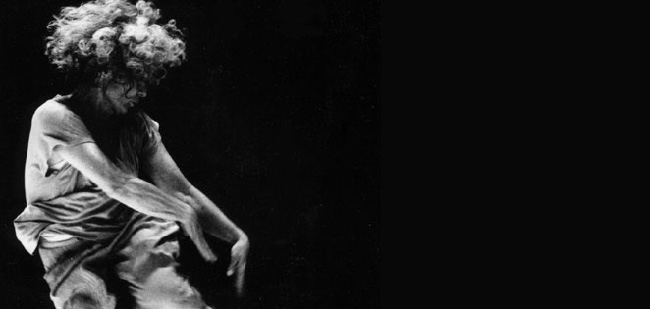
Simone Forti

Only after the herd thunders past, then the chewing snapping locust swarm, then the boulder storm, only after all of these have carried themselves off into the collapsing distance does the gesture peek out from its hushed cave.

The ribbon unfurls from my wrist. A glass staircase bears the weight of fear. A feral pup  in its winter wool climbs to the cliff edge and readies its throat.

The wing, first opening, closes.

Opens again.  Continue reading “This Dance”

Art, Family, Poetry

The Age We Are

standing on shoulders

“Toss the word rain to her,” he says.
I do and she catches it
on the chin. Drenched, she climbs aboard
his shoulders and returns six drops
to the sky. A boy cheers
as his dog digs in the sand
for a smell long severed
from its host. Wild-eyed,
the two wear matching
grins on faces bright
enough to kill
or ignite
or like us
both. We try on hats
now that we see
we could have worn them
all along. Felt
and ribbon and feather, like the grandfathers
of other people whose everyday
days are like our holidays.
Our patriarchs wiped sweat
from their wrists with stained handkerchiefs
before their fingers slipped.
Some had one arm
from forgetting this. Some left our mothers
orphans even after returning intact
from war. We never hear the ones still here
say, It comes to this?
That’s some sick joke

because they only whisper such things
to a sagging ceiling, the most sympathetic ear
for miles. I toss the word blindness
next time
but no one sees it land.


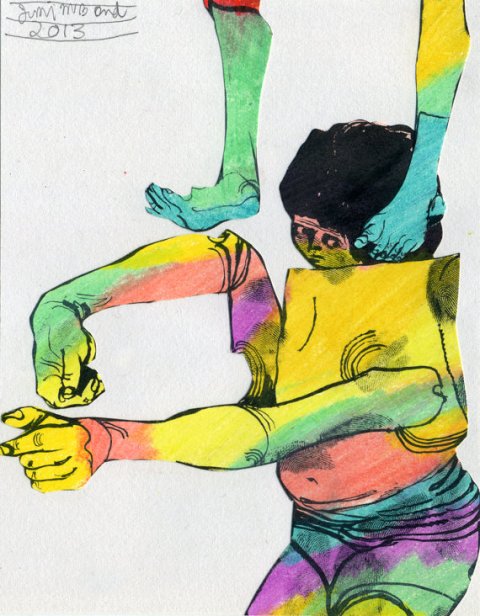
Image: Justin Brown Durand, “careful now, don’t let me fall”

Art, Creativity, Poetry, Relationships

Unboxed Shadow (Hirshhorn)

Cornell Box

In the drawer, a tiny bundle of newsprint
waits for paper fingers
to untie its secrets. Inside
their China cabinet coffin,
glass eyes almost
see. I tilt
towards a convex wall
where iron and bronze
sculptures anchor those
who forget that the absence of corners
can lead to infinite revolutions.  Continue reading “Unboxed Shadow (Hirshhorn)”

Creativity, Music, Poetry

Everything is Music

He points to Sting and Bob Marley,
his eyes hopscotching sideways
over walls of worn bright album covers
all the way to the ceiling, lighting
up for the first time
as salsa music and hissing milk
steam the room and warp
corners that squeeze
us into the proximity
of firsts
and nexts. Shots
in hot mugs clank against laughing teeth.
He slides forward in his seat
back again. When India Arie
escorted Stevie Wonder to the stage
he tells me, she kissed him on the cheek.  Continue reading “Everything is Music”

community, Friends, Home, Mindfulness

It’s Marvelous to Be Alive in This Time and Place

20151129_154608

It’s worth fighting through the inertia.

True as that may be, my self-pity disagrees. In its defense of digging a deeper rabbit hole, it would rather filibuster than concede. Its zealotry twists the mere suggestion of celebration into an offense against reason.

Birthday? Bah. What would you be celebrating anyway? Your troubled finances? The end of your relationship? The last dozen fights with Bug, an anemic field of job prospects, your dearest friends in crisis?

The silk-throated devil reminds me that I’m stretched too thin as it is. “Tired” is no longer an adequate descriptor for the perpetual state in which I exist. Wouldn’t you rather just rest, read, heal? Wouldn’t your time be better spent re-tooling your resume?

And:

Once you’ve had 40-something of them, birthdays just become days. Throwing yourself a party at this stage is both tacky and desperate.

No parties. No people. No no no.

But also yes. Because every reason to skip out on pleasure is a dolled-up version of submission. In fact, the more convincing the justification for staying low, the more I should suspect — and upend — its dominance. A toxic mood relishes its alpha dog position, growing in power unless I subvert it.

Cognitive Behavioral Therapy has a simple and ingenious approach to this. Just choose the opposite.

To break this feedback loop, we need to engage in a behavior inconsistent to the emotion we’re trying to manage. This is a technique called opposite-to-emotion behavior. To do this, identify the emotion (sadness), identify the mood-dependent behavior (inaction/isolation), then do the opposite of that.


Opposite to Emotion Behavior from Cognitive Behavioral Therapy

A snap, right? Take the stairs. Don the cape. Put a friggin foot on the gas and go. Even when it seems like the most useless act in the world. Especially then.

So, snarling and irate and certain the endeavor will fail, I hurl a few names at Evite.

Fixing a time and place leads to tidying, menus, asking for help. I cobble together activities. I send personal invitations to a new neighbor and to old family friends going through a tough time. My mother gets on board — bless that lady — and then I am dashing around, slapping on lipstick and jamming in earrings as the first guests knock on the door.

20151129_154453

As with so many actions, motion generates momentum. It’s almost irrelevant the direction of travel. Any push will do.

The friends arrive. More follow. They hug and meet and hoot and gossip. They bring wine, sweets, kids, dogs. A few play along with my contrived icebreaker activity, milling around five zones of the house where markers and paper on the wall invite joyful thinking about our community and our time together here.

As with so many choices, intention determines outcome. It’s almost irrelevant the details of the text. Any welcome will do.

Earlier in the day, Tee whisked Bug off to a college basketball game. Halfway through the party, he’s dropping the kiddo off. When half-ass planning this whole shindig, I’d been wearing armor of thorns and stink. My invite list failed to catch half the people I love. I’d also been too tight-hearted to ask Tee if he’d like to come. If I have to throw this stupid party, I don’t want my ex husband here. My birthday. My party.

Mine mine mine.

Then my son walks through the door and the room erupts in a cheer. Bug’s face lights up and he skips into the Studio 54 buzz and music and sparkle. Tee is already backing out, saying good night. “Come in,” I say. “Eat. Have a beer.”

“I’ve got a lot of school work still to do. . .”

I gesture wide. “There’s hot cider, Moroccan veggie stew.”

“Okay, just for a minute.” He steps inside and stays for an hour.

Tee is still there when my loved ones gather in a circle around the room. Everyone speaks out loud their wishes for the year ahead as well as their thanks for the right-here-and-now. My mom. The junior-high pals. The Zumba instructors who’ve become sisters. The new neighbor, the writing group fellow, all these the people who just happen to be my people. Even Tee shares how happy he is that we are parenting together as friends and that our son is thriving. Words upon words brushed with almost-tears and lots of chuckles weave their light web around the room.

Bug and the neighbor’s son, chasing down dogs who are chasing down crumbs, dart through the throng decked out in sunglasses and bandit masks, mercifully demolishing our grownup drift towards solemnity.

20151129_154649

It’s an extraordinary and dizzying experience to stand inside the metaphor of a circle of love manifesting in real life.

That incessant need to be on, to get things right and be just so, has slunk off into some forgotten corner. In my home with these dear ones, I feel at ease. It is as if I really am — for the moment — okay as me. Clumsy, gushing, nerdy, cutting, tempestuous, so-very-lucky me. . . just a gal entering her 43rd year in the happy company of her tribe.

20151129_154523

(And, as I remind several perplexed friends and my son: Yes, a 42nd birthday is the beginning of a 43rd year, because math, people).

As the music starts up again, the circle dissolves and takes on new shapes. Small pockets of conversation dot the room. People who just met giggle like old friends, a baby is passed to a new set of arms, men talk coaching and gals talk travel. Folks who haven’t seen each other in years cover lost ground. The first roots take hold under nascent relationships.

Orientation determines truth. I tilt my head and the whole thing resolves into sharp-edged clarity. Throwing oneself a party is also giving a party. A birthday is just another day, yes. It is also a gift, a perfect excuse to open a door and invite a fledgling community to weave itself into being. This circle is so much more than mine. It holds my son, parents, neighbors, and all the friends who show up with attention, voice, and story.

My girlfriend says that each year is “a free vacation around the sun.” Even so, it can also feel like an extended solo trip. It can take a few revolutions (or a few dozen) before it becomes clear that we have always been in this together.

This time I can see how many are at the helm, how strong the crew, how wide open the skies.


Choices, Love, Relationships

Sky’s Limit

There is hardly any activity, any enterprise, which is started with such tremendous hopes and expectations, and yet, which fails so regularly, as love.

Erich Fromm, The Art of Loving

Nowhere in the Odyssey or Iliad will you find the color blue. Homer’s sea was dark as wine, his sky fingered rose. Indeed, the word itself is missing from the whole of ancient Greek.

This defies logic. The vast canopy envelops us in blue. What blindness could obscure those coruscating waves as the bolt of silk billows open to the day? Sapphire, azure, cobalt, cerulean. We see this now and maintain it must always have been so.

But this too: What name was glass when those first Mesopotamian beads fell from the fire? What did we call that handful of thatch when we ventured out from the cave and found ourselves in need of a roof? The people of Atacama never have foggy memories. And you, city dweller, suburban native, may live a whole lifetime without capturing in words the clank and groan of the pumpjack as it drinks up oil from under the broken steppe.

To know a thing is to name it. We describe what becomes familiar as our mind splits it from the mottled everything and our senses fight to trace its shape into being.

When a thing is everywhere it is nowhere. Sky becomes blue when we develop the capacity to make blue and the concurrent desire to trade in it. Indigo velvet, lush royal moire. Now we grind a once exceedingly rare pigment out to its dizzying extremes. Now we call up a spectrum of descriptors for the field across which the sun and stars make their journey.

Indeed, we have dozens of terms where we used to have none. These words pin our eyes to ever-finer slices of hue, and we discern every shade as a distinct and almost solid thing. It is impossible to un-see what’s fixed now on the canvas, so we assume these shades were born with the world.

We believe we name what exists, when really, we birth what we name.

Ask this: what might the sky be without lapis and cornflower? To the ancient Greeks, it could have been a copper valley laced with honeyed streams, or herringbone and almond root, or blood seeping through sheared wool. From dawn to dusk and around again, petal and wing and wine and jewel. The sky holds anything given a name.

But only that, and nothing more.

Now you pull the door closed as you leave.

You take our words, all the ones we’ve only just begun to distill and to weave and — yes, we were almost so bold, we came so close — to conceive.

You, one who was not until he was. In the anonymous swirl, a faceless other. I was as blind to you then as Homer to a 21st century sky. If my language had a word for you at all, it would have been as it is with “bird” until the plangent whipporwill calls down night, with “tree” until sweetgum briars bite tender feet. You were stranger, neighbor, father, man. The general is where things might have remained.

Then I saw you.

I see you.

You are.

Then we have in our hands the material of us, thread and patches, a whalebone form. But what is it? What word do we coin for this new architecture?

Do we even think to ask?

When the sand-burnt debris fell out of the fire, it could have been stone, it could have been trash. Its very existence was determined by the lexicon’s outer limits. Beyond that horizon line, all things embryonic swim in the invisible not-yet.

Until someone picks it up and says, this is something else.

The boundaries shift. The world expands.

Sifting through ash, someone finds it again, shares it, and someone else finds it yet again. They begin to recognize it as an it, to spin it and shape it, and the infant entity takes its place in the vocabulary of civilization.

How many beginnings are discarded or broken, how many — for want of notice — fail to hatch?

How many nameless wonders already walk among us that we are unable to see? What kaleidescopic marvels sing against our blind skin?

We can garnish our curiosity with courage. This ability is our human birthright, and we can let our minds split an almost imperceptible variance from the mottled everything. It is up to us to marshal the tremendous combined force of sense and choice, and to trace the shape into being.

Kinship becomes love when we develop the capacity to make love and the concurrent desire to trade in it.

Love becomes the invention into which we breathe life when we sift it from the ashes and say, this is.

We are.

This is something else.