Children, Family, Things I Can

90. Things I Can Keep: My Promise

Bedtime Story

 
We climb into bed at 7:45pm for the sole purpose of extra cuddles. After two chapters in the thawing forest of Narnia, I close the book and tuck myself around him. He scoots over and pulls my arm around his middle. We slip into our rhythm. Light and steady, whisper and pulse, we course along the curl of our twin spines like water smoothing a riverbank. He sighs and goes still. It is barely 8:30 and my boy breathes softly in my arms.


Image: Elizabeth Shippen Green, Five Little Pigs, illustration for “Mistress of the House” (1905)

Family, Home, Mindfulness, Things I Can

84. Things I Can Snap: The Family Photo

. . . and they found a certain contentment, living more or less happily ever after, which is what “now” is while one’s in it.

From Robert Coover’s “The Frog Prince”

I lay flat on the stained carpet, felled by a muscle spasm with diamond-tipped talons. My boy, stung pink with sun, is sprawled across a twist of sheets and pillows. He has been complaining about a stomach ache. “I just don’t feel good,” he keeps repeating while he looks at me with a mix of longing and irritation.

Beside us, Noodle mopes in her crate. All the pacing and fussing and nosing  to spur one of us to action had the opposite effect, and now she sighs heavily and frequently while staring right at us.

A pillow props up my knees up and I grit my teeth against waves of pain as I read. We’ve just begun The Lion, the Witch, and the Wardrobe, which we’ve inexplicably overlooked during the previous eight years of literary peregrination. Bug sips from a cup of seltzer water and kicks the blanket further down the bed.

Right in the middle of Edmund’s box of Turkish Delight, Bug turns and reaches across me. Scootching his hand under my shoulder, he inches me closer to his mattress. Then he leans in and plants a slow, soft kiss on my cheek. I see a smile ease loose across his face as he lets me go and flops back onto his bed.

“It’s all three of us right here,” he says. “Wouldn’t this be a perfect family portrait?”

I put my finger in the page, close the book against my chest, and look around.

My boy, the dog, a home, this night.

One story, one kiss.

Our perfect family.


Children, Family, Learning, Things I Can

80. Things I Can Clear: A Place for Him

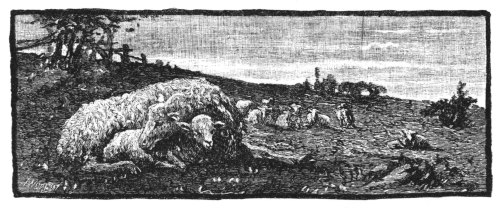
Ewe and Lamb

He likes daddy’s house better. “I get to be in the same room,” he says.

I like sleep better. So here, he has his own room. He is almost nine, and still, he begs for me to stay. He pulls me in after books and cuddles, “Just one more hug,” he pleads. “Just one more minute.”

On weekends, he tries all over again. “We can go to sleep in your room tonight, right?”

No. I tell him again, no. Not this night. No every night, two years of no in this house, eight years of no in this life. No, mama needs to sleep alone. No, Mama has trouble resting when she shares the bed. Mama is a monster who trips into a churning, troubled cauldron of demons night after night after night after night. Any chance this mama has of sleeping soundly, she’ll protect with all her might. Even if this means earplugs, eye masks, a bolted door, a lonely son.

No.

Then suddenly, my boy wakes with the dawn and pads into my room. Hair wild and eyes gummed with dreams, he crawls into my bed and folds himself into the warm pocket of comfort around me.

Gangly, humongous, heavy as stones.

A boy? My boy?

I feel the height and weight of him, the crackling and waking up of every surging cell in him.

My boy is finished being small.

Forever.

From here, he only grows up. Out, older, taller, away. He grows into himself.

How much longer will he want to be so close?

How many chances do I have to be his home?

His longing for nighttime company is more than a craving, more than a passing interest. Beyond the clutchy acquisitiveness children have for Pokemon cards and pizza nights and winning at Stratego, this hunger is something deeper. Primal even.

Every time he begs and cries for me, every time in all of his eight years, he is asking to feel bound up in something, to feel tethered to place and kin.

In the purest form of humanness — mammal and existential alike — he needs to be held.

Now, in this quickly closing chapter of his life, I can be the one who holds him. This web I weave around him — alternately flimsy and rugged — tightens into the vault from which he launches the man he will become.

This web I weave around him — alternately capacious and secure — sinters into the vault in which he stores the stars and wounds and whispers that he gathers along the way.

Tonight I decide: We will find a way to climb in close together. Close, so he can worm his way deep into the heart of the comfort he needs. Close, so I can protect my precious sleep and still love my boy the way he wants to be loved.

Tonight, I ask: “Do you want to make a nook in my room?”

He stares, checking my face for tricks. Then his spreads into a grin and he actually shivers with delight.

In record time, he finishes dinner, stacks dishes, helps walk the dog, and lops nearly 20 minutes off bath time. Then we plop ourselves on the floor of my room. The rack of toy bins in the corner needs to go.

“Okay,” he says picking up a matchbox car. “Donate.” He tosses it in a bucket.

“Easter bunny ears?” I ask.

“Trash,” he says.

We go like this. Legos, mardi gras beads, pirate eye patches. Toss, donate, keep. The box of trinkets he wants to hold onto is far emptier than I imagined. The toys are meaningless. What he wants is the absence of them. What he wants is the treasure their departure promises.

By bedtime, we’ve done it all. Vacuumed, dragged in extra mattress, unfurled sheets. He carries in a stack of books to line the windowsill, fetches the lamp with its denim shade. He keeps smiling at me. Smiling and smiling. “It’s so comfortable,” he beams, settling himself into a heap of red and turquoise linens. “Want to come try it?”

I bring my pillow and cuddle up in his nest. We are tucked into an alcove under the window across from where my big-girl bed lives. Bug can look right into Noodle’s crate. A few moments later, she tip-taps in and sniffs around the new setup, talks at us, then heads over and curls into a ball on her blanket.

Bug thrums with sleepy rightness, with a satisfaction rare in his bull-headed, only-child world.

He sighs and rests a damp head on my hip. “Put your arm around me,” he says. “All the way across.” He draws my hand over his chest, slips it into the fold between his torso and the blanket. In my other hand, I hold Cornelia Funke’s Thief Lord and pick up where we left off last night. The conniving Barbarossa has spun backwards on a carousel and toppled out as a toddler, while Scipio — wounded and obstinate — has chosen to careen past adolescence and emerge as a man.

We stumble towards infancy and whatever comes before. We surge towards dying and the end we refuse to imagine. On either side of us, these memories, these wishes, they stretch like corridors lined with swords and feather beds, disappearing into dark. When fortune spits us out against unforgiving walls, when moments choose us before we have a say, we carry our soft landings with us. We bear our own rending.

For our children, we dull what blades we can.

Even when they are certain they are done needing us, we tuck beneath them a pallet of silken rope and down.

We hold them anyway.
 

Image from “The Nursery,” March 1881.


community, Family, Things I Can

76. Things I Can Lead: This Pack

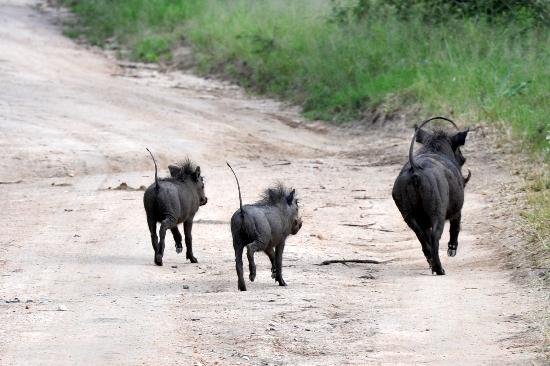
warthog-family

I sit cross-legged on the path and fold Noodle into my lap. A little boy who was stroking her with such a soft touch continues. Two others — younger, toddlers — step closer. One with a mop of curls squats in front of her and stares with the focus of a hypnotist. Unwavering, he peers along the length of her snout and into her steady eyes. She is so still. He ventures a touch, two fingers on the side of her head. She barely blinks. He steps closer and touches her flank. “Ga-ggie,” he says.

“Yes,” his dad smiles. “She’s a nice doggie.”

This is enough for the small one. He steps back and considers Noodle from a safe distance. His brother keeps that rhythm along her back, as regular as a metronome, as soothing as surf. Noodle’s fur drifts and settles, blanketing my black work trousers. She shifts ever so slightly and surrenders her weight to my belly. I feel her exhale. The third boy — another toddler — stands at his daddy’s shin. He grins and squeals then shoves a finger up his nose.

Behind me, Bug snaps off his rollerblades and tosses his helmet in the grass. I hear a basketball. Voices.

It is nearing dusk. Neighborhood moms call to summon their stray men home for dinner. I dump Noodle back onto the trail. She gives passive resistance a shot but her dead weight is more pliable than she thinks. Soon she falls into step beside me.

Bug is trotting around the blacktop in his socks, his blonde surfer hair flopping. Another boy passes him a basketball and Bug shoots then passes it back. I circle the park a few times watching while the boy’s dad stands and texts from center court. The duo abandons the game and strolls back and forth across the pavement. Bug trails a long stick. His companion holds the ball tucked beneath his arm. Their heads are bent together in a conspiracy of murmurs. They walk the length of the court at least six times over, six times back.

“Hey you,” I call. Noodle and I cut across the grass. Bug scratches his pooch under her chin and shoves his feet back into his skates. I chat with dad and boy. I’ve never seen them here before, although they live a block over from us. We talk schools and child care and pizza. Tomorrow, they kick off a week-long hiking trip in the Monongahela National Forest.

“I’m going to play on the playground equipment,” Bug says, rolling away. I love that he calls it that. Playground equipment. “Okay,” I shout after him. “But not in your blades.”

“I’ll take them off,” he hollers back. When the dad and I make our way over, I see helmet, wrist guards, socks, and wheels lying in a heap at the bottom of the slide. Bug is up high, straddling the outside of a suspended tunnel. His buddy is swinging from a bar. A third has joined them, a preschooler.

The small one points to Noodle. “Is she curly too?” He asks.

“Curly?”

“Yeah,” he poofs his arms around him. “Fluffy. Like that.”

I shrug. “She sure sheds a lot. You know how I know when she’s been sneaking up on the couch?”

Bug grins from his perch. “She can’t fool us!” He cries.

“She’s tricky,” I shake my head in disapproval and glare at Noodle who is straining, straining to play with the kids. “Fur all over the sofa!”

The preschooler stomps a foot. “My bro-zher is the smartest of all!” He declares.

“Are you sure? I think you’re the smartest of all.”

“No my bro-zer is! He teached me math. See?” He holds up two fingers on one hand and two on the other. “One -two-free-four.

Bug is swaying way up high. “Do you know how to do squares? You know the square root of 100 is 10?”

The one from the basketball court swings then plants his feet. “I can divide.”

Then it’s time to go home. A mom collects her mini math whiz. Hiker dad answers a text from home. “Dinnertime, buddy,” he says. He and his boy wander off in the direction of the townhouses. Bug clambers down and slips mulched socks over filthy feet. Buckles, helmet, wrist guards, off we go. Noodle trots along beside us.

“So that boy goes to your school, huh? Did you know him from school?”

“No,” Bug says. “He’s in first grade.”

“You just met him today?”

“Yeah.”

I picture them again, whispering as they strode off together like they’d been buddies since kindergarten.

“You know what? That’s a really cool talent,” I say. “You find friends everywhere you go.”

Bug shrugs but I see he’s sort of smiling.

What a marvel.

To my right, this clickety-rolling kiddo who enters every setting as if the place has been waiting for him to arrive. He strikes up a conversation. He jump-starts a game. He conjures up companions, assuming friendship is a given.

To my left, Noodle the Wonder Dog, a magnet for toddlers ready to face their fears. A touchstone for kids who still believe that contact with a fellow earthling is the high point of any day.

And me in the middle, a mama leading this bold pack out into the world.

This force, small yet mighty.

My family.
 

.


Growing Up, Things I Can, Writing

69. Things I Can Tell Myself: One Small Truth

I am not going to read Jared Diamond’s The World Until Yesterday.

Never mind that he’s on deck for a Monday evening book group at the Unitarian church right up the street. And I have two full weeks until then, which is more than enough time. And it’s an opportunity to talk ideas and raw human family concerns with like-minded, world-eyed liberals right here in my community.

And that I want more than anything to disrupt this aching lonely purposeless robotic toil-consume-pick up-drop off-sort-pay-do-it-all-again-tomorrow middle aged existence by weaving myself into a project bigger than me, and attending this group is one simple step towards a richer life.

Because that’s a lie.

I want other things. This I want, yes, but only as much as other things, not more than. Maybe even less than, if I’m really honest.

My 7am Zumba is a few notches higher. That’s why, instead of reading past 11pm, I turn off the light and quiet myself down.

Also higher on the list? Long, meandering walks through the neighborhood with Noodle.

Making my own hummus from scratch is up there too.

Drawing crayon doodles on the envelopes into which I fold letters to Bug at camp. And scritch-scratching in my journal. And tip-tapping here: All higher.

Also whirling through loops and riding over soft plateaus in nighttime phone conversations with My Mister. And deadheading the basil. And transplanting the peppers. And mining the deep vein of creativity when the tough tasks come calling during my 8 hours.

Lunchtime yoga. That’s higher too.

If I really want that book club and the currency I imagine it carries — I mean, if I really want it — the choice is simple. Kick Jared Diamond up to the top of the list. Let something further down fall off.

And here I am, standing at the local library about to wave my key-card under the scanner. I look at what I’ve got. An Alice Munro collection of short stories, a thin volume of poetry exercises, a Stewart O’Nan novel called Last Night at the Lobster.

And Jared Diamond.

I think, What would it hurt to just take him home? Maybe if he’s there on the bedside table, I’ll pick him up. He might enthrall me. Just imagine how edifying, how engaging that discussion group! Fourteen days? No problem.

But why do this to myself?

Why this relentless work to repair, mutate, improve?

(Or prove?)

Somehow, I still fear the call chorusing through me is a siren’s song. The desire I drive so hard to override must be Peter Pan at the window, stunted id and stars for eyes.

Somehow, I am still trying to get this growing-up thing right. And still doubting that the woman right here in this skin is actually enough.

You do not have to be good.
You do not have to walk on your knees
For a hundred miles through the desert, repenting.
You only have to let the soft animal of your body
love what it loves.
Tell me about your despair, yours, and I will tell you mine.
Meanwhile the world goes on.

from Mary Oliver’s “Wild Geese”

I’ll do better (because doing better seems to be so damned important) if Jared Diamond makes his 512-page case somewhere other than my bedroom. I set his down on the re-shelf cart.

The moment I do, two quick but powerful currents rush past from opposite directions. The first says, Rock on, Girl! You’re free of that pointless assignment!

The second one is harder to decipher, but I still manage to catch its gist. It says, There goes another chance to be a person of substance. Have fun playing in the shallows, my friend.

And because my father earned a PhD, lists dozens upon dozens of publications on his CV, and spends a good chunk of his weekends reading not only the entirety of the Washington Post but a good portion of the works of nonfiction reviewed in its “Book World” — because of all of this, I am forever falling short of the mark.

That mark written on the bones of ghosts.

That mark mapped in disappearing ink.

I beep through the library checkout with only poetry, short stories, and a novel. As I do, I take a deep breath and tell myself the true small truth. This one has nothing to do with Jared Diamond.

It is this:

I will never be my father.

The heart shivers, resists, cries out for the comforting lie.

Then lets go.

I carry home my works of fiction and image. I walk my dog, slice peaches and cherries, talk on the phone with My Mister, then come here to write.

Fiction. Image.

Lyric. Story.

(So much closer to nonfiction than anyone let on.)

Something alights outside my bedroom window. It calls softly.

This song, I’m learning.

This song, mine.


Divorce, Growing Up, Things I Can

63. Things I Can Recite: Alas, Poor Yorick

denmark-girl-at-kronborg-castle-garrisonsIt’s July 9th and raining again. My former father-in-law sends me photos of my son at the beach on an island in Lake Michigan. Bug is scrabbling on the shore near his two cousins. They are all turned away from each other, each bent over a single small universe of sand. The girls are 12 and 10 now. I held them when they were babies. They were my nieces before. Now they are just someone else’s children.

Sorrow again.

Or rather, sorrow as always.

In Pacific Heights, the 1990 thriller that put even the most liberal of us squarely on the side of monied landlords, a happy couple invites the dude to move in. He does, and proceeds to lay waste to an entire world one light fixture at a time.

This sorrow here with me? He is my tenant from hell. It is hard to believe he once so completely charmed me, but he must have.

Back when the pages of my 8th-grade diary needed an indigo flourish, he came oozing up from the spiral binding and began scoring my lines with crenelations. He had callouses and clean fingernails, serving up a Darcy-Heathcliff cocktail with a twist of Bond. It took a few years and a semester of college English Lit to peel back the pinstripes. He was the Danish prince all along and stopped bothering to claim otherwise. Now he’s as indelible as he is unmistakable, moping around the crumbling grounds in a state of masturbatory melancholy that borders on solipsism.

It’s too late to eject him.

I’m too mortgaged to try.

What came before? I see a picture of myself at 10 or 12 on a beach in New Jersey. The snapshot catches me mid-leap in the surf, a dragonfly in amber. Water arcs from the bucket in my hand and my friend shrieks. Her note twinges the air, humming across years like wings. We are neon streaks, brown limbs, airborne, foam.

I knew him, Horatio, a fellow of infinite jest, of most excellent fancy.

The faithful prince catches me again and twines my feet in those calligraphic lines. He promises me Elsinore and all her ghosts, as if such an offer holds any appeal. I climb the stone steps still trailing silver thread, making my way to the keep. A trap door opens in the floor and I follow the stairs as they spiral down and away. Back to apotheca. To kitchen. To dungeon. I trace the walls again, again, walls unbroken by portculis or bridge.

I remember windows when he lets me.

Sorrow. My voice. My lodger.

My common-law spouse.

The shape of the skull on my shoulders, the heft of it in my hand.


Photo credit: Sisse Brimberg & Cotton Coulson, Keenpress for National Geographic

Family, Things I Can

39. Things I Can Deliver: Her Eulogy

The girl who climbed trees in Durant, Oklahoma, ignoring as long as possible the suggestion that this activity may be less than ladylike, she was long grown by the time I came around. But I caught a glimpse of her when she and Dick outfitted that van for the open road, and she scrambled over hillsides all around this country collecting gems and geodes.
 
The college graduate who came to Dallas and strode through downtown with her girlfriends, in awe of the fashions at A. Harris and the big city bustle? She was a distant memory by the time I was old enough to have joined her on those walks. But a glimmer of her appeared when she’d stroll through the aisles at Neiman’s on the way to the Zodiac Room, pausing to stroke the beaded silk and saying, “Oh, just imagine the places we could wear this!”
 
I wish I could have met the young woman who whirled around the USO with her flyboy, but she showed up at the bridge table, and stocked her cabinets with board games and playing cards, and let us flounce through the house in the puffed sleeves and petticoats of her square dance dresses, and opened her treasure boxes to gild our necks and arms with costume jewels.
 
That girl who’d let her big sister Cecil take the spot as Mima’s culinary apprentice while she herself was skinning her knees climbing all those trees? When she became a young Navy wife and realized she’d actually have to cook for that husband of hers, it would have been a kick to see her rooting through the barrel at the PX and choosing a nickel edition of Fannie Farmer and stumbling through her first pot roast. But I saw a bit of her when she cranked a whole orange through the grinder for cranberry salad, and tossed just the right splash of ice water across the flour for pie crust.
 
I could have learned a lot from the dedicated young mother who cared for those five babies while setting up house and community in Hawaii, Maine, Florida. But she appeared in front of me when, at 86 years old, she got right down on the floor and played with her infant great-grandson.
 
I wish I could have held the hand of the young widow with two of her children still in school, who took the searing tragedy of losing a husband and transformed it into the courage to up and move to Germany. But I did see her seek adventure in the everyday, driving all the way down to the Dallas Farmer’s Market on a Saturday to marvel at the cantaloupes and east Texas tomatoes, lifting them to her nose and wowing at the fragrance, the warmth, as if each was the first she’d ever held. I saw her boldly stay open to the world even as her body set its own limits. Walking the pool, gabbing with friends; accepting every invitation to travel; serving families in need through her volunteer work; consuming the Dallas Morning News every day; and meandering all the way through each new issue of National Geographic.
 
Mardy was Gramma Mardy by the time I came along. She would sit with me in the breakfast nook and drink her tea. But she was so much more than a tea-drinking, nook-sitting gramma. We’re working the crossword together, digging through the dictionary, patching together word origins and giggling at the rickety bridges strung between the gaps in our knowledge. She wants to learn it all. Then the puzzle is done and she’s reading the headlines out loud and punctuating them with fiery commentary about this senator or that scandal. Then she’s up feeding birds whose habits and classifications she is eager to grasp. Then she’s skimming the arts page for a gallery or a foreign film.
 
Then, invariably, the people come.
 
The phone rings and it’s one of lunch ladies. Rick and the kids stroll up the patio waving. The doorbell rings, and Nelda is there with a question.
 
Gramma invites them in. Curious, affable, delighting in whatever is going on in their worlds, she offers a chair and questions, and soon they’re re-drawing the blueprint of old neighborhoods on the map of their collective memory. Where did Sleepy Reese end up? Did the neighbors actually lay that driveway on Daddy’s property? Which year did Eddie Dominguez graduate? Oh, and what about old What’s-his-Name? Then we’re laughing and hollering, trying to reach consensus, and barring that, nudging the discussion into more agreeable territory. Soon someone’s going to pick up Dickey’s barbeque or getting suited up for the pool or arranging for church then lunch then a trip to Durant. And all of this activity just blooms up from the mere act of being in Gramma Mardy’s house.
 
I say I wish I could have known the girl, the young wife, the mother. But maybe I did know her. All those glimpses had stories behind them, and the stories were right there, still very much alive, ready for me to weave into my own. I knew a much fuller version of my Gramma because people called and came to the door knowing they’d be invited in. Made comfortable. Asked to share.
 
Witnessing and learning about the lives of her loved ones – that was Mardy’s way. She cultivated openness, welcome, HOME. Everyone who was part of Mardy’s circle knew they’d have a place where they could come and where they could belong. Cherino, Crestover, Allencrest, Hideaway. She opened the doors to Paul, Lissa, Brin, John and Nancy, Rick and Carrie, Jamin, me. Giving all of us at one point or another a waystation and a launch pad, or just a place to catch our breath. And the other grandkids – Jonathan and Jennifer, Brendan, Dylan, Sadie too – all of us knew that Gramma’s home was ours.
 
This is not an accident. This is a way – Gramma Mardy’s way – unique and extraordinary. And because all of these generations of friends and kin have sat at her breakfast table laughing and arguing and telling the stories, I met that red dirt girl who became the kind of woman I hope to someday be.
 
It breaks my heart that my Gramma didn’t make it out to Virginia to stay in the condo I bought two summer ago – the first home of my own. It would have been so nice to share my table with her for once. I spent the first year there guarded and shell-shocked, protecting my solitude, my hackles up against the obligations attached to membership in a community.
 
But this year, as Gramma’s health declined, it’s almost as if some fragment of her spirit rode the currents over 1500 miles and took root in me. I’ve finally started to look up and become friends with my neighbors. To host parties even when my house is a mess. To follow my son when he jets off with his buddies, and go meet their parents and siblings.
 
Maybe that woman I only caught in glimpses over 41 years waited for me to grow up enough to meet her, fully formed, as the curious, vibrant, tough, and tender person she always was.
 
I am lucky – in fact, we all are so lucky – to have been on the receiving end of her love. She’s here in that love, in me – in us – every time we open the door and invite someone in.
 

Family, Home, Things I Can

24. Things I Can Cherish: This Home

Bug builds a nest by the sliding glass door. A foam mattress from his old bunk bed serves as a wall. He hauls in a heap of blankets and a camp chair. “Dogs and kids only,” he tells me. He fits a bag of soil into the nook by the wall to block the entrance.

Nestled in under a table, he listens to an audio book whose plot I can’t follow. Islands, magic, a group of children, danger. Noodle is splayed out in the sun next to him on an old Oklahoma Sooners blanket.

I replace the busted bike tire and air up the tube. One load of laundry whirls in the dryer while another hangs in the sunlight on a rack in my bedroom. The pots and pans are done, but the breakfast dishes haven’t made their way into the dishwasher yet. That’s Bug’s job. He can tackle it later.

The tea kettle gurgles. I pour steaming water over tea bags. Decaffeinated black tea for Bug, Bengal Spice for me. I dig through the recycling for the two old egg cartons. The packets of new seeds are waiting. Perennials this time.

Bug acknowledges neither the milky tea I slip into his clubhouse nor the the basket of pencils and markers. He pretends not to notice when I sneak off with the sack of soil.

Splayed on the kitchen floor, I rip the tops off the cartons and use a sharpie to mark the sides. Thyme, rosemary, lavender, sage. Each tiny seed falls into an almost invisible divot in the dirt. Dormant, they nestle in under a thin blanket of soil. I soak each pocket with a soft drizzle from the sink sprayer. The cartons sag until I fit them into their inverted lids.

The sunlight slices a long triangle into the table by the sliding door. I step up on a chair and stretch over the mattress wall. A swath of Bug’s blonde head peeks out from under the table. He’s leaning back in the camp chair using a marker to draw a battle scene with towers and little people dropping rocks on their enemies. He’s painted his fingernails purple. Noodle’s eyes twitch towards me but she only sighs and closes them again.

I slide the seeds into the sun next to the snap peas and spinach, their first threads already climbing towards the light.
 

Friends, Home, Things I Can

4. Things I Can Organize: A Social Life on a Budget

Staying connected to other humans is a necessity. This is especially so for a working single mom with a taste for the blues. Yet the rules of the Financial Fast forbid dining out and spending money on entertainment.

Catching up with folks for free is harder than it seems. After dispensing with restaurants, shows, coffee shops, bars, karaoke, ice rinks, shopping, and all the other cold-weather activities out there, what’s left?  Three weeks of January without seeing loved ones = emotional suicide (I tell myself). When schedules are tight and the nights are long, grabbing a bite out seems like the only option (I tell myself).

Is it any wonder so many Americans are looking up from the bottom of the financial pit, wondering how the hell to climb out? It’s sometimes the case that a person’s money struggles come on the heels of a single seismic life event. Most folks, however, work their way there one small seemingly inconsequential decision at a time. It’s possible to rationalize any expense, no matter how big, no matter how frivolous. Wants morph into needs, and the same old habits keep playing out.

The point of this fast is to figure out ways to stick to the rules, not ways to sneak around them. For those of us living close to the bone, the tradeoff between money and time is as near even as you can get. Make your own bread from scratch, and you’ll save about as much money as you could earn with the time spent elsewhere. Take on a little extra work, and the money ends up paying for the additional gas and childcare. It all comes out in the wash. How can a person really tend to these necessities on limited means — both financial and otherwise?

These 21 days lean towards the Save Money/Spend Time side of the equation. This is why it’s important to consider a broader definition of “spending habits.” A few extra minutes making lunch for work is important, but where else might resourcefulness and creativity be useful? After all, we all have certain essential activities that keep us thrumming. It may be dancing or sports, learning or art, travel or food — whatever it is, chances are, doing it the familiar way is too expensive. The problem is that self-discipline smacks of self-denial. When limits become suffocating, either the old ways return or the person inside wilts.

There has to be a third way.

For our little family, I believe there is. Inside this labyrinthine universe of Us, maintaining relationships is as essential as exercise, work, and a good night’s sleep. That said, our schedules stretch us so thin, friends feel like another “thing to do,” which is exactly why we have to keep them in the front of our minds. Community feeds us. We have to feed it in turn.

This weekend, we let the Financial Fast force ingenuity and forethought. Instead of going out on Saturday night, we extended a dinner invitation to my folks and a few family friends. We spent the day cleaning and making our little condo fancy with the baubles on hand. The meal was bare bones — dull, in fact — but no one seemed to care. My mother contributed pie and appetizers, and another guest brought a salad. Bug was crazy proud to host. All day and evening, he pitched it. As guests arrived, he donned an apron and took drink orders. Our little group was a warm light in the dead of winter.

It was work and it was exhausting, but also, it was so very simple.

And we managed it all on the grocery budget.

If not for the fast, we probably would have just gone to a movie. Or I might have plopped Bug in front of a DVD while I focused on one of the countless unfinished projects from work. Instead, Bug and I worked together to welcome friends into our home. We planned a menu, decorated, baked and tidied, and shared time with the people we care about. Here we are the next morning with a beautifully organized space, feeling connected and happy.

Maybe the trick is to take the long view. We have to dare to imagine the composition — career, home, relationships, art, and overall well-being — we most want for ourselves and our families. The question then becomes: What can we cultivate here and now with what we have on hand?

For these weeks as in the year ahead, a Saturday night can be exercise in frugality, but it doesn’t have to just be that. It can also be an opportunity for creativity and celebration, and a chance to build towards a life both balanced and vibrant.


Family, Home

Good Stay

It’s our first day back at work and the neighbors are complaining. Out on the balcony, the lady from next door smokes as she watches the snow. She greets me with a friendly “Good morning.”

Then, “Oh, by the way…”

First comes an excruciating description of the 8-hour howling marathon. Then her recommendations: bitter apple, a towel with my scent, a plastic crate, a muzzle. She and her husband work from home. They listened to it all day, she tells me. ALL DAY. “Hours,” she says. “We could hear her all the way outside. She didn’t stop.”

I apologize and thank her. Then I stand there listening. I need to stay on her good side, if that’s even possible. Nodding, agreeing, I’m not sure what to say. Finally, I tell her I just don’t want to give Noodle up, which is the same as giving up on her.

Most of the neighborhood has heard about Noodle’s history. What we know is bad enough. What we don’t know is probably worse. From initial snatching by the smugglers through her arrival in our home, she’s endured at least six separations. Those are just the ones we can count. Add a measure of abuse followed by an overseas migration, and anxiety is a given. Aggression would not be a surprise. Even so, after all she’s been through, this tormented creature has managed to hold on to all the traits that most endear dogs to humans: groveling, nuzzling, cuddling, sitting. She gazes through glimmering eyes when we read on the couch and quivers with joy when we return from the store. She has not so much as nipped at Bug despite the horseplay he requires of her (“Mom, look! Conga, conga, conGA!”)

The codes run deep. They work. Bug is madly in love with her.

Also, she has crippling anxiety.

My finances are limited, and what little I have comes from a job at an office. I had foolishly assumed that the two-week winter break would be a sufficient adjustment period. Unlike my work-from-home neighbors, I can’t stay all day to train this pooch through months of desensitization. I live in a condominium instead of the country cottage, so ignoring the problem isn’t an option.

As ever, life is generous with its opportunities for growth. This is yet another reminder that I’m not all alone in a world on the brink of crashing down around me. The neighbors are, thanks to all things holy, dog lovers. Also, my superhero mother has offered to stop in for a mid-day walk. Being a member of Noodle’s pack, her presence is a comfort and a godsend for one hour of the day.

Even so, it doesn’t erase the four hours of howling on either side of her visit. I’m no fool. Neighbor-dog-love has its limits. Somehow I’ve got to hold down my job, take care of my son, and placate the neighbors all while keeping this dog from impaling herself on the busted bars of her crate.

I’m trying hard to La-La-La plug my ears against the little voice telling me this one of the the top five worst decisions of my life.

Is there a convincing argument for putting so much at risk and for this neurotic, sweet girl?

Why does anyone make these sacrifices? No one gives out awards for adopting abused dogs. Accolades are similarly nonexistent for all other do-gooders, from library volunteers to vegetarians. Maybe some folks trust the promise of delayed rewards. While the Flying Spaghetti Monster may be reserving a place at the head table for me, faith is generally missing from my list of motivators. Beyond that, altruism is irrational at best. It rarely leads to financial payoff, professional success, fame, leisure, an advanced degree or a smaller dress size. In fact, of the many ways to squander personal resources for some greater good, dog ownership is a guaranteed drain. The costs of food and care are just the beginning. Sleep takes a hit. Those extra hours at work needed to get ahead? Lost, along with evening classes and weekend conferences. And forget about tagging along for happy hour.

So why do it?

Because ___________________. Pick your platitude. Because you care. Because if you don’t, who will? Maybe because maybe you want to add to the sum total of kindness in the world, or because you hope someone would do the same for you.

Because duty. Because love.

Maybe all altruism is selfish. Being good feels good. A little hit of dopamine accompanies an action in sync with a value, especially when it leads to some small improvement. Or a big, sloppy kiss.

In my rather cold calculation, sticking by this dog is service to my son. After all, his status as an only child confers benefits and costs that a pet can complement and correct, respectively. My boy is king of the castle here. He chooses a great many of our activities and habits. His preferences certainly aren’t equal to mine, otherwise there would be no school, broccoli, or bedtime. That said, his vote counts more than it might if a sibling or second parent weighed in. This superior position may seem grand, but it costs him in social skills. My son has a long way to go to master compassion and consideration. A dog — especially one with a troubled history — is a good teacher. No quantity of playdates comes close to the humbling experience of sharing a home with a fellow being. Having a dog means more than sharing the back seat when running errands. It means waking every day to the awareness of someone else who matters.

Bug’s elevated rank also leaves him as his own and only best companion. At eight years old, he still tells me he’d rather live at his other house because there, he shares a room with his dad. He doesn’t like sleeping alone. On those mellow weekends when we spend more time at home than running all over creation, Bug sometimes wanders aimlessly, at a loss for how to entertain himself. He’s tired of Mama but he wants to engage with someone or something. This kind of quiet, TV-free existence is good for him, true. It’s on-the-job training in resourcefulness, creativity, and the innovative potential of boredom.

Also, it makes loneliness routine.

Not so great a norm to set for a kid who’s been handed two genetic suitcases packed with depression.

Noodle is Bug’s guide. She is also his buddy. Bug adores and curses her in much the same way a sibling might. He plays with her, gets irritated with her, wants her close, wants her gone. He always comes back to her though, learning all the while to temper his reactions and be a good companion. He’ll screw up (as will I), but she’ll probably survive. Noodle nudges Bug — and me, if I’m honest — up and out of ourselves. More than just waking us to the world, she engages us in a lasting and full relationship with a fellow earthling.

I’m sure the crazy dog people will skin me alive when they find out my motives for adopting are anything other than pure love. Alas, I’ve never been known for purity except in contrast, so Noodle and all her champions will just have to put up with my labyrinthine rationale.

Anyway, she’s home now. She can make do with this imperfect family.

Tomorrow, I’ll move the crate to my bedroom and shut all the doors, hoping the extra layer of drywall will muffle her cries. I’ll give the bitter apple and towel a try. I’m not sold on the muzzle. If we’re lucky, the neighbors will indulge us as Noodle’s little brain works out that there’s nothing on the other side of that door she needs.

This is it. She’s not going anywhere.

Neither are we.