Family, Learning, Parenting, Relationships

He is of Us, as am I

turkus mother son

. . . a discouraged child tends to focus increasingly on her anxious desire to fit in and quickly loses sight of the needs of others in the family.  Children are always trying to improve their sense of securely belonging as valuable members of the group, and they fear losing that connection.  Therefore, the more the child’s discouragement deepens, the less capable she feels of interacting with others in useful ways.  Instead, she is more likely to resort to misbehavior to connect inappropriately, to feel negatively powerful, and finally to gain at least a perverse sense of respect before giving up when her attempts fail.


– Linda Jessup and Emory Luce Baldwin, Parenting with Courage and Uncommon Sense

My boy has been back with me for a week.  During that time, I have not screamed once.   I have not stormed out to cool down.  We have been on time for camp drop off every morning without a fight.  Bug has gotten himself out of the bath, teeth brushed, and into bed before 9:00 every night without me raising my voice or lifting a finger.

On July 7, I made a commitment to heal our family.  This is a tall order.  A family is more than just one mom and it would seem that one mom alone can’t overhaul a whole family culture.  Each of us can only control ourselves.  As it turns out, this may be the concept that brings the most significant change to our family.

When children are very small and dependent on us, we can haul them out of troubling situations and put them in their cribs at specified times.  We can decide what food is in front of them.  As they get older, this control shifts.  They fight their own playground battles.  They can get up out of bed and turn the light back on.  They can snub dinner and sneak treats from the fridge behind our backs.

A parent cannot control a child.  Control is an illusion.  Dominance as a method of control is an illusion. A parent can withhold, wheedle, punish, threaten, bribe, and ignore, but even with these dangerous tools, a parent cannot control a child.

What a parent can do is model healthy choices and guide a child to build the capacity to navigate the world.

I made a commitment to learn whatever I could to strengthen our family.  The past few weeks, I have planted this commitment into the center of my days.  Between reading and journaling to reflect on the approaches I’ve taken (and might like to try), I’ve immersed myself in a 16-hour Parenting Encouragement Program class.  The process has been intense and even transformative.  That word that usually makes me roll my eyes, but in this case, “transformation” about captures what’s happening here.

My son comes off the day camp bus in a foul mood and immediately lays into me for some perceived slight, like asking him to please hand me the tablet so I can charge it.  He is furious, steaming, telling me he hates me.  These are his steps in our standard friction-filled dance, one we’ve been perfecting for years.

Now, I choose a different dance, one that improvises and responds.  First I catch my breath.  No reaction.  I ask myself quietly to note that Bug’s behavior is a textbook version of discouragement, that he is actually seeking connection and a sense of belonging through a mistaken goal of taking revenge on me.

A parent cannot control a child.  A parent can only control her own choices.

I choose my words with care.  “It seems like something is really bothering you.  I’m sorry it’s hard.  Remember that it’s not okay to call me names or hurt me.  When you are ready to talk about what’s bothering you in a less hurtful way, I am here to listen.”

He continues to simmer and spit but it’s cooling down.  I sit quietly and breathe, remembering that my son is a creative child, he’s bright and resourceful.  That he is learning, as I am.  Even in my silence, I keep my mind on the goal of encouraging him and helping him feel connected and capable.

After a little while, after we’ve moved on to the next phase of our evening, he quietly — almost distractedly — says, “You should write a bad review of that camp.”

“Really?” I say, just as casually.  “And what would I write in this review?”

Then he opens like the sky.  Something happened this morning at the high ropes course.  A misunderstanding, a punishment he felt was unfair.  We talk it through and I match his tone.  Attentive but calm, like this is any old conversation on any old day, not a huge issue.  I do not come up with a list of solutions or reprimand him for what most likely stemmed from his failure to listen to instructions.  I reflect back what I’ve heard and capture what his feelings might have been about this.  Finally, I say, “Would you like to think through what you could do if this happens again?  Or to keep something like it from happening next time?”

Bug shrugs and says “maybe,” then turns to his crafts.  He’s had enough for now.  Enough is fine.  Enough is miles ahead of where we were a month ago.  Enough is a victory.  When and if he does want to tackle the issue, I’ll be ready to help him tap his courage and find his way.

I can only control myself.  The choices I make contain the threads that stitch together this family.  When Bug and I were stumbling through our difficult 9-day stay-cation together in June, this was my commitment:

I am determined to sustain a creative, positive planning attitude for the duration of this stay-cation with my son.  This means I am equally determined to postpone any self-improvement initiative that might divert energy from our formidable endeavor.

Now I see that these two journeys — family health and personal well-being — are part of the same whole.  Indeed, they turn on the same axis.  The more skillful a parent I become, the more loving our relationship, the more encouraged my son, and the more nourishing our home.  From this place, we all grow.  In this place, we thrive.


Image: Pristine Cartera Turkus, “Mother & Child”

activism, community

Dear School Board: You’re Getting The Transgender Thing Right

Dear Fairfax County School Board,

Please don’t stop.  You’re getting this one right.  When you decided in May 2015 to add “gender identity” to the non-discrimination policy, you took a step that will put our schools on the right side of history.  You’ve been facing some pretty loud resistance to the decision, and I want to tell you that those voices are not the only ones out here.  Also here are parents who are thankful that our kids go to schools that recognize the dignity and worth of all people. Continue reading “Dear School Board: You’re Getting The Transgender Thing Right”

Children, Letting Go, Parenting

Language Immersion

water dragon

The motionless dragon in deep waters becomes the prey of the crabs.


– A fortune in a cookie in Valeria Luiselli’s The Story of My Teeth

My mother is taking a Spanish class.  This is her retirement.  She also teaches ESL several days a week and is active in two book clubs.  Each spring, with a gaggle of bibliophiles, she travels to the UK for a mystery writers’ conference.  She goes to church, putters in the garden, cooks a meal almost every evening to share with my dad, and shows up at Bug’s school events.  She even pops by my house to give Noodle a daily walk while I’m at work.

All of this, and now Spanish.

“I need to do something to keep from being bored,” she says.

In all seriousness.  Bored.

Continue reading “Language Immersion”

Children, Choices, Determination, Home, Parenting

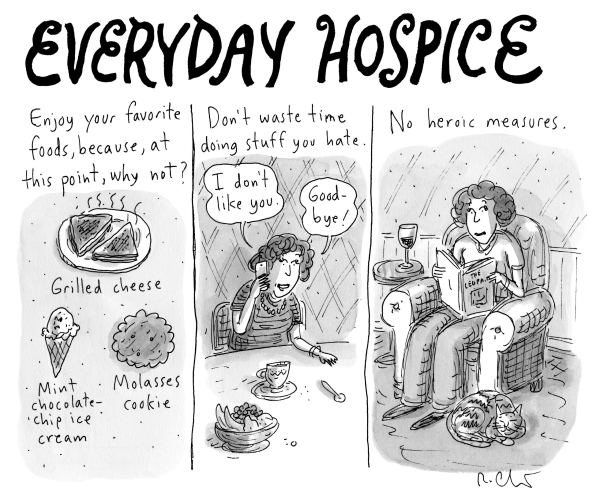
Don’t Waste Time Doing Stuff you Hate

everyday hospice 2

We are at the midpoint of our nine days together.  On the first night, I arranged to pick up my son’s little buddy from down the hall to join us for the free Seldom Scene bluegrass concert at a local park.  Bug snarled and fussed while I packed up watermelon and blankets.  Then at the show, the banjo twanged, the audience swayed.  Bug and his buddy rounded up a half dozen other kids and played soccer in a clearing until the trees twinkled with lightning bugs.  He rode home flushed and grinning.

Yesterday morning, when packing up to go to the Spark!Lab at the Smithsonian, Bug fought until he cried.  Then on the train, he thrummed with questions and leaned forward in his seat peering out the front window down the dark tracks.  At the museum, he spent 2-1/2 solid hours building laser mazes, a sonar rover, a helmet with night vision and echolocation.

Continue reading “Don’t Waste Time Doing Stuff you Hate”

Family, Learning, Parenting

Nine Days

Those of us who experience ugliness in our family dynamics often prefer to remain concealed. There is less shame when one stays underground.


– Tracey Watts, “The Explosive Child” in Brain, Child Magazine

In two months, the school year ends. I’ve scheduled the vacation from work. I’ve cancelled the trip to Myrtle Beach. My son and I will have nine uninterrupted days together.

This is a luxury. Most working parents crave time like this, time with our over-scheduled and growing-too-fast kids. Be grateful, Smirk.

Gratitude yes, it is here. It just happens to be mixed with a shot of dread. I am mystified about how to make the nine days anything but miserable for us both.

How many parents are sitting on a locked vault of tangled up feelings? It can’t just be me.

(Maybe it is just me.)

I’m not very skilled as a parent. Loving, sure. Dedicated and creative and willing to learn. But bumbling, too. Perplexed. The issues that arise are rarely what I predict and never what I’m prepared to face. My responses miss the mark. I careen around our home, swinging between tight-lipped and screeching, in the face of my boy’s constantly shifting needs.

The loving bond that grows dense and loose in my friends’ families is, in ours, a stunted thing. At the end of our weeknights together, when Bug finally stops arguing about homework, bath time, and how many chapters we’re reading, when he finally conks out, I’m sapped. The thought of facing a mere weekend together wears me out.

Nine days?

The thing is, I’m willing to learn. I’ll eagerly dedicate these next two months to preparing for those nine days. My son is nearing tween-hood.  This may be our last best chance to cultivate the trust and connection that he’ll need as he slogs through the tar pit of adolescence. I have a stack of books. And blogs. And habits to practice both in anticipation of what might come and in response to what does. When I turn to it and start learning, it all makes sense. The way forward is clear.

Then almost as soon as it appears, that clarity begins to blur. In creep the other responsibilities. Up goes the volume on their demands. The fact is, only so much of the strife in our home is a result of “parenting” as some discrete set of techniques. Of our troubles, far more than I’d like to admit, arise from me.

I live 23-1/2 of every 24 hours in a state of low-level panic. A thirty minute cardio high is the only thing that reminds me of the world outside my hall of mirrors.

Unresolved financial concerns haunt me. How can I leverage my skills and energy to move into a higher-paying position? With this question nagging, I push harder at work. I submit a conference proposal, step up on a search committee, and get involved in the new DC undergrad internship initiative. None of this I have time for, of course, but I do it because I need to ensure that Bug and I stay a few feet back from the financial cliff.

The anemia of my social life concerns me. How can I give Bug a strong community of peers if I don’t build one around us? With this question tugging, I reach out to the people around me. I schedule a walk with a girlfriend, volunteer at the Unitarian church auction night, plan a weekend playdate, and put a potluck on the calendar. None of this I have time for, of course, but I do it because I need to ensure that Bug and I are woven into a rich and supportive community.

The paucity of my creative efforts prick at me.  So, too, the half-assed attempts at mindfulness, the chaotic closets and filthy windows, the short shrift I give to the relationship with my Mister, the public meetings I fail to attend for the condo association and local school board and VDOT as they make decisions that upend the value of my home,  the urgent call to action for racial and economic justice, the runaway bad habits of eating too much and staying up too late that destroy my sleep and mood and ability to manage any of this with grace. . .

Does growing into a better parent begin with focusing on “parenting”?

Or with 10 minutes of morning journaling? Or with a commitment to a professional development plan?

With daily exercise and 8 hours of sleep?

With a counselor?

With breath?

With less?

What heals a frayed bond between a 9-year-old boy and his mama?

We love each other, of course. All of this begins and ends in love. This hard work, these questions about how to proceed, they pull at me to build a home that can be my son’s sanctuary and his launch pad. Every question comes down to love.

In its most active, living form, what does love need? As it tries to push itself up from the root, how do we cultivate it?

This question churns under all the others. Sometimes I forget this simple truth, and the details topple me. That is when I roar until my throat fills with mud, and I am swamped with shame. That is when I want to sink into the earth.

And that is precisely when I most need to remember that my love for my son is under everything. It won’t let me sink. It catches me and helps me find my way back to the surface.

Then I — then we — get to keep on learning.

In two months, my son and I will have nine uninterrupted days together.

I have no idea what to do to prepare.

My son and I have nine uncertain years left together.

I have no idea what to do.

I guess I’ll do it anyway.


Children, Family, Parenting

Outgrowing Punishment

Boy Swing

After another night of ignoring, hitting, and name-calling (the kiddo to me, not the other way around, thankfully) and a morning with even more of the same, I’m lost again.  Serious anger is roiling around inside my son.  His cold fury manifests as prickling hands and words.  He seeks to  needle.  He seeks split the seams and set fire.

I recognize my tendency to respond to my son’s daggers with my own verbal stabs.  I roar.  I exert dominance.

These choices escalate the war.

Recovering from a recent hellish family trip to California, I posted this:

Bug’s had nine years to become the person he is.  I’ve had 42.  If I hope to cultivate healthier ways of being in our family, I’ll need to do it one itty-bitty step at a time.

I’m trying this now.  Seeking out and attempting tiny new approaches.  Even if I have no idea what or why or how, I’m trying something.

In the spirit of taking tiny steps, I choose this morning to read about natural and logical consequences.

From Alyson Schafer, “Positive Discipline: Signs your ‘Consequences’ are Punishments in Disguise”  in the Huffington Post:

A logical consequence must include three distinct qualities, and if any one is missing, it’s a punishment.

1) Related
The consequence must be directly related to the child’s behaviour. This is what makes it logical. Most importantly, the child must be able to see the connection. For example, if you don’t put your clothes in the laundry hamper, a logical outcome is that your clothes won’t get washed when it’s time to do the laundry. If you tell that same child that they won’t get screen time — one of our favorite things to confiscate — if they don’t put their clothes in the hamper, the child’s perception is that their parents are using their personal power to be mean and make them pay for their mistakes.

2) Respectful
Anytime you show a child disrespect, you are being punitive. (Quick test: Would you speak the same words to a friend or a coworker? If not, chances are it’s disrespectful.)

3) Revealed in advance
The child must be given all the information up front so they can make clear choices in their behaviour.  For example: “If you would like to eat, you need to stay at the table. If you get down from the table, you are excusing yourself and we’ll accept your choice and see you at the next meal. Please know there will be no food until that time, so when you get down, you’re done.”

In short: “Stay and eat or get down and wait until the next meal to eat — your choice.” But parents must be sure to actually follow through with implementing the consequence. Too frequently we simply threaten the consequence and the child fails to learn.


Photo from The Good Men Project

Children, Learning, Parenting

Back To Each Other

BlessedNest

Think of your child as a plant who is programmed by nature to grow and blossom. If you see the plant has brown leaves, you consider if maybe it needs more light, more water, more fertilizer. You don’t criticize it and yell at it to straighten up and grow right.

Kids form their view of themselves and the world every day. They need your encouragement to see themselves as good people who are capable of good things. And they need to know you’re on their side. If most of what comes out of your mouth is correction or criticism, they won’t feel good about themselves, and they won’t feel like you’re their ally. You lose your only leverage with them, and they lose something every kid needs: to know they have an adult who thinks the world of them.


– From “Building a Great Relationship with your Child” in Aha! Parenting

On our spring break trip to California, my son rounded up other kids at the hotel pool and played for 4 hours without pause.  At the San Diego Botanical Gardens, he climbed up into tangled two-story treehouse and built a shelter out of balsa wood.  On one bright morning, he hiked with his grandma and me through the hills at Torrey Pines as Pacific tides lapped at the cliffs.

He also fought, screamed, raged, cried, hit, kicked, and hurled insults.  Every single day at every point of conflict, his body went rigid with defiance.  He said hateful things.  He brought his grandmother and cousin to tears.  Me, to worse.

Continue reading “Back To Each Other”

Family, Home, Learning

Boxed Blocks Equinox

mirror tree house

My boy wants me near.  I want to be near.  The sun is low in the sky. We have come inside.

He taps his pencil against the worksheet. Someone somewhere crafted this shoddy crossword puzzle. Someone believed it to be an adequate stand-in for learning, or at least believed others could be made to believe. This is how we teach the vocabulary of soil.  The Rorschach of blocks (dinosaur? metro map) lacks symmetry. It lacks even the pretense of design.

Wood pulp pressed flat extrudes the texture of earth.  What’s left is surface and the imagined mines we spell ourselves into digging.

We ask so much of our children. Continue reading “Boxed Blocks Equinox”