Brain, Things I Can

82. Things I Can Watch: Dream Reels from the Projection Booth

Sleep. . . knits up the raveled sleave of care.
 
From Shakespeare’s Macbeth, Act 2, Scene 2

I follow him along the circumference of the earth. The globe bends under us. A rusted iron chain strewn out loose on the ground guides our hands, our feet. We walk near the shore then into the surf which licks our ankles as it rises. Soon it sweeps us up, the surge, and I clutch at my father’s back while he swims hard for a distant city on stilts. It is all that is left of our land.

Dazed and shivering, we climb to the rickety boards and look for a place to rest. A man squats against a corner of railing and hisses out the rates. Six to a room, he tells us. Fifty cents extra to use the loo.

All night and into morning, the brine clings and the heat swells. My father gives way to the other one, the who knows me as equal no matter much I long to be less. We have to find a place for our children on the sick earth. We have to fashion them a refuge, even if we are its only walls.

These choking and sumptuous images careen across the terrain of my imagination. I have seen such places only in glimpses, only when far from home. Kissed by spray from the Zambezi, I leaned over the precipice of Victoria Falls. Two decades have failed to dull the breeze lifting my pink skirt, to damper the white roar slamming geysers upon arrival.

I made a vow then: If I ever choose to die, it will be here. I will soar from this arcing explosion.

I have kept few promises in my life. This one holds, at least so far: I am allowed an escape hatch only of extraordinary proportions. I know that the effort involved and the miles covered will force me into new life.

Now, the stone edge of that Zimbabwean river is etched into a vein of recollection where the cliffs of Cape Breton gather around the New Forest’s scraggy tangle. The faraway place is memory, which means now I travel in dreams.

Sleep is a ticket to a steady body and a capable mind, but it is also a free ride to the outer limits. Just four bouts of it now — four dead zone nights following four decaffeinated days — have spun me along gilt-edged galleries and coursed me through sea caves, then pulsed me back out into the clutches of grinning dystopian warlords.

Through glass walls of a time-warping rocket, wrapped safe in a cloak of gravity and linen, I see worlds that maybe were and those that maybe will be. My soft spine arches as I clear the next mountain rising between the two. From both above and below, I watch as the laws of physics clash and spring against spasms of turbulent time.


Fitness, Things I Can

77. Things I Can Honor: The Body’s Cry

Sleep is one of the most important predictors of how long you will live — as important as whether you smoke, exercise, or have high blood pressure or cholesterol. . . Unhealthy sleep remains American’s [sic] largest, deadliest, most costly, and least studied health problem.

Sleep scientist William Dement in Secret Life of Sleep by Kat Duff

It’s possible to plug my ears and soldier on, but who’s the hero of that story? Push too hard for too long and you end up with blistered hands and a dead battery.

The weary frame begs for rest.

This family, this work, this creature living out her days in this one-and-only body has to release her stranglehold on momentum. It turns out that the slick promise of Forward Harder Better More actually pays out in stumbling weakening poisoning collapse.

What we knew once we can know again:

Sweet dreams invite sweeter days.

I return to chapter one to learn this lesson all over again.

Last night, I clocked eight hours. Tonight I will do the same.


Fitness, Things I Can

70. Things I Can See: Her Beat, Mine

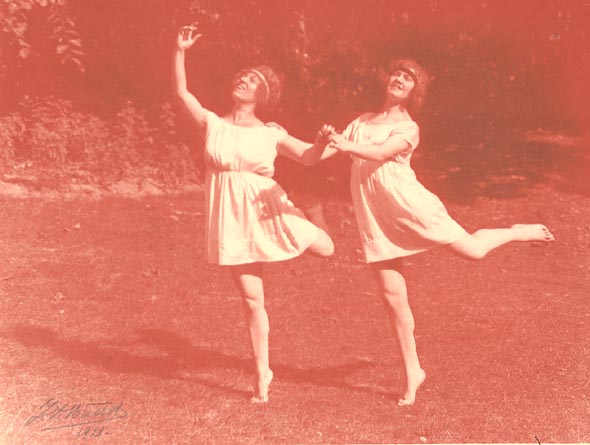
Two Women Dance

The girl who drove the Volkswagen bus plastered in Dead stickers fell off the face of the earth after graduation. West is what I heard. Community bordering on cult, new name. I pictured her in a homespun dress drawing water from the well for backwoods apostles.

She popped up on Facebook — as we all do — 25 years later. No bonnet, no copper kettle. Her profile shot is blazing female Gumby, bronzed flesh arched in a yoga bridge against the setting sun. The other photos are strappy heels, flashing sequins, rhumba beats and a man in a fedora testing the limits of her psoas muscle by pressing her stretched leg flat against his chest before dropping her into a dip.

Continue reading “70. Things I Can See: Her Beat, Mine”

Fitness, Poetry, Things I Can

54. Things I Can Pamper: This Flagging Frame

It is 10 minutes past 10 on the first night of summer. The boy is asleep. The dryer bumps and tumbles, smoothing our wardrobe for the trip ahead.

The computer at work is powered off for the week. Tasks huddle in their restive limbo behind that dark office door.

Here, crumbs dust the counter.
Free weights squat in the corner.
A story cocoons between silent covers.

This body is so weary.

Rain came then went again. On the dark balcony, pepper leaves sip at the sky. Petals curl into sleep.

Tonight, for once,
I turn from the eternally unfinished
everything.

I turn off the light.

At long last, sleep draws closed the curtains
and tucks me into her blue
furred throat.


Music, Things I Can

30. Things I Can Tap: The 4/4

Even on a day that saps breath, beat
remains.
Night, home, a high whine
sears the deep ear. When veering toward bed
or bread or any
webbed polyfil
to muffle
the last throb of momentum, habit
is the last hope.
Turn towards
Calabria, thud and sway
into currents
already in motion,
churn flesh inside
out. Turn up
here like sleepwalking
to Messina, like emerging
at the first dawn.

Fitness, Living in the Moment, Things I Can

19. Things I Can Still: The Go

It took two injuries in three days.

For an hour, the floor became the only place I could safely be. My Mister, mother, and boss all encouraged the recline. Horizontal I stayed. They helped me to bed. Eventually, I hobbled to the easy chair. With laptop. With novels. With quiet punctuating the growl and jabber of construction workers welding outside my window. With the first birds of spring punctuating the quiet.

This is not a familiar mode. Stress begets sweat. When the engines are firing — even more so when they are flagging — the default setting is to slam the heavy bag or pound the streets. Dance, climb, lift, go go go.

Not now.

Now it’s this: Two howling muscles on the right side — lumbar and erector — keeping company with the perennial scapular pain.

Now this: Only stillness.

Sleep comes. Caffeine goes. Sleep comes harder. Eight hours. Then nine, then ten. I struggle upright through a fog like rheum, fumble for the Advil, then surrender again. Flannel sheets. Sweet relief. An afternoon nap gives way to a labyrinthine descent into oblivion.

Three days of sleep nine years overdue. Sleep I haven’t know since Bug put down roots in my naive womb.

It took two injuries.

It shouldn’t take even one.

This stillness belongs.

I inch open the door. Who knows the cost?

Welcome. Please come in.

Please stay.

Learning, Reading

Woman, Mine: Eat, Drink, Overthink

When women are faced with a difficult situation, they turn inward to control or change themselves rather than focusing outward on the environment and individuals that need to change. Whereas men tend to externalize stress — blaming other people for their negative feelings and difficult circumstances — women tend to internalize it, holding it in their bodies and minds. When something bad happens to women, they analyze everything about the problem — how they feel about it, why it came about, and all its meanings and ramifications for themselves and their loved ones.

– Susan Nolen-Hoeksema, Eating, Drinking, Overthinking: The Toxic Triangle of Food, Alcohol, and Depression — And How Women Can Break Free

The self-help stacks are my first stop. Over in biography and history, the finds are nourishing but bland in comparison. Substance rarely wins. On any given week, some bestseller on living the full life accompanies me home. I gulp down the first chapter for a fix of the hottest therapy-couch trend. When I get up to run the dishwasher or my fidgety legs, I plop the earnest analysis on the coffee table as a reminder of all that needs to be explored. It’s three days overdue when I dig it out from under the board games and magazines. I’m still the same stumbling, unpolished creature I was five years ago and undoubtedly will be in another twenty.

Sometimes these finds are good, a few are great, and most hover somewhere below mediocre. I paw through them, hopeful and willing. The self, after all, is a mine. A precious vein cuts a find thread through acres of the most primitive matter. It’s hard to resist skimming to see if any can offer up a new kind of pickaxe.

Nolen-Hoeksema is a diamond drill bit.

First, the qualifiers: her writing falls short of art and her research is miles from the cutting edge. Much of what she’s exploring has already turned itself inside-out in every issue of Psychology Today. That said, she strikes oil in her depiction of this one woman’s experience: mine. I doubt the insight ends here —  this work must speak to others or it wouldn’t have made it to the shelf.

If you are out there experiencing what I experience. . . well, you have my deepest sympathy.

Also, go find this book.

Nolen-Hoeksema layers description of the emotional experience of depression with the behavioral coping strategies that are common among women. The dynamic interplay of thoughts, feelings, and actions is not a new concept, yet the insight here strikes a bright chord. I have tried to pick each of these predilections apart as its own unique concern. In my disordered world, here are the areas of most pressing need: Food issues, compulsive/addictive issues, depression issues. Also, motivation issues, anxiety issues, perfectionism issues. Daddy issues are as loyal and true as gum stuck to my shoe. Oh, then there are the communication issues along with trust issues which contribute to sleep issues… You get the idea.

Culture, biology, and family paint the backdrop upon which these actions and reactions play out. While my sleepless internal critic insists otherwise, it is not all just chaos in here, and none of us is a hopeless mess. Indeed, giving up is another form of indulgence. It’s no small gift that Nolen-Hoeksema writes for popular consumption. Those of us who are working on something-or-other all the time would wilt at the idea of another task, even while reaching for it. The analysis here requires little more than a shot of receptiveness and a few quiet hours.

The book begins at a point central to the ways women cope. At that place, a kind of behavioral and cognitive Bermuda triangle — depression, drinking, and compulsive eating — draws other aspects of the self into it. With the same insidious force, it infiltrates what seem to be unrelated spheres of our lives. Careers suffer, bodies weaken, marriages falter, children pay.

Rooting out sources, subsequent chapters explore the patterns of over-identifying with other folks’ feedback and perceptions, the role physiology plays in stress and emotional responses, and the tendency even among successful women to swallow anger but wallow in sadness. These lines of inquiry will be familiar from feminist theory, neurobiology, clinical psychology, and human development theory. Nolen-Hoeksema tugs loose the component parts and assembles them into a new mechanism for self reflection.

After digging up the thickets and landmines, it’s time to lay new ground. The final section dedicates several chapters to concrete strategies for designing an alternative to the triangle. Practical guidance complements theory, providing tips for replacing avoidance and remorse with “approach goals,” and walking through simple problem-solving skills. The book finally urges the reader to think forward and beyond herself. The closing chapter guides offers readers tools for supporting girls and teens — particularly daughters — in developing practices and vocabulary for a healthy adulthood.

As I write this, I notice a force that seems to want to pull me away from focusing and finishing. Giving in to it would lead me to the refrigerator, or bed, or wandering through an electric smog of doubts and plans and urgencies about the unfinished business of my life. The force, of course, is less than an “it” and exactly as strong as the breath I waste fighting it.

Mine, this mind. I’m grateful Nolen-Hoeksema pieced this tool together and handed me the map. With them, I might be able to reconfigure the landscape to invite the bold step and a lifted gaze.