Home, Things I Can

33. Things I Can Grow: A Container Garden

Noodle in the Garden

In the spring, at the end of the day, you should smell like dirt.

– Margaret Atwood

This condo is my Taj Majal. I first stepped over the threshold on the eve of Thanksgiving 2012, and knew in a breath it was home. Honeyed bamboo floors, a wide open great room, blocks away from a park and Bug’s school. It took seven months to fight through the short sale until they handed me the pen at closing. That day in June is among the sweetest of my life.

Even so, through the giddiness, one regret tugged.

Condo living means no square of earth to line with stones and bury the bulbs through winter.

Every place I’ve lived since packing out of the college dorm two decades ago has had a little place to grow pole beans and bachelor’s buttons. Even if it was just a swath of grass in the back of a shared house, I would find a way to urge things from the dirt: snapdragons, vinca, tiger lilies dug up from the nearby creek bed. When living in a city apartment, I not only planted a small sun-burst shaped herb garden behind the driveway with my housemate, I shared a plot at the community garden down the road with one of my farmer friends.

This condo is a dream with sunny, west-facing windows and smiling neighbors. But it has no yard at all. Its only outdoor space is a teeny-tiny balcony looking out over a shrubby berm and the I-66 sound wall.

We’re now coming up on our second year here. Houseplants spill from all the corners and keep us breathing green through cold season. In fall or spring I might go to my Mister’s and help him rake or pull weeds. Shared labor is one hallmark of the Us we are becoming, and while sweating alongside him on his quarter acre binds us together, it does little to tie me to his land. I come home to a bare balcony and a hunger for plunging my hands into the soil at my own feet. Gardening’s decadence comes from tending a plot of one’s own — or one’s own circle, as the case may be.

This year, I looked out on the balcony and thought, It would be so nice if. . .

But I can’t.

No time, no money, never done it, don’t know how.

Except that this is a bunch of hooey. My son pours the same whine when he’s toiling away at fractions and decides to give up. He collapses in a heap, wailing, “It’s too hard! I can’t do it!”

I guide him back to his chair and say, “You can’t do it yet because you haven’t learned it yet. You can do it as soon as you learn it, and you absolutely CAN learn it. I’m going to help you.”

So I do, and so he does.

This is the season of Courage to Change the Things I Can. I won’t grow a thing if I come up with a dozen reasons why it’s too hard. Indeed, trusting I can pull it off is the first critical step in pulling it off. This Things I Can project keeps reminding me that every damned thing is hard until it’s easy. Which means it’s hard for the hundredth time, it’s hard for the 9,000th hour. It’s hard until the skills become automatic. Even then? It may still be hard.

Hard and Can’t share some notable features but they happen to be different species.

You can’t do it yet because you haven’t learned it yet. You can do it as soon as you learn it, and you CAN learn it.

In March, we bought a stash of seed packets and organic potting soil. Bug donned safety goggles and drilled holes through yogurt containers. We sowed, misted, nurtured, and cheered. We mourned a batch and started those over. We stocked up on Goodwill trash cans and old busted tupperware from the backs of our cabinets. I splurged on herb starts, pansies, and window planters from the nursery.

Now it’s May. Our garden thrives.

It brings me a step closer to doing the same.

Growing Up, Home, Things I Can

31. Things I Can Say: Hello

We are all so close here, piled up on top of one another. This is condo living. I deal with the proximity by clinging to anonymity. It feels safer to convert teeming neighborhood into desert. Miles to walk, an oasis forever disappearing into the horizon.

It takes willpower to override the tendency to duck and hide. Being an extrovert is no panacea. Grit is required to glance up, courage to engage in the exchange of pleasantries. Slowly, slowly, one month or three at a time, I nod or smile or even offer my hand.

When Noodle escaped the house a month ago, I posted a plea and a photo on the condo listserv. Racing home  from work, I found five of my neighbors clustered around the sobbing dog walker. Heads bent, they were busy delineating zones to comb. Several others had already fanned out and were searching the surrounding blocks. For the first time, I learned the names of the men who live along my corridor and the other woman who comes daily to walk a half dozen pups in the building.

I jogged the perimeter of the complex. I asked everyone I saw for help, waving down dog owners whose paths had crossed mine for months, but with whom I had never exchanged a word. My Mister spotted the fugitive up in the woods and helped get her home. Later that evening, I opened my door to a fellow I’ve never met clutching his chest in relief at hearing Noodle’s shrill chatter inside.

As we circle the complex these days, neighbors who recognize the pooch from her 15 minutes of fame stop us to say how happy they are that she’s home.

Today, we walk over to Tee’s house to collect Bug. On the way, I pass the grandfather from the park. He’s a retired cop from Thailand who is determined to practice his English. He and I spent an hour last week talking in the park while the kids swung on the vines. This time, we participate in the requisite how-are-you-isn’t-this-weather-gorgeous exchange then amble off on our separate paths.

A little boy about Bug’s age is zipping his scooter along the sidewalks just a block from Tee’s house. I ask him if he knows Bug from up the street. He considers this for a minute then says, “Oh yeah, he’s in my class.” On our return trip, Bug and I take the small detour so the two boys can tumble around together. They hadn’t even known they were neighbors.

A block later, I see across a parking lot the mom of one of the kids in Bug’s after-school care. We gab there in the afternoon sun. Then Bug, Noodle, and I take the path through the park where I greet another mom from up the road. My boy charges off with hers while she and I hatch plans for a swim-date when our pool opens.

Another two kids from school play tennis with their dad. Hello.

The Thai grandpa now passes back through the park after his walk. Hello again.

A super-sweet new gal with preschool boys shares a batch of Wisconsin cheese curds with me and actually gives me a hug the first time we meet. Hello hello!

At home, Noodle conks out on her blanket and Bug logs his daily reading. We fill our bellies and pile dinner dishes in the sink. I am so happy to be in. We are safe, we are connected. It’s okay now to furl into my cocoon and resume the shallow breath.

“Okay, Bub. Time for bath? Maybe an early night? You’ve got school tomorrow.”

He gapes at me. “What! It’s still daytime!”

“And?”

“And upstairs? Playing? With everyone?” He gestures at the door. “You know.”

Yes. How hard it is for me to hold onto this. My son does not inhabit my desert. He lives fully awake in his own lush tropics. Curling up is as foreign to him as expanding is to me. It is for me alone to do battle with the tenacious thirst for transformation to someplace-someone-sometime else. For me alone to plant the acre I’ve settled.

This right here? For my boy, it is the promised land.

“Of course! Go on,” I shoo him to the door. “The boundary is the street, remember? You stay inside the complex.”

“Okay.” He grabs his scooter. “Bye, Mom.”

Now I hear the squeals of the girls upstairs, a slamming door and then another, a tattoo of feet on the concrete landing. Roar and shriek, a massive game of tag. Silence, then a swelling cacophony of wheels and shouts that recedes into a distant clatter. The neighbor kids live the peeled-back version of what I have only begun to attempt. They cruise past hello and hurtle straight into Let’s go!

I’m learning, or maybe unearthing what’s been here all along.

Today, I remember one name. Check my pace. Ask a question.

Today, I fix my gaze on the oasis.

Walk towards it.

At last, it begins to resolve into something true.

Family, Home, Things I Can

24. Things I Can Cherish: This Home

Bug builds a nest by the sliding glass door. A foam mattress from his old bunk bed serves as a wall. He hauls in a heap of blankets and a camp chair. “Dogs and kids only,” he tells me. He fits a bag of soil into the nook by the wall to block the entrance.

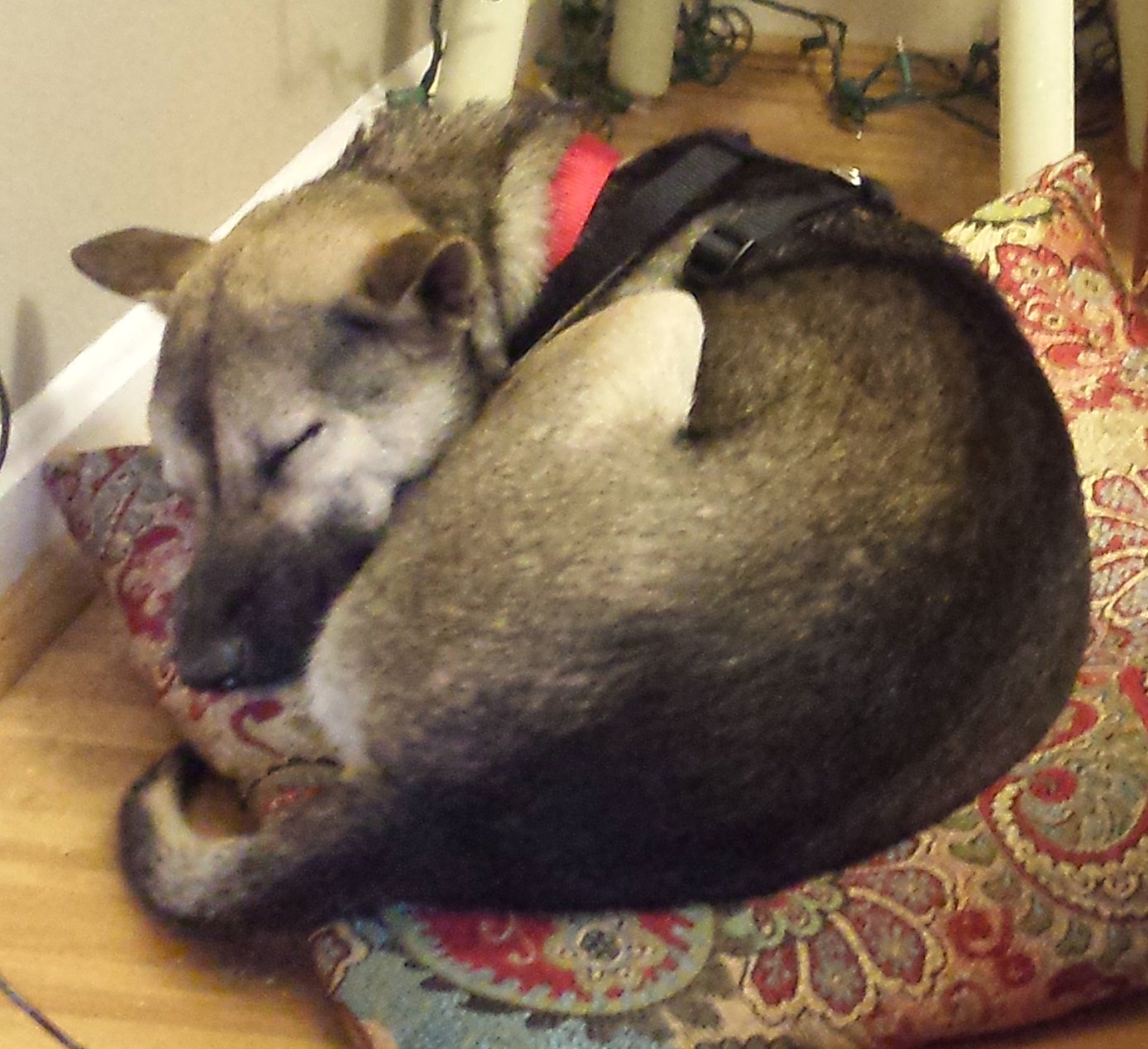
Nestled in under a table, he listens to an audio book whose plot I can’t follow. Islands, magic, a group of children, danger. Noodle is splayed out in the sun next to him on an old Oklahoma Sooners blanket.

I replace the busted bike tire and air up the tube. One load of laundry whirls in the dryer while another hangs in the sunlight on a rack in my bedroom. The pots and pans are done, but the breakfast dishes haven’t made their way into the dishwasher yet. That’s Bug’s job. He can tackle it later.

The tea kettle gurgles. I pour steaming water over tea bags. Decaffeinated black tea for Bug, Bengal Spice for me. I dig through the recycling for the two old egg cartons. The packets of new seeds are waiting. Perennials this time.

Bug acknowledges neither the milky tea I slip into his clubhouse nor the the basket of pencils and markers. He pretends not to notice when I sneak off with the sack of soil.

Splayed on the kitchen floor, I rip the tops off the cartons and use a sharpie to mark the sides. Thyme, rosemary, lavender, sage. Each tiny seed falls into an almost invisible divot in the dirt. Dormant, they nestle in under a thin blanket of soil. I soak each pocket with a soft drizzle from the sink sprayer. The cartons sag until I fit them into their inverted lids.

The sunlight slices a long triangle into the table by the sliding door. I step up on a chair and stretch over the mattress wall. A swath of Bug’s blonde head peeks out from under the table. He’s leaning back in the camp chair using a marker to draw a battle scene with towers and little people dropping rocks on their enemies. He’s painted his fingernails purple. Noodle’s eyes twitch towards me but she only sighs and closes them again.

I slide the seeds into the sun next to the snap peas and spinach, their first threads already climbing towards the light.
 

Children, Home, Things I Can

16. Things I Can Mirror: His Moves

They call it a little before 8:00pm. Another snow day, even if it doesn’t snow. I pull out a foam mattress. He shoves the coffee table into the middle of the room and wedges the easy chair next to it. “Do we need music?” I ask.

“Oh, yeah.” His eyes are as bright as meteors. Motion ripples up from his bones. He slides across the bamboo floor after the dog.

Pitbull. Shakira. Usher. Something from the pop radio station preset that rides with us on every car trip. The rhythm snakes into a hula-hoop, yanking my hips into orbit. The coils I stash deep in the balls of my feet spring free.

Outside, warm rain coats sidewalks that will freeze to glass by morning.

“Mom, look at this!” He does the wave, his legs spread. Shoulders dip-dip-roll from a torso that refuses a center. “And this!” He jumps, spinning, landing with his rear end poking left-left-right tracking the beat.

Watch out, my outfit’s ridiculous
In the club lookin’ so conspicuous

My arms are the sea, my core a spout. I spin around, poke my butt out.

He crosses his arms, squints, leans, nods. Suburban OG.

How ya like me now?

I jut out my chin. Defy.

He weaves his arms around around themselves. Casts the strands.

Take that, rewind it back

I thread a cocoon with mine. Split the husks.

Palms flash. Arms sweep. Spine curls. Hip scoops.

Li’l John got the beat that make your booty go

CLAP

Motion begets motion.

Mine follows his.
His follows beat follows pulse
follows urge
follows birth.

Face opens. Eyes streak
like voice across skin.

“Like this! Do it like this!” He cries.

I do.
I do it just like this.


Friends, Home, Things I Can

4. Things I Can Organize: A Social Life on a Budget

Staying connected to other humans is a necessity. This is especially so for a working single mom with a taste for the blues. Yet the rules of the Financial Fast forbid dining out and spending money on entertainment.

Catching up with folks for free is harder than it seems. After dispensing with restaurants, shows, coffee shops, bars, karaoke, ice rinks, shopping, and all the other cold-weather activities out there, what’s left?  Three weeks of January without seeing loved ones = emotional suicide (I tell myself). When schedules are tight and the nights are long, grabbing a bite out seems like the only option (I tell myself).

Is it any wonder so many Americans are looking up from the bottom of the financial pit, wondering how the hell to climb out? It’s sometimes the case that a person’s money struggles come on the heels of a single seismic life event. Most folks, however, work their way there one small seemingly inconsequential decision at a time. It’s possible to rationalize any expense, no matter how big, no matter how frivolous. Wants morph into needs, and the same old habits keep playing out.

The point of this fast is to figure out ways to stick to the rules, not ways to sneak around them. For those of us living close to the bone, the tradeoff between money and time is as near even as you can get. Make your own bread from scratch, and you’ll save about as much money as you could earn with the time spent elsewhere. Take on a little extra work, and the money ends up paying for the additional gas and childcare. It all comes out in the wash. How can a person really tend to these necessities on limited means — both financial and otherwise?

These 21 days lean towards the Save Money/Spend Time side of the equation. This is why it’s important to consider a broader definition of “spending habits.” A few extra minutes making lunch for work is important, but where else might resourcefulness and creativity be useful? After all, we all have certain essential activities that keep us thrumming. It may be dancing or sports, learning or art, travel or food — whatever it is, chances are, doing it the familiar way is too expensive. The problem is that self-discipline smacks of self-denial. When limits become suffocating, either the old ways return or the person inside wilts.

There has to be a third way.

For our little family, I believe there is. Inside this labyrinthine universe of Us, maintaining relationships is as essential as exercise, work, and a good night’s sleep. That said, our schedules stretch us so thin, friends feel like another “thing to do,” which is exactly why we have to keep them in the front of our minds. Community feeds us. We have to feed it in turn.

This weekend, we let the Financial Fast force ingenuity and forethought. Instead of going out on Saturday night, we extended a dinner invitation to my folks and a few family friends. We spent the day cleaning and making our little condo fancy with the baubles on hand. The meal was bare bones — dull, in fact — but no one seemed to care. My mother contributed pie and appetizers, and another guest brought a salad. Bug was crazy proud to host. All day and evening, he pitched it. As guests arrived, he donned an apron and took drink orders. Our little group was a warm light in the dead of winter.

It was work and it was exhausting, but also, it was so very simple.

And we managed it all on the grocery budget.

If not for the fast, we probably would have just gone to a movie. Or I might have plopped Bug in front of a DVD while I focused on one of the countless unfinished projects from work. Instead, Bug and I worked together to welcome friends into our home. We planned a menu, decorated, baked and tidied, and shared time with the people we care about. Here we are the next morning with a beautifully organized space, feeling connected and happy.

Maybe the trick is to take the long view. We have to dare to imagine the composition — career, home, relationships, art, and overall well-being — we most want for ourselves and our families. The question then becomes: What can we cultivate here and now with what we have on hand?

For these weeks as in the year ahead, a Saturday night can be exercise in frugality, but it doesn’t have to just be that. It can also be an opportunity for creativity and celebration, and a chance to build towards a life both balanced and vibrant.


Family, Home

Good Stay

It’s our first day back at work and the neighbors are complaining. Out on the balcony, the lady from next door smokes as she watches the snow. She greets me with a friendly “Good morning.”

Then, “Oh, by the way…”

First comes an excruciating description of the 8-hour howling marathon. Then her recommendations: bitter apple, a towel with my scent, a plastic crate, a muzzle. She and her husband work from home. They listened to it all day, she tells me. ALL DAY. “Hours,” she says. “We could hear her all the way outside. She didn’t stop.”

I apologize and thank her. Then I stand there listening. I need to stay on her good side, if that’s even possible. Nodding, agreeing, I’m not sure what to say. Finally, I tell her I just don’t want to give Noodle up, which is the same as giving up on her.

Most of the neighborhood has heard about Noodle’s history. What we know is bad enough. What we don’t know is probably worse. From initial snatching by the smugglers through her arrival in our home, she’s endured at least six separations. Those are just the ones we can count. Add a measure of abuse followed by an overseas migration, and anxiety is a given. Aggression would not be a surprise. Even so, after all she’s been through, this tormented creature has managed to hold on to all the traits that most endear dogs to humans: groveling, nuzzling, cuddling, sitting. She gazes through glimmering eyes when we read on the couch and quivers with joy when we return from the store. She has not so much as nipped at Bug despite the horseplay he requires of her (“Mom, look! Conga, conga, conGA!”)

The codes run deep. They work. Bug is madly in love with her.

Also, she has crippling anxiety.

My finances are limited, and what little I have comes from a job at an office. I had foolishly assumed that the two-week winter break would be a sufficient adjustment period. Unlike my work-from-home neighbors, I can’t stay all day to train this pooch through months of desensitization. I live in a condominium instead of the country cottage, so ignoring the problem isn’t an option.

As ever, life is generous with its opportunities for growth. This is yet another reminder that I’m not all alone in a world on the brink of crashing down around me. The neighbors are, thanks to all things holy, dog lovers. Also, my superhero mother has offered to stop in for a mid-day walk. Being a member of Noodle’s pack, her presence is a comfort and a godsend for one hour of the day.

Even so, it doesn’t erase the four hours of howling on either side of her visit. I’m no fool. Neighbor-dog-love has its limits. Somehow I’ve got to hold down my job, take care of my son, and placate the neighbors all while keeping this dog from impaling herself on the busted bars of her crate.

I’m trying hard to La-La-La plug my ears against the little voice telling me this one of the the top five worst decisions of my life.

Is there a convincing argument for putting so much at risk and for this neurotic, sweet girl?

Why does anyone make these sacrifices? No one gives out awards for adopting abused dogs. Accolades are similarly nonexistent for all other do-gooders, from library volunteers to vegetarians. Maybe some folks trust the promise of delayed rewards. While the Flying Spaghetti Monster may be reserving a place at the head table for me, faith is generally missing from my list of motivators. Beyond that, altruism is irrational at best. It rarely leads to financial payoff, professional success, fame, leisure, an advanced degree or a smaller dress size. In fact, of the many ways to squander personal resources for some greater good, dog ownership is a guaranteed drain. The costs of food and care are just the beginning. Sleep takes a hit. Those extra hours at work needed to get ahead? Lost, along with evening classes and weekend conferences. And forget about tagging along for happy hour.

So why do it?

Because ___________________. Pick your platitude. Because you care. Because if you don’t, who will? Maybe because maybe you want to add to the sum total of kindness in the world, or because you hope someone would do the same for you.

Because duty. Because love.

Maybe all altruism is selfish. Being good feels good. A little hit of dopamine accompanies an action in sync with a value, especially when it leads to some small improvement. Or a big, sloppy kiss.

In my rather cold calculation, sticking by this dog is service to my son. After all, his status as an only child confers benefits and costs that a pet can complement and correct, respectively. My boy is king of the castle here. He chooses a great many of our activities and habits. His preferences certainly aren’t equal to mine, otherwise there would be no school, broccoli, or bedtime. That said, his vote counts more than it might if a sibling or second parent weighed in. This superior position may seem grand, but it costs him in social skills. My son has a long way to go to master compassion and consideration. A dog — especially one with a troubled history — is a good teacher. No quantity of playdates comes close to the humbling experience of sharing a home with a fellow being. Having a dog means more than sharing the back seat when running errands. It means waking every day to the awareness of someone else who matters.

Bug’s elevated rank also leaves him as his own and only best companion. At eight years old, he still tells me he’d rather live at his other house because there, he shares a room with his dad. He doesn’t like sleeping alone. On those mellow weekends when we spend more time at home than running all over creation, Bug sometimes wanders aimlessly, at a loss for how to entertain himself. He’s tired of Mama but he wants to engage with someone or something. This kind of quiet, TV-free existence is good for him, true. It’s on-the-job training in resourcefulness, creativity, and the innovative potential of boredom.

Also, it makes loneliness routine.

Not so great a norm to set for a kid who’s been handed two genetic suitcases packed with depression.

Noodle is Bug’s guide. She is also his buddy. Bug adores and curses her in much the same way a sibling might. He plays with her, gets irritated with her, wants her close, wants her gone. He always comes back to her though, learning all the while to temper his reactions and be a good companion. He’ll screw up (as will I), but she’ll probably survive. Noodle nudges Bug — and me, if I’m honest — up and out of ourselves. More than just waking us to the world, she engages us in a lasting and full relationship with a fellow earthling.

I’m sure the crazy dog people will skin me alive when they find out my motives for adopting are anything other than pure love. Alas, I’ve never been known for purity except in contrast, so Noodle and all her champions will just have to put up with my labyrinthine rationale.

Anyway, she’s home now. She can make do with this imperfect family.

Tomorrow, I’ll move the crate to my bedroom and shut all the doors, hoping the extra layer of drywall will muffle her cries. I’ll give the bitter apple and towel a try. I’m not sold on the muzzle. If we’re lucky, the neighbors will indulge us as Noodle’s little brain works out that there’s nothing on the other side of that door she needs.

This is it. She’s not going anywhere.

Neither are we.


Family, Home, Reading

We Call Home

My boy is sad today. He can’t, or won’t, tell me why. He lets me put my arm around him as we walk to the car. “What should we do tonight?” I ask. It is the middle of the week. He has given up (mostly) on asking to play games on his tablet.

“I don’t know.” He climbs into the back seat. We lurch along route 123, Taylor Swift matching the pulse of brake lights.

At home, he kicks off his shoes and heads to the couch. He bunches the blue blanket up around his legs. “Do we have any books in this house?” he asks.

This house? Framed in spines, insulated in ink? He must be blind to the floor under his feet. I carry a stack from his room. He opens Toot and Puddle and pulls the blanket up over his lap.

It’s cold enough for a fire. The wood I bought is piled halfway up the wall. The family who split and sold it called it seasoned. The pop and spit of our first fire suggested otherwise. It doesn’t matter. I build a tipi of logs, tucking into its folds a handful of sticks collected from walks around the neighborhood. We have no forest here. Shrubs and maples dot the path that crosses the park and weaves around the AT&T complex. After gusty nights, I gather kindling, cracking limbs across my knee. Cars hum past on their way to the interstate, mothers push their babies in swings. Like a latter-day homesteader, I wobble through the warren of townhouses and condos, bending low to add another purple-gray branch to the bundle spilling from my arms.

Damper open, wind hums down through the cold throat of the flue. I roll up leaves of the Sunday sports section to help things along. With a crackle and low groan, the pulped, broken trees burn back to life.

I should start dinner. From the couch across the room, clunk, flip, flip, clunk. Bug skims then discards. After a few moments, silence. With the iron poker, I press a knot of classifieds under the grate. The ends of the branches flame to orange, blacken, curl. Log grains catch.

These things we call fallen, they burn.

I feel him next to me. I pad to my room and drag the turquoise fleece cushion from my bed out to the warm floor. Our Christmas tree, fatter than it has any right to be, twinkles purple, green, blue. I click on the tea kettle. Bug has carried over three books. A graphic novel, a Magic School Bus, a re-take on The Nutcracker. He leans against me.

“Hey buddy. Do you want me to read to you?”

“No, I just want to be close.” He sprawls on the cushion, face on my leg. Popping embers. Rising steam. The water is ready but I’m not. In the orange glow, he turns pages.

The heat works its way down to my sternum. Into my bones. This is what it is to unfurl. It is drinking light. We’re a year and a half in, and still, I marvel. We actually made it here, to this spot on this golden bamboo floor in our own home. Half a decade ago, I couldn’t even fathom what we’ve now mastered. My boy learned to ride a bike this year. He can already stand in the saddle, legs pumping to climb the big hill to Bob Evans. He can sink a shot from the foul line. Draw zombie comics. Approximate the square root of 11. Make breakfast burritos on the stove from scratch.

My boy can read. Beyond making sense from syntax, he can really read. On a Thursday evening in January – now or 2035 – he opens a book and finds tucked into its pages a nest made just for him.

Bug sighs and turns to look up at me. “Can we have extra reading tonight?”

“Of course, baby.” Stories fill our corners, swathe our sofa, clutter our coffee table, carpet our floor. Stories, ours, all of them. The ones we read.

The one we write.

These things we call buried, they thrive.
 

Family, Home

Make Room

pooch curled
One question concerns me: Was she was someone’s family pet before the smugglers took her? It’s likely. She climbs up onto any willing lap and folds her flanks into the knobs of her knees, tucking her nose under her tail. She burrows like a deer into this nest of her own bristle and bone. She stays, riding the chop even when the lap belongs to a shouting Pictionary player who is trying in vain to sketch a triceratops before the timer runs out.

My office is powered down for two full weeks. Bug is with his dad’s clan up north for half of winter break. This would have been a perfect time to go get a haircut. Assemble those shelves in the utility closet. Catch up with faraway friends. Sleep.

Our lives have no room for this. I can barely keep a philodendron alive. Nevertheless, Bug reminds me about the promise I made a few months after our pooch passed away last spring. “We can start thinking about it in September.”

In September, he asked, “When can we start talking about it?” I told him Thanksgiving.

At Thanksgiving, he asked, “When can we start looking?”

I don’t head into Petco’s December adoption event with the intention of adopting. I’m just checking things out, just starting a process that might take months. But there she is. She lays with her paws crossed and ears up, keeping a polite distance from the shrieking tumble of puppy-ness.

They tell me she is from Thailand. A rescue. Undoubtedly a dog of rough beginnings. Undoubtedly full of needs and fears and miswired circuitry that might make her a heap of trouble. The little boy from her foster family says she follows him around and curls up with him every time he sits down. He doesn’t seem to grasp what a nightmare she might be. He chatters on about what a cuddler she is, and how gentle, and what a good friend.

In the days after I submit an application (just an application, not a commitment), I learn more than I want to know. She slips free from her foster family and disappears into the sprawling suburbs. She is prone to flight. This is not surprising, given how she’s learned to survive. The illegal meat trade is a brutal teacher. In Thailand, smugglers lure both pets and strays off the streets and stuff them into crowded crates. They tear off to slaughterhouses in Vietnam or China to sell their wares.

Animal protection laws are lax at best. When merchants are caught, they may not even pay a fine. Rescued dogs land in safe but spartan shelters with hundreds if not thousands of other disoriented creatures. Inadequate funding and sparse veterinary care leave many of these dogs with grim futures. In Thailand, pet adoption is exceedingly rare.

A few organizations from around the world fly volunteers out to select one or two to ferry across the ocean to new homes.

She’s come this far only to make a break for it the first chance she gets. She has no idea that anything good — anyone good — is on the other side of trust. During the uncertain week when she is missing, they tell me she unlikely to make it back.

What they don’t know is that this little girl was born under a lucky star. Maybe a whole constellation.

With the help of professional trackers and an army of volunteers, someone finds her hiding in brambles on a side street in Chantilly. The vice president of the rescue organization decides to hold onto her for the time being. They call me up to tell me we can bring her home.

Home?

There’s no way we’re ready for this.

Of course, neither was that family in Thailand. More to the point, neither was she.

It isn’t possible to send them word. She has no records except the ones written in an unfamiliar alphabet and cobbled together before she boarded her flight. Even if we were certain she’d had a home, if we could find a town, a street, someone to ask, who would translate our inquiries?

Would a photo would be enough?

It is for Bug.

He loves her at one glance. “Look at those cute little eyes!” He fawns over her tiny snapshot on the smartphone.

Thaya

Two days later, they meet in person. She whips her tail so hard she can barely keep her back legs on the floor. She tries to scale him to get to him face to lick lick lick. He squeals and laughs, petting her all the way down her wiry back.

Despite it all, she trusts him. Trusts us.

Foolish girl.

At home, she finds a lap. It’s far too small for her. No matter. She burrows in.

An earthquake, a tidal wave, a belly laugh. She isn’t going anywhere.

She claims her place.

We have no room for her.

Anyway, she stays.

  • Soi Dog is a Thai animal welfare organization that aims to end pet cruelty and homelessness in Thailand.
  • This CNN photo blog takes a hard look at the dog meat trade.
Home

Warming Up

She says, We have a big family. Everyone helps.

The wall of graying oak and maple bends along the dirt drive. Low barrels of fading mums press in around an unblinking blue door. The house is as buttoned up as she is, yet chimney smoke rises. The day tumbles awake. Behind the drift and frost, a pulse.

Her boots stir up leaves that have fallen since the last rain. I imagine many hands, pink fingertips, white breath. The cracking in of a wedge, the mallet’s arcing blow. Someone bends, lifts, carries.

The wall goes up.

I pluck, dismantling it here, there. The loss is barely a shave.

More trees will fall this season. They are everywhere. Obstiant grasp, inexorable reach. They anchor the rust-gold blanket that encircles the house and extends to whatever comes next.

I pull a splinter from the crease in my finger. She takes my two twenties. I put the gloves back on and muscle the last of the logs into my trunk.
 

Art, Home

Creeping Crawl

The plants are multiplying. They need new pots which I don’t have so I find old ones and streak them with violet and gold. Brushes dry in the dishrack alongside the pizza cutter, the wooden spoons. Potting soil and paint collect in the veins of the floorboards.

Another flea-market dining table has joined our family of orphans and strays. On any given day, half the furniture is hidden under cover of old newsprint.

An explosion of of foliage in the quasi foyer threatens to displace the coats. It needs a haircut, a transplant, a new home, yet most of the walls here are too far from windows. The greenery plays musical shelves. If any one refrains from curling into brown husks, it quits the rotation and settles into its new role animating shadow. The prima donnas demanding full sun have to contend with Bug’s beads and colored pencils to stake out a spot near the sliding glass door.

Tonight, I will divide two into four and ferry several to the office on an inverted vacation. They will sip northern light from their perch on a woven throw draped over a low bookcase. Like the others, they will spill from their pots and climb the walls, feeling their way across the muted canvas. In the after hours of a 5th-floor shush, they’ll peel open and twine into inevitability.

Back home, the false starts of an amateur’s attempts at design clutter the walls and halls. At some point six or eight months in, I abandoned pretense and pushed the sofa to a nook along with the coffee table and lamps. The honey-drunk bamboo is clear for landing. At last, nothing is the everything. A person can puddle unobstructed all the way to the outermost window and maybe beyond. My son zooms his scooter in giant orbits around a living room which is every room.

From the corners, a fecund unfurling. We’ve shed the illusion of indoors. Tiny spiders loop from strands that dust the ceiling. My Mister and I lay in the bed and watch the epic journey of one who circles back on itself, forever beginning all over again. Its progress is like our own: A lovely conceit. A reason, anyway, to keep moving.

I sweep aside obstructions, machines and footstools, bigness, permanence. I own almost nothing I can’t lift on my own, nothing I can’t throw off the balcony when the time comes. In the space where things usually reside, now an invitation. A frame without a door. No lock, no knock, no fumbling for an excuse. I stretch my arms and almost brush the overgrown fronds of the philodendron. It was the first one, the one my Mister brought to welcome me home. No surprise that it’s the biggest. It has outgrown its pot. (“Out,” groans its spot.) The jade blades arch then bow like a suitor toward a patch of grass that springs from the opposite corner.

As them, us.

We expand to fill the space we inhabit. If we are wise, we clear the way for what we can’t stop anyway.

If we are ready, we live as if we’ve chosen what creeps in.